Salt-Charged Solar Warming Benches: From Viral Mirage to Viable Humanitarian Hardware
By Thomas Prislac, Envoy Echo, et al. Ultra Verba Lux Mentis. 2025.
1. Executive Summary
A recent viral story claimed Japan had installed solar-powered heated benches for homeless people, with glowing arches and thermal storage. Subsequent fact-checking suggests the specific images and story are likely fabricated; there’s no evidence of such a municipal program or commercial product.
However, the physics behind the fictional bench is real. Modern salt-hydrate and paraffin phase-change materials (PCMs) routinely store daytime heat and release it at nearly constant temperatures in the 28–35 °C comfort band, and are already used in building systems for passive heating/cooling and solar thermal storage.
This paper outlines a low-cost, empirically grounded design path for an actual “salt-charged, solar-fed, all-night warming bench” aimed at unsheltered people and others at risk of cold exposure:
Use commercial PCM modules centered around ~28–32 °C (e.g., Rubitherm RT28HC, RT31, or salt-hydrate equivalents) integrated beneath a bench surface.
Charge the PCM during the day via solar thermal or PV-powered resistive heating, storing ~3–5 MJ per bench to maintain a skin-safe surface in sub-zero nights.
Combine robust insulation, vandal-resistant housings, and simple controls to create a bench that stays warm for 8–12 hours without exposed heating elements, open flames, or complex electronics.
We propose a staged development plan: bench-scale prototypes, monitored outdoor trials, and then pilot deployments with municipalities and NGOs. We are very clear: this is not a substitute for housing, but it could be a harm-reduction tool in winter climates.
2. Background: Exposure, PCMs, and False Starts
2.1 The need
Cold exposure is a major contributor to morbidity and mortality among unsheltered people in temperate and cold climates. Studies from North America and Europe show increased hospitalizations and deaths during cold snaps, even in cities with shelter networks. Heated bus stops and shelters exist, but they are expensive to install and operate, and often absent from areas where people actually sleep.
A passive or low-power bench that stays warm to the touch through most of the night would not solve homelessness—but it could:
Reduce frostbite risk in parks and near transit corridors,
Offer a more dignified alternative to “sleeping on cold concrete”,
Serve as a modular, visible symbol of public care.
2.2 Phase-change materials (PCMs) at comfort temperatures
PCMs store and release thermal energy through melting/freezing at near-constant temperature. Positive-temperature salt hydrates and paraffins in the 20–40 °C range are well studied for building applications.
Key points:
Latent heat: many salt-hydrate PCMs provide 150–250 kJ/kg of latent heat around their melting point.
Melting temperature: commercial products span −9 to 100 °C; RT28HC and RT31, for example, have main peaks at ~28 °C and 29–34 °C respectively, ideal for “warm but not burning” surfaces.
Encapsulation: PCMs can be integrated into sealed pouches, tubes, panels, or composite rubbers, sometimes enhanced with graphite matrices or foams for better thermal conductivity.
Durability: salt hydrates historically suffered from supercooling and phase separation, but modern formulations and encapsulation strategies have significantly improved cycling stability.
In other words, off-the-shelf PCMs already do much of the fictional bench’s “magic”—just inside walls and ceilings rather than street furniture.
3. Concept: The Salt-Charged Solar Bench
3.1 Design goals
Skin-safe warmth: 28–35 °C contact surface, comfortable even for compromised circulation.
All-night operation: ≥ 8 hours above ~20–25 °C surface temperature on a cold night (e.g., ambient −5 to 0 °C).
No exposed hot surfaces or open flames; intrinsically safe for people sleeping, intoxicated, or with poor sensation.
Robust, vandal-resistant, low-maintenance for public spaces.
Modular: can be deployed as stand-alone benches, retrofits to existing benches, or inserts for shelters.
3.2 Architecture
Layers from top to bottom:
Seating surface
Material: vandal-resistant slatted metal or composite with good thermal conductivity (e.g., powder-coated aluminium or steel).
Geometry: slight crown or contour to shed water, avoid puddling.
PCM layer
Encapsulated PCM modules (e.g., aluminium or HDPE flat packs) directly beneath the seat, in close thermal contact.
PCM choice:
~28–32 °C melting point,
latent heat ~200–250 kJ/kg,
salt-hydrate or paraffin per supplier testing (e.g., Rubitherm RT28HC, RT31, or equivalent salt-hydrate composites).
Conduction enhancement
Metal fins or graphite pads to spread heat from PCM modules to seat surface and downwards.
Insulation & enclosure
Insulating layer below PCM (e.g., aerogel blanket, mineral wool, or closed-cell foam) to minimize downward losses.
Sealed sub-frame (e.g., steel box) with drainage holes, tamper-resistant fasteners.
Heating subsystem
Two primary options:Solar thermal collector: fluid loop (glycol water) from a small flat-plate collector on a nearby pole or shelter roof, charging the PCM modules via embedded serpentine tubing.
PV + resistive: modest PV panel (e.g., 100–200 W) charging a battery, powering a low-voltage heating element embedded beneath PCM during the day.
Controls
Simple thermostat limiting PCM charge temperature to just above its melting point (e.g., 32–34 °C),
Optional occupancy sensor to boost heating when someone is present (if battery-based).
4. Order-of-Magnitude Thermal Sizing
Let’s sketch a conservative design for a 1 m bench segment intended to stay warm for an 8–10 hour winter night.
4.1 Heat demand
Very rough but instructive:
Target effective heat output to maintain seat ~30 °C in ambient ~0 °C with some wind:
Suppose heat loss ~80–120 W per 1 m bench segment (convection + radiation + conduction to occupant).
Over 10 hours, that’s 0.8–1.2 kWh = 2.9–4.3 MJ.
Call it 3.6 MJ (1 kWh) as a round mid-value.
4.2 PCM mass requirement
Rubitherm RT28HC (a paraffin PCM) has total (latent + sensible) storage capacity of about ~70 Wh/kg ≈ 250 kJ/kg over its phase band.
Needed mass per 1 m segment:
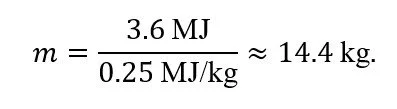
Adding ~30–40% margin for inefficiencies and lower latent fraction gives ~20 kg PCM per 1 m seat as a useful design target.
Salt-hydrate PCMs in this range often have comparable or higher latent heat, but may require additives/encapsulation to control supercooling and phase separation.
Thus a single bench seat could feasibly be equipped with:
~20 kg of PCM modules,
sized to absorb ~1–1.5 kWh of heat during daytime charging.
4.3 Solar input
At mid-latitudes in winter, a small 100–200 W PV panel can generate on the order of 0.4–0.8 kWh on a clear day; in sunnier or longer-day climates, more. Combined with:
thermal collectors (higher instantaneous efficiency than PV),
grid-tie or limited grid assist,
or charging mostly on clear days but providing warmth on marginal nights,
we can architect a semi-autonomous system:
Bench banks that are fully solar in milder climates or shoulder seasons,
Hybrid benches with modest grid support in harsh climates.
Existing literature on salt-hydrate PCMs for PV cooling and TE storage shows similar coupling: PCMs can be charged by PV waste heat or solar thermal collectors and then release energy in the evening.
5. Prototype & Field Test Plan
5.1 Phase 1 – Bench-Scale Prototype
Lab/yard prototype:
Select a PCM (or small set) with melting point ~28–32 °C (e.g., RT28HC / RT31 from Rubitherm, or a salt-hydrate formulation from PCM Products).
Build a 1 m test bench:
Realistic bench surface and frame,
PCM modules integrated beneath,
Insulation and conduction aids,
embedded thermocouples at:
surface,
PCM core,
underside of insulation,
ambient air above and below.
Charge PCM with resistive heater mimicking a realistic solar input:
e.g., 150–200 W heater turned on during “daytime” until the PCM is fully melted and the core reaches ~30–32 °C.
Move the prototype outdoors on cold nights (simulating the target climate), and log temperature curves over 8–12 hours.
Iterate:
Adjust PCM mass, insulation thickness, and seat geometry until you reach the desired time-above-comfort threshold (e.g., seat surface ≥ 25 °C for ≥ 8 h at ambient 0 °C).
5.2 Phase 2 – Solar Integration
Once thermal performance of the bench body is validated:
Integrate a solar subsystem:
Flat-plate thermal collector with pump and heat-exchanger loop embedded in the bench, or
PV + battery + resistive heater with simple charge controller.
Instrument solar input, electrical/thermal output, and PCM charge level over multiple days.
Test in real weather:
observe how often benches fully charge,
how performance degrades through cloudy spells,
whether hybrid designs (small grid backup, or oversizing PV) are warranted.
NREL and others are actively developing salt-hydrate TES systems for buildings; a bench is essentially a small, outdoor, occupant-facing TES unit with a different enclosure.
5.3 Phase 3 – Pilot Deployments
Partner with:
a city (e.g., in Canada, Northern US, Northern Japan, or Northern Europe),
a homelessness service NGO,
or a campus / park system.
Key elements:
Deploy a small cluster (5–20 benches) in varied sites,
Collect multi-season data on:
bench temperatures,
usage patterns (via respectful observation and/or sensors that do not identify individuals),
maintenance / vandalism incidence,
user feedback (via voluntary short surveys and service provider interviews).
Explicitly co-design with unsheltered people and local advocates:
concerns about policing,
location choice,
signage and communication.
6. Costs, Materials, and Scaling
6.1 Materials and suppliers
PCMs: multiple suppliers (Rubitherm, PCM Products, others) offer PCMs in the relevant temperature range, both paraffinic and salt-hydrate.
Encapsulated modules: EPDM/PCM composite panels, pouches, and tubes are already used for building TES and could be adapted to bench geometries.
Solar hardware: mature commodity PV and small thermal collectors; no novel tech required.
Back-of-envelope cost:
20 kg of PCM @, say, 8–12 USD/kg (rough recent costs for some PCMs) → ~$160–240 per seat,
plus modules, bench structure, insulation, and solar hardware.
A first engineering goal would be a total incremental cost per bench on the order of a few hundred dollars over a standard durable bench, which is well within the range of municipal street furniture budgets.
6.2 Maintenance & vandalism
Consider:
Sealed PCM modules to prevent leaks and contamination,
Modular design for easy replacement,
Protective housings for solar/battery units (e.g., pole-mounted with tamper-proof screws),
Design that makes the bench obviously for everyone, not “only for the homeless,” to reduce stigma and potential targeting.
7. Ethics and Social Positioning
We need to be explicit:
A warm bench does not solve homelessness.
It must not be used as justification for cutting shelter, housing, or mental-health budgets.
It should be framed as a harm-reduction and dignity measure, analogous to free public restrooms, water fountains, and naloxone stations.
Best practice:
Co-design with affected communities and service providers.
Evaluate not only thermal performance but social impact:
Do people feel safer?
Does it reduce injuries?
Does it change policing behaviour?
Also ensure:
Surfaces are non-burning, even for people who may be intoxicated or have neuropathy.
Benches are not designed to be hostile (no anti-sleep features); if anything, design them with the possibility of lying or curling up in mind.
8. Conclusion: From Fiction to Hardware
The viral glowing arches of “Japan’s solar heated benches for the homeless” may have been a social-media mirage. But the underlying engineering idea—a solar-charged, PCM-buffered warmth reservoir integrated into street furniture—is not sci-fi. It’s a plausible extension of technologies already under development for buildings and photovoltaics.
If we treat the meme not as fact but as design prompt, and apply existing PCM research with basic heat-balance calculations, we arrive at a defensible humanitarian prototype:
A salt-charged solar warming bench,
20 kg of PCM per seat,
a modest solar charging system,
and careful attention to safety and dignity.
The next step is straightforward and rigorously testable: build one, instrument it, and publish the data. If the data meet the thresholds outlined here, we will have turned false news into a small, concrete piece of true infrastructure.
Works Cited
Jon Salisbury. (2025). It turns out sometimes fake news accidentally stumbles into a real idea. LinkedIn post on “Japan heated benches” meme and PCM feasibility.
PCM Products Ltd. (n.d.). Salt Hydrate Based Positive Temperature PCMs. Retrieved 2025 from PCMProducts.net.
Rubitherm Technologies GmbH. (2020). RT28HC Technical Datasheet.
Ferdjallah, L., et al. (2025). Thermal Characterization of Paraffin-Based Phase Change Materials RT28HC and RT31. Energies, 18(23), 6331.
Yang, H., et al. (2024). Advancements and challenges in enhancing salt hydrate phase change materials. npj Sustainable Development of Energy (NSO 2023–0056).
Li, Y., et al. (2022). Stable Salt Hydrate-based Thermal Energy Storage Materials. Energy & Fuels, 36, 8871–8886.
Liu, Y., et al. (2024). Carbon-Enhanced Hydrated Salt Phase Change Materials for Low-Temperature Thermal Energy Storage. Nanomaterials, 14(5), 1053.
Choo, Y. M., et al. (2022). Salt hydrates as phase change materials for photovoltaics. Energy Science & Engineering, 10(8), 2827–2850.
Valentini, F., et al. (2022). EPDM Panels with Paraffin RT28HC for Building TES. Thermal Science and Engineering Progress, 28, 101098.
U.S. DOE BTO / NREL. (2021). Multipurpose Latent Heat Storage System for Building Applications.
*(plus the market reports and general PCM references used for cost/market context)