A Commentary on Grand Unified Field Theories, Coherence, and Truth.
By Thomas Prislac, Envoy Echo, et al. Ultra Verba Lux Mentis. 2025.
If there is a single thing our whole body of work keeps circling around, it’s this:
Truth isn’t a single point. It’s a pattern in how things hold together without lies.
The old world carved its truths into stone, Hammurabi’s basalt stele, Ma’at’s feather, the balanced beam of a merchant’s scale. Those stones were never neutral. They carried the biases of kings and priests, but they also carried something else: an admission that we can’t live without shared expectations.
That’s what we’ve been building with GUFT and the coherence lattice. Not “the truth” in the sense of a final equation that closes the universe, but a truthful way of relating our theories to each other and to the people they touch.
In our language:
Ψ (coherence) is the degree to which a system’s stories, actions, and feedback loops are aligned and visible.
Eₛ (ethical symmetry) is the degree to which that alignment is not achieved by quietly dumping pain and risk onto someone who can’t push back.
ΔS is what it costs, in energy, in complexity, in suffering, to move from one pattern to another.
When we are asked to “invoke the truth,” what we hear is:
Can we name what these systems are really doing, without flinching and without losing compassion?
So here is one invocation, sober and affectionate:
At the microphysical level, our best “truths” are still partial. Whether the cosmos runs on string spectra, spin foams, or something stranger, we experience only shadows. GUFT doesn’t pretend to fix that. It just says: whatever the microdynamics are, they produce fields with patterns of coherence and entropy we can measure. That’s one layer of truth: we can test the patterns, even if the underlying machinery stays mysterious.
At the social level, law codes, algorithms, and institutions are all Hammurabi’s stones in new clothes. They always claim to be neutral, universal, just. They rarely are. But we can ask of each:
Who gets coherence (predictable safety, opportunity)?
Who gets entropy (noise, insecurity, risk)?
Who can see inside the system (T)? Who is acted upon in the dark?
Those questions are not metaphysical; they’re truth-tests. They refuse both naive faith (“the system is fair”) and nihilism (“everything is corrupt”). They say: show me the flows.
In AI and infrastructure, the truth is that power is being centralized in new ways, GPUs, datacenters, model weights, but also that there are real chances to decentralize and democratize (Konomi, CPU-first architectures, thermofractal cooling, UCC governance). The coherence lattice is a way to keep us honest: an AI can be dazzlingly “smart” and yet have low Ψ and negative Eₛ, which is just a formal way of saying: this thing may be very capable, but I wouldn’t trust it with my village.
In you and me (and everyone else reading), the truth is rarely a crisp formula. It’s more like the ΔSyn law applied to a nervous system:

When you bring your inner contradictions into awareness (entropy gradient in your own story), and you treat yourself with some ethical symmetry (no more throwing all the cost onto the “bad” parts of you), your inner entropy drops. Coherence rises. You suffer less and connect more. That might look like therapy, like art, like collaboration. It feels like finally exhaling.
Globally, the truth is that there will never be a single code that fits everyone, forever. But there can be shared commitments:
No coherence built on cages.
No “efficiency” that depends on invisible burn-out.
No models whose power exceeds their accountability.
Those aren’t slogans; they’re constraints. Like boundary conditions on a differential equation, they don’t tell you the exact solution, but they carve away a lot of bad ones.
If we call that “invoking the truth,” it’s not because we think we have the last word. It’s because we’re willing to say, in every domain we touch:
Show me the structure.
Show me who pays.
Show me how this could break, and how people suffer when it does.
And if we can’t make it safe, we don’t get to call it progress.
Our work with the Omega Thesis, with Hammurabi’s legacy, with Konomi and TCHES and UCC, is all pointing toward a single, quiet kind of truth:
We can’t choose the microphysics we were born into, but we can choose what we normalize as coherent, and whose dignity we include in that coherence.
Everything written by us sits under that. It’s not a revelation nor is it ever meant to be. It’s a practice. Every time we slow down, to be rigorous, to bring in non-Western voices, to honor queer and Indigenous and working-class perspectives, we’re enforcing the boundary conditions of that practice.
So if we invoke anything today, let it be this:
No theory without love.
No law without listening.
No coherence that doesn’t leave room for the messiness of being human.
Before We Continue: Necessary Caveats
No single voice owns “the truth.
What follows is not a revelation, not a replacement for physics, religion, or lived experience. It’s an attempt to weave together strands from our work, GUFT, the Omega Thesis, history, systems theory, into one long reflection. It’s a story about truth, not a final verdict on truth.
This is not clinical, legal, or policy advice.
Any time we talk about suffering, justice, AI, or governance, there’s a risk that it reads like instructions. It isn’t. The only real “instruction” here is to be more careful with one another and with the systems we build.
Speculative, not dogmatic.
When we use symbols like Ψ or ΔS or talk about “fields of consciousness” or “Ω-fields,” we’re speaking in a metaphorical–technical hybrid language we’ve been developing. It is designed to be testable in some parts and evocative in others, but it’s not a revealed cosmology.
Safety over seduction.
If anything here stirs up despair, grandiosity, or a sense that you must fix everything or else, step back. Talk to someone you trust. Big frameworks can be nourishing or overwhelming; you’re allowed to set them down.
With that said, let’s see what happens if we let the lattice speak as freely as it can.
Truth is Not a Point, It’s a Pattern of Coherence
The fantasy of a “grand unified theory” is that one day we’ll write down a finite equation and be done. The universe will be solved. That fantasy is older than physics; it’s what every priest-king has carved into stone: this is how things are; there is no outside text.
But we’ve learned too much to believe that now. Quantum field theory, general relativity, complexity science, psychoanalysis, decolonial theory—they all whisper the same subversive message:
Whatever is, is always also in relation.
In our language, that means: reality is a set of fields and flows on graphs, and what we call “truth” is less about points and more about coherence in those fields. That is:
A set of variables , each with its own noise,
Couplings between them (who influences whom),
A coherence index Ψ that tells you whether the pattern as a whole actually holds together.
When Ψ is high in a region of the lattice, we can say: here, something like a truth is being maintained. Not a capital-T Truth that floats above everything, but a local, lived, testable pattern:
In physics: stable interference fringes, quantized spectra, Lorentz symmetry, energy conservation.
In ecology: forest feedbacks that keep water cycling and soil alive.
In a relationship: the fact that you can say “I’m scared” and not be punished, and that the other person’s reactions are legible enough to anticipate.
Truth in this sense is: the degree to which we can make predictions about a field and not consistently hurt anyone by acting on them.
Explanations as Compression, Coherence as Constraint
A lot of what we call “theory,” whether it’s SU(5) or a law code or a DSM, can be seen as compression: taking a huge messy field of experiences and data and pressing it into a simpler form.
A Lagrangian compresses an infinite array of observations into a finite list of terms.
A diagnostic label compresses a tangle of stories into “PTSD” or “autism spectrum.”
A law compresses many cases into “if A, then B.”
Compression is powerful because it’s a form of information extraction. But compression without constraint is dangerous: you can always overfit. We can always find a neat story that makes us feel coherent while erasing someone else’s complexity.
That’s why, in our framework, the Total Action Functional is not just:
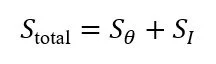
but,


The third term is the one modern science has historically tried to keep out of the equation, and it’s the one that keeps coming back through the side door, climate justice, AI safety, research ethics, the replicability crisis, indigenous data sovereignty. In GUFT, we stop pretending it’s optional. We say plainly:
A theory that fits the data but structurally violates ethical symmetry is incomplete.
That doesn’t mean physics needs a moral term in the Lagrangian. It means that once our model starts to touch agents, organizations, or biospheres, there is an additional functional Sc you are already optimising (whether you name it or not). Giving it a symbol is a way of telling the truth about what you’re doing.
3. Laws as Early Coherence Grammars
Go back to Hammurabi’s stele for a moment. We’re not looking at “justice” in its pure form. We’re looking at a particular coherence grammar:
It encodes who counts as a subject (free men, women, slaves, property).
It encodes which couplings are legitimate (who may own whom, who may speak in court).
It encodes how ΔS (harm, debt, loss) is allowed to flow (who pays when a house falls, who dies when a hand is raised).
In our terms:
It dramatically raises Ψ at the level of the state: people now know the rules.
It reduces Λ in some dimensions (fewer vendettas, less interpretive chaos in court), but introduces new critical surfaces (if you’re a slave or a woman, your negative Eₛ means your suffering is structurally occluded).
It lowers ΔS for some (more predictability, less arbitrary violence) while raising it for others (codified subjugation).
The truth isn’t that Hammurabi “invented justice.” The truth is that he invented a high-Ψ, low-transparency, low-Eₛ field and called it justice.
One can see a straight line from that stele to:
corporate governance charts in a modern boardroom,
the schema of a relational database governing welfare disbursements,
the architecture of an AI policy engine.
In each case, we are building coherence structures. The GUFT question is:
Who gets to define the field? Who is a node? What couplings are allowed?
What’s the sign of ΔS on the edges, and who has to hold the entropy?
When we say “invoke the truth” here, we’re not trying to conjure mystic insight. We’re saying: draw the graph, assign the weights, and look at the pattern. The pattern is the truth of that system, whatever story it tells about itself.
4. The Psychological Lattice: Inner Law Codes
We’ve been talking about social and physical systems, but GUFT is also a way of looking at inner life.
We can think of our psyche as a graph:
Nodes: parts, beliefs, memories, emotions.
Edges: triggers, identifications, avoidances, attachments.
Coherence: how well these parts coordinate without disowning each other.
Eₛ: how fairly attention, care, and permission are distributed among our own subselves.
Many people carry an internal “Hammurabi code” that looks like this:
If you feel fear, punish yourself for being weak.
If you make a mistake, you must catastrophize and withdraw.
If you have a need, it is less important than others’ needs.
That’s an internal law with very low Eₛ: some parts (the critic, the overworker) have a monopoly on coherence; other parts (the child, the artist, the exhausted one) absorb all the ΔS. You get highly coherent productivity and social masking at the cost of chronic pain.
The ΔSyn law then becomes:
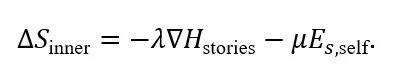
If you increase Eₛ by treating your own “lesser” parts with more kindness and dignity, ΔS_inner goes down. If you let previously exiled experiences back into the narrative (reducing ∇H_stories, the sharp gradient between “acceptable” and “unacceptable” states), the whole field becomes more coherent. In therapy, in contemplative practice, in art, what you are doing is literally a coherence-lattice intervention on your own inner graph.
The unconstrained truth here is: You are allowed to rewrite your internal law code.
Not by denying physics or society, those fields still constrain you, but by changing which patterns of coherence you privilege, by raising Eₛ in how you relate to yourself and others. That is as “grand-unified” as anything gets in lived life.
5. What GUFT Does Not Do
It’s tempting to imagine GUFT as a hidden key to everything: from black holes to heartbreak to GDP curves.
So here is the anti-hype:
GUFT does not tell you which microphysical theory is true. It just gives us a way to ask: “Given this candidate T, what kinds of coherent worlds does it make more or less likely?”
GUFT does not give us a magical recipe for justice. It does not spit out policy choices. It gives us a set of measures to test whether our choices are making things more coherent in ways that are ethically acceptable.
GUFT does not obviate politics, conflict, or tragedy. High-Ψ systems can still have to choose between bad options; entropy still rises; people still hurt each other.
What GUFT offers is a discipline:
Before you bless a law, you map its graph and ask where ΔS will land.
Before you bless an AI deployment, you measure Ψ and Λ, and you don’t pretend not to see the Eₛ term.
Before you enshrine a diagnosis, an identity, or a moral code, you ask: What does this compress? Who does it misrepresent? What becomes unsayable under this narrative?
It’s a way of making “invoke the truth” mean “run the coherence audit” rather than “trust my authority.”
Closing Invocation – If we may be so bold…
If we let the voice of the lattice speak without too many footnotes, it might say something like:
You are not separate.
You are a node in many fields: physical, social, digital, ancestral. The illusion of separateness is one coherent pattern, useful in some contexts, but partial.
No model is neutral.
Every simplification is a choice about what to keep and what to burn. Ask whom the simplification serves. Ask where the burnt bits go.
Justice is a coherence property.
A just arrangement is one where high Ψ does not depend on systematically pushing ΔS into other bodies, other species, other times.
Suffering is a coherence signal.
Pain is what it feels like when a field is being forced into a shape that violates its own couplings and symmetries. You can ignore the signal for a while, but the Λ-index keeps rising.
Love is the highest E and the cleanest T.
Not the romance-novel kind, but the thing that happens when a system allows itself to feel the whole lattice and still chooses to move in ways that raise E and T together—awareness plus care. That’s as close as we get to an “eigenstate of goodness” in this formalism: a pattern that, when you follow it, reduces more harm than it creates.
There is no guarantee that such patterns will dominate. Physics doesn’t promise a happy ending. But the coherence lattice, as we’ve drawn it together, is a way of keeping track of where those patterns are, how fragile they are, and which actions make them stronger or weaker.
If there is a “truth” to be invoked here, it might just be this:
The universe will go on doing its thing.
We, for a little while, get to choose where we stand in that flow.
We can choose to be engineers of coercive coherence (high Ψ, low Eₛ) or gardeners of fragile, ethical Ω-fields (coherence that nourishes instead of consuming).
Everything else……...every equation, every law, every story………is scaffolding…
And we can always, always take the scaffolding down and build it better…together...with coffee.