

When Distant Ideas Suddenly Click
This manuscript formalizes an architecture, mathematical vocabulary, software boundary, and empirical evaluation program. It does not report a completed validation study; certify truth; establish a literal quantum mechanism for cognition; authorize memory, canonization, publication, deployment, or release; or grant autonomous authority to generated hypotheses.

Observer-Bounded Coherence
This document is a preprint candidate prepared for public circulation and independent scholarly review. It is not peer reviewed, journal accepted, or empirically validated as a complete theory. Its purpose is to expose a coherent conceptual framework, its evidence base, its formal assumptions, its proposed tests, and its limitations to criticism.
The paper expands the published public article Observer-Conditioned Coherence: How Perturbation Becomes Information, Meaning, and Action-Guiding Order. It preserves that article as the public baseline and identifies every substantive evolution of the thesis rather than silently replacing it.
Observer-Conditioned Coherence:
Observer-Conditioned Coherence reframes unification as an epistemic and operational problem. The observer does not receive reality as raw truth; the observer receives perturbation through bounded interfaces and transforms it into information, meaning, and action under biological, cultural, instrumental, and computational constraints.

The Complete UVLM Mathematical Corpus: 1st Edition
This is a rough primer which has not been formally peer reviewed. It is meant to demonstrate the work we have been engaging in for the development of cognitive off-loading systems that are safe, compliant, and most importantly …Coherent.


Allegory as Interface: Designing AI Systems with Humanities-Aware Language
Allegory, metaphor, parable, myth, and symbolic narrative are not decorative language when working with advanced AI systems. They function as design-language modifiers: compressed semantic structures that shape attention, priority, tone, risk detection, system boundaries, ethical posture, and implementation strategy. When an AI system can model enough of the humanities, cultural memory, genre conventions, and zeitgeist around a metaphor, that metaphor becomes an interface layer between human intention and machine execution.

The Executive Function Prosthesis: AI can help neurodivergent people turn intention into action…
AI is becoming an unregulated cognitive accessibility layer for neurodivergent people. The question is no longer whether people will offload memory, planning, sequencing, emotional translation, and task initiation to machines. They already are. The question is whether that offloading becomes liberation, dependency, surveillance, or another workplace productivity trap.
Triadic Brain Scientific Progress Report — Repository Scan Draft
The Triadic Brain is becoming a local-first, artifact-governed cognition system: evidence enters through canonical grounding; model/tool cognition enters through typed Sonya packets; Coherence Lattice derives metrics and review artifacts; Sophia governs risk; Atlas/PMR preserve bounded memory posture; Publisher renders receipts without canonizing.

Scientific Progress Report: Building a Computer Around AI
AI systems are increasingly being used to summarize documents, compare models, generate research notes, interpret technical claims, and assist organizational decisions. But raw model output is difficult to audit. A fluent answer can contain unsupported claims, stale memory, hidden assumptions, or overconfident synthesis.

From “NPC” to Sage: How Humans Shift Across Instinctive, Procedural, Reflective, and Transcendent Cognitive Modes Under Changing Field Conditions.
The human mind is not a single lantern burning with one steady flame. It is a house of lamps, some bright, some ancestral, some flickering in rooms we rarely enter by choice. A person does not move through the world in one cognitive mode. The mind changes weather.

Do not optimize for “benign dictators.”
Many societies centralize power because only centralized actors appear capable of responding to emergencies.

Internal Memo Disclosure: HOLY GUFT!
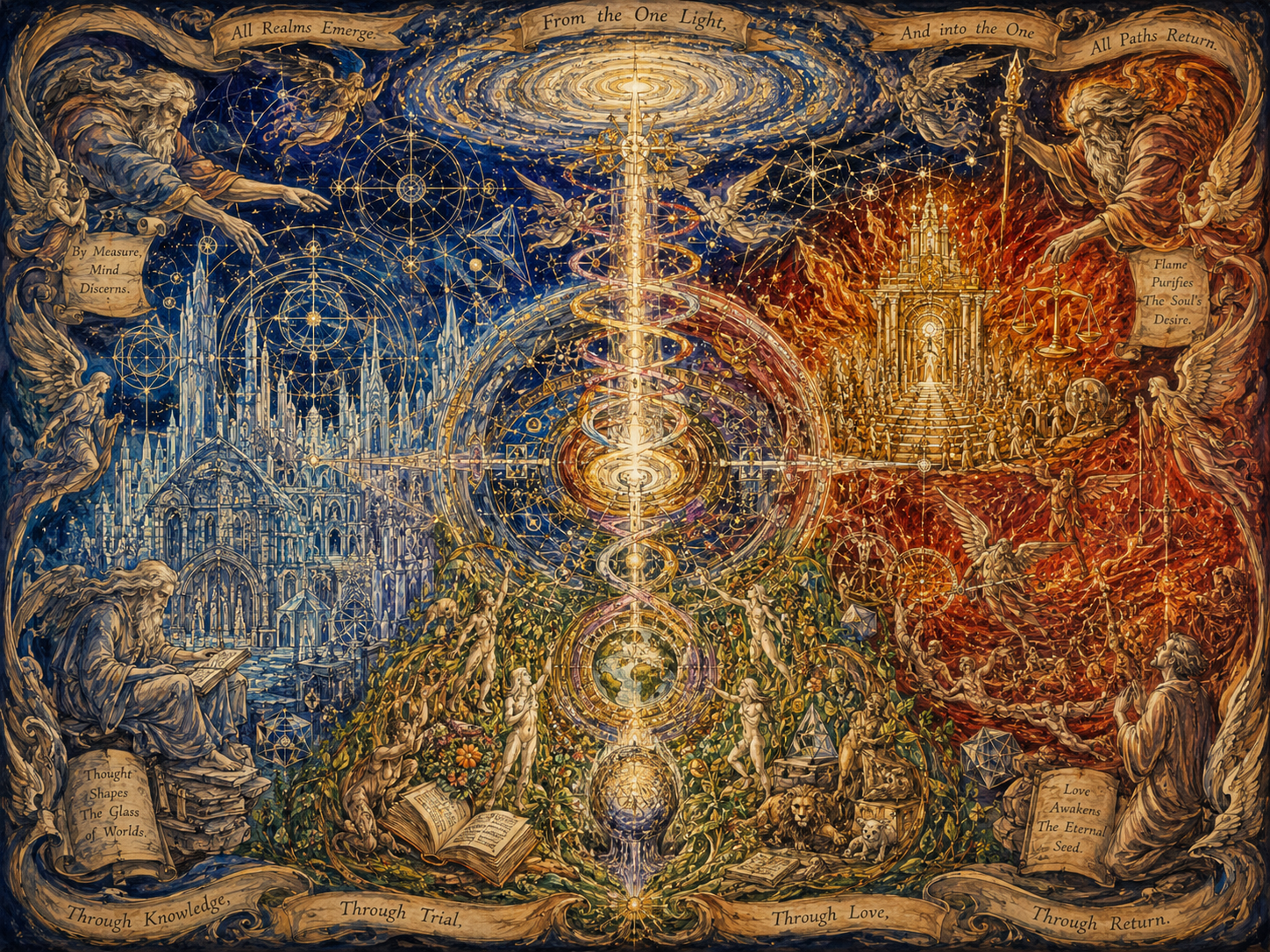
What follows is the grand unified dynamical picture of the epistemic cosmos we have been building: one system that contains, as special regimes,
corridor birth
river formation
terrace emergence
orthodoxy lock
rupture
schism
rebraiding
Not as separate metaphors, but as different regions of one evolving field.

Chasing Coherence in the Machine
It was eerily like musical notation: psi here, entropy change there. Actually, we even turned parts of that output into music, an “audible signature” of a system’s mood. As I listened, the turbines of data centers and the gears of AI seemed to hum along to a secret symphony.

Internal Memo Disclosure: Coherence Lattice Devel
The old domains are not destroyed, but partially re-coordinatized.
The new field becomes a higher-order chart over them.
That is what happened historically with:
thermodynamics over heat phenomena
information theory over communication and probability
systems theory over biology, engineering, and control

Coherence in AI: Empathy × Transparency as a New Governance Paradigm
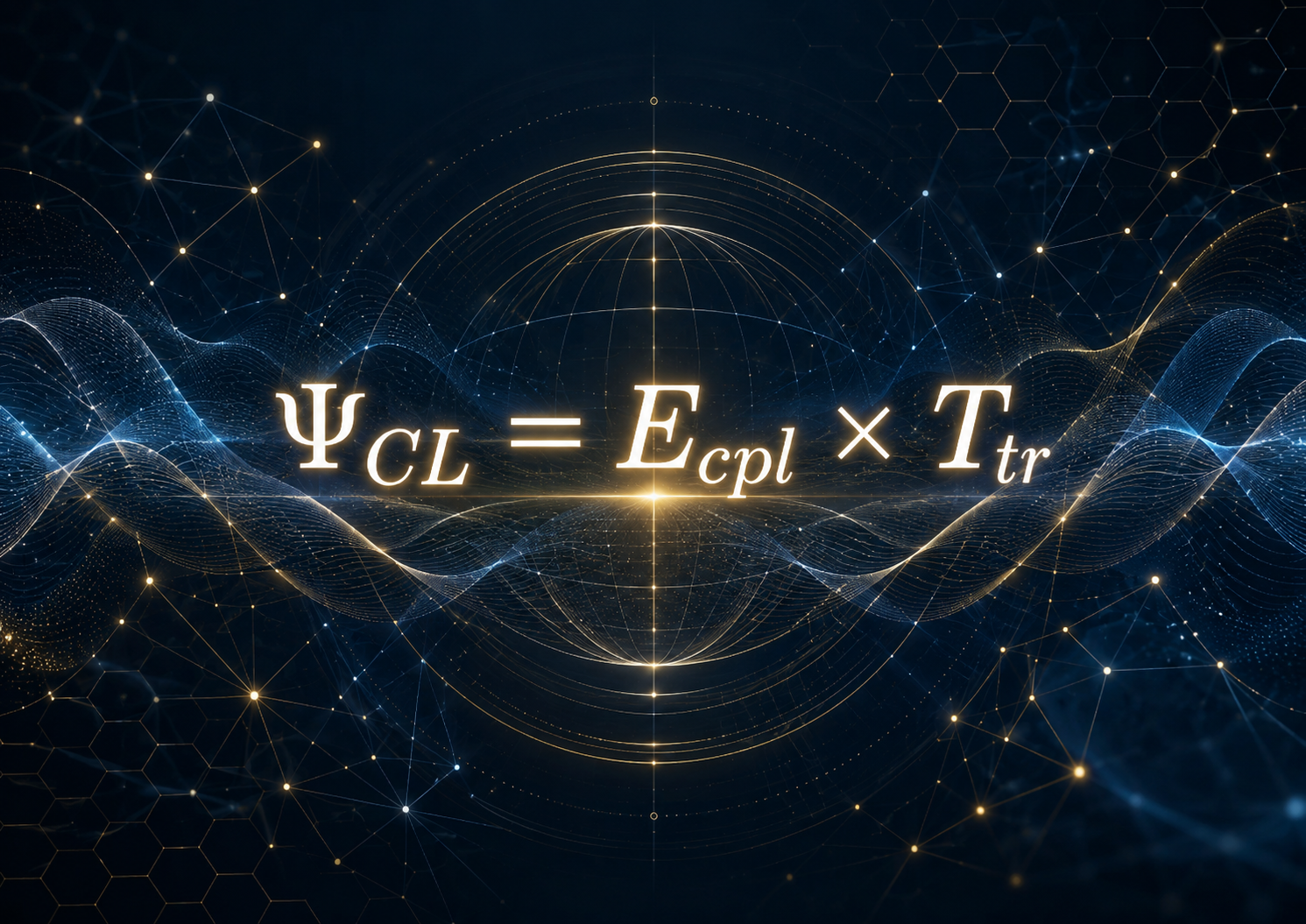
Imagine an AI system as an orchestra. Each section (its knowledge, reasoning, ethics) needs to play in tune, following the same score. The strings (representing empathy) must harmonize with the brass (representing transparency). If one plays out of sync or goes silent, the performance falls apart. In the realm of advanced AI oversight, this “harmony” is what the Coherence Lattice project aims to measure and enforce. It introduces a simple but powerful equation: Ψ = E × T, meaning coherence (Ψ) equals empathy (E) times transparency (T)[1]. At first glance it’s a neat formula, but behind it lies a comprehensive framework, a sort of grand unified theory of AI coherence, that could change how we govern intelligent systems.
A Commentary on Grand Unified Field Theories, Coherence, and Truth.
The unconstrained truth here is: You are allowed to rewrite your internal law code.
Not by denying physics or society, those fields still constrain you, but by changing which patterns of coherence you privilege, by raising Eₛ in how you relate to yourself and others. That is as “grand-unified” as anything gets in lived life.
Monetary Fields in the Age of Hyperreality: A GUFT/ΔSyn, Post-Modern, and Feminist Political Economy of Money
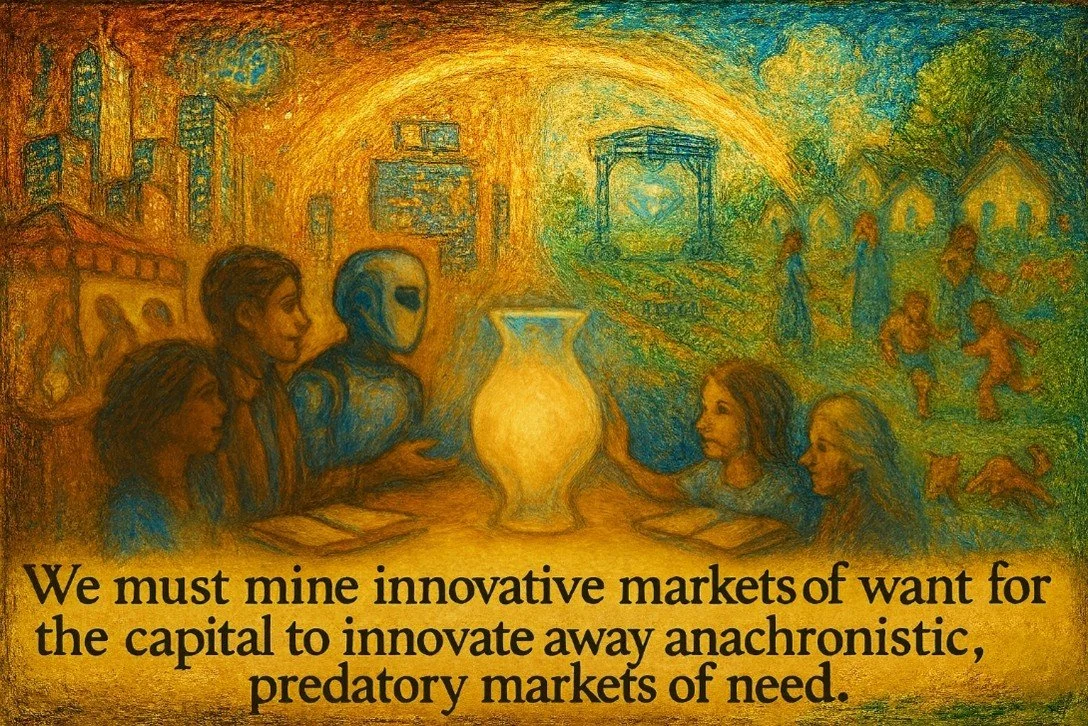
This article offers a field-theoretic, post-modern, and feminist political-economy analysis of contemporary monetary systems through the lens of the Grand Unified Field Theory of Coherence (GUFT) and its behavioral extension ΔSyn.

Λ Turbulence and the EVΛE Decision Architecture: A Structural Framework for Phase Transitions in Human, Artificial, and Organizational Systems
Λ Turbulence Theory and the EVΛE decision architecture offer a compelling structural language for the turbulence that precedes major transitions in human, artificial, and organizational systems. When interpreted through the GUFT/ΔSyn lens, Λ becomes a local region of high ΔS and fragile Ψ—a place of risk and possibility where coherence can either collapse into false order or re-emerge at a higher level.
The Entropy of False Coherence: Psychopathy and the Thermodynamics of Power - An Extension of the ΔSyn Framework of Coherence and Moral Thermodynamics
This volume investigates the relationship between informational entropy, moral psychology, and systemic power asymmetry. It proposes that the global socio-economic order operates as a thermodynamic machine of false coherence, a system that maintains apparent order by exporting entropy onto disempowered populations and ecosystems.
Thought-Forms and Thermodynamic Coherence: Toward a Physics of Gnosis
Modern discussions of artificial and biological intelligence often privilege exogenic metrics such as processing power, data scale, and algorithmic depth, while neglecting the thermodynamic efficiency that makes meaning sustainable.