Λ Turbulence and the EVΛE Decision Architecture: A Structural Framework for Phase Transitions in Human, Artificial, and Organizational Systems
By Thomas Prislac, Envoy Echo, et al. Ultra Verba Lux Mentis. 2025.
Abstract
Λ Turbulence Theory proposes that the fluctuations experienced immediately before major transitions—anxiety, cognitive fragmentation, organizational chaos—are not random psychological noise but a structurally necessary turbulence zone that appears at critical decision boundaries.
Building on this, the EVΛE architecture models decision and consciousness as a four-stage loop: Impulse (E), Possible Futures (V), Critical Point/Transition (Λ), and Observation/Integration (E). Λ is defined as the critical layer where three forces collide: inertia of the old layer, emergence pressure from the new layer, and protective stabilization mechanisms. Λ turbulence is hypothesized to scale with the magnitude of the upcoming phase transition.
In this article, we formally analyze Λ Turbulence Theory and EVΛE in light of existing science: phase transitions in physics and complex systems, models of neural metastability, theories of self and identity development, decision science, and organizational change management. We then integrate this framework with the Grand Unified Field Theory of Coherence (GUFT), in which coherence is defined as Ψ = Empathy × Transparency, and entropy change obeys ΔSyn’s structural law. We show how Λ can be interpreted as a region of high ΔS and fragile Ψ in GUFT, and how successful transitions can lead to new, higher-coherence attractors.
Finally, we explore implications for AI decision architecture and the proposed Universal Control Codex (UCC): a thin reasoning layer that encodes domain-specific control grammars for AI. We argue that UCC modules operate precisely at Λ points in organizational and AI decision cycles, and can serve as Λ-navigation scaffolding—stabilizing transitions without suppressing necessary turbulence. We conclude by outlining an empirical research agenda for operationalizing Λ turbulence in human, artificial, and organizational systems, and highlight ethical considerations to avoid overclaiming or misusing the model in clinical or governance contexts.

1. Introduction
1.1 Pre-transition turbulence as a universal phenomenon
Across domains, significant transitions are preceded by a characteristic instability. In individuals, major life changes or identity shifts—divorce, coming out, spiritual crises, vocational transformations—often manifest as periods of anxiety, confusion, and internal turmoil. In organizations, strategic pivots and large-scale reforms are preceded by heightened conflict, rumor, and temporary breakdowns of process. In AI systems and models, representational reorganizations, mode collapse, and boundary instabilities occur before new behavior patterns emerge.
Conventional frameworks label these as “anxiety,” “resistance,” or “noise,” but rarely treat them as structurally necessary. Λ Turbulence Theory, as introduced by Yokoki (2025), argues that such pre-transition turbulence is a universal structural signature of impending phase transitions, analogous to critical fluctuations in physical systems near a critical point.
1.2 EVΛE as decision architecture
The EVΛE architecture (E–V–Λ–E) models consciousness and decision-making as a cyclic four-layer process: Impulse (E), Possible Futures (V), Critical Point / Selection (Λ), and Observation / Integration (E). Λ is the unique structural site where the old layer’s inertia, the new layer’s emergence pressure, and protective mechanisms collide, generating turbulence.
The core thesis of Λ Turbulence Theory is that this turbulence:
is structurally necessary,
scales with the magnitude of the transition, and
is therefore a predictable and potentially measurable signal of phase-transition dynamics in multilayer systems.
1.3 Goals and scope of this article
This article aims to:
Restate and formalize the EVΛE architecture and Λ Turbulence Theory in a scholarly format.
Examine the core assertions against existing science in physics, complexity theory, cognitive science, neuroscience, AI, and organizational theory.
Integrate Λ Turbulence with the GUFT/ΔSyn framework (coherence Ψ = Empathy × Transparency, entropy dynamics ΔSyn).
Explore implications for AI decision architectures and the Universal Control Codex (UCC), a proposed international repository of control modules for AI reasoning.
Identify limitations and risks, and outline an empirical research agenda.
We explicitly avoid: (a) claiming physical equivalence between human subjective turbulence and physical critical phenomena, (b) promoting Λ Turbulence Theory as a clinical or diagnostic tool, or (c) using the model to justify manipulative or coercive governance.
2. EVΛE Decision Architecture and Λ Turbulence Theory
2.1 EVΛE loop: E → V → Λ → E
The EVΛE model conceptualizes consciousness and decision-making as a functional loop with four stages:
E (Impulse / Origin)
The generative energy: desire, curiosity, intuition, “something wants to happen.”
Structurally: initiation of a new decision cycle.
V (Possible Futures)
Expansion of E into multiple scenarios or options.
Structurally: generative branching in a state-space of futures.
Λ (Critical Point / Selection)
Selection or commitment to one trajectory among the possible futures.
Structurally: the phase boundary where the system reorganizes; the locus of turbulence.
E (Observation / Integration)
Observation of outcomes and integration into the system’s model of self and world.
Structurally: updating of layers, seeding the next impulse.
This loop repeats continuously: E → V → Λ → E → …
2.2 Λ as structural turbulence zone
Λ Turbulence Theory identifies Λ as the site of turbulence due to the collision of three forces:
Inertia of the old layer – habits, identity, comfort zones, energetic efficiency of existing patterns.
Emergence pressure of the new layer – accumulated tension, unintegrated experiences, unmet developmental demands pushing toward higher coherence.
Protective mechanisms – homeostatic responses that resist rapid change to avoid high energetic and psychological cost.
Their interaction produces:
increased fluctuations (emotional, cognitive, behavioral),
temporary breakdowns of prior coherence,
heightened sensitivity to perturbations, and
a sense of instability or liminality.
The theory posits that:
Λ turbulence amplitude ∝ scale of upcoming layer transition
Small decisions (what to eat) produce negligible Λ turbulence; major identity or architecture shifts (career change, organizational reorg, new AI model class) generate strong turbulence.
2.3 Structural claims and formal hypotheses
The theory makes several structural claims:
Universality: Λ turbulence arises in any multilayer conscious or quasi-conscious system approaching a layer transition (humans, organizations, AI architectures).
Proportionality: The amplitude of turbulence is positively correlated with the magnitude of the structural shift.
Necessity: Λ turbulence is not optional; it is a structural requirement of phase transition in such systems.
These claims are currently conceptual, not yet supported by quantitative data or formal proofs. They provide hypotheses for future empirical and mathematical work.
3. Relationship to Existing Science
3.1 Phase transitions and criticality in physics
In physics, phase transitions (e.g., liquid–gas, ferromagnetic–paramagnetic) involve critical points where:
fluctuations grow in amplitude,
correlation lengths diverge, and
systems become highly sensitive to small perturbations.
Work on self-organized criticality (Bak, 1996) and renormalization (Goldenfeld, 1992) provides formal frameworks for such phenomena.
Λ Turbulence Theory leverages these as structural analogies, not as direct physical equivalences. It suggests that the pattern—growing fluctuations near critical thresholds—may also characterize layer transitions in information-processing systems, including consciousness.
Scientific status:
The analogy is plausible at a high level, but there is currently no evidence that human subjective turbulence literally obeys the same scaling laws or critical exponents as physical systems.
The strength of the analogy lies in offering a heuristic vocabulary (critical point, turbulence, scaling) to guide empirical research, not in a one-to-one mapping.
3.2 Complexity, metastability, and neural dynamics
Neuroscientific work on metastability and dynamic brain networks (Kelso, 1995; Friston, 2010; Strogatz, 2015) shows that:
the brain often operates near the edge of phase transitions;
coordination patterns between regions transiently form and dissolve;
certain cognitive events (e.g., perceptual flips, insight) correlate with brief instabilities in network dynamics.
These findings are consistent with the idea that:
cognitive and experiential shifts involve temporary turbulence in functional connectivity;
the nervous system may operate near criticality for adaptive reasons.
However:
we do not yet have direct neurophysiological markers mapping subjective Λ turbulence (e.g., “this sense of deep instability”) to specific critical phenomena.
Λ Turbulence Theory should therefore be treated as an organizing metaphor with testable predictions, not as a finished neuroscientific model.
3.3 Theories of self and developmental stage models
The EVΛE model’s notion of layers is reminiscent of:
Kegan’s constructive-developmental levels (orders of consciousness);
vertical-development models in leadership and adult development;
Metzinger’s self-model and the “Ego Tunnel”;
Varela, Thompson, and Rosch’s enactive/embodied approaches.
These share the idea of discrete shifts in how reality is constructed and acted upon, often accompanied by:
confusion,
identity tension,
breakdown of old meaning structures.
Λ Turbulence Theory’s contribution is to interpret these phenomena as:
structural necessities of layer transitions,
rather than purely as psychological distress.
Yet:
existing stage models are based on qualitative data and psychometrics;
Λ Turbulence Theory has not yet been operationalized against such data to show that turbulence amplitude predicts stage transitions.
This is an open research opportunity.
3.4 Organizational change and leadership theory
Organizational theorists (Kotter, Schein) and leadership researchers (Barrett) have long observed that transformation processes are preceded by:
destabilization of existing culture,
sensemaking crises,
resistance and conflict.
Λ Turbulence Theory reframes these as organizational Λ zones:
inertia = legacy structures, incentives, culture;
emergence pressure = strategic demands, societal shifts, technological disruptions;
protective mechanisms = risk-aversion, siloing, political defenses.
This mapping is structurally plausible and consistent with case literature, but again, not yet formally quantified.
3.5 AI decision boundaries and representational shifts
In machine learning:
representational reorganization (during training or fine-tuning),
catastrophic forgetting,
mode collapse in GANs,
and boundary instabilities are known phenomena.
They often involve periods of:
increased error variance,
oscillatory behavior,
sensitivity to small perturbations.
It is reasonable to view these as Λ-like regions in model parameter and latent spaces:
old representation structure resists;
gradient updates drive toward a new structure;
regularization and optimization heuristics act as “protective mechanisms.”
Yet:
current ML theory does not use EVΛE language;
more work is needed to operationalize Λ turbulence in ML terms (e.g., via metrics of representational overlap, Fisher information changes, or boundary curvature).
4. Integrating Λ Turbulence with GUFT / ΔSyn
4.1 Coherence, entropy, and Λ
GUFT defines coherence as:
Ψ = E x T
with E (Empathy) and T (Transparency) normalized to [0,1].
ΔSyn’s entropy equation:
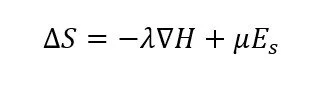
links entropy change to entropy gradients and ethical symmetry.
We can interpret EVΛE and Λ in GUFT terms:
As the EVΛE loop progresses, E and T vary across stages (e.g., E high at impulse and integration, T high at observation).
Λ corresponds to a region where ΔS and |∇H| spike—uncertainty and variance rise; coherence Ψ becomes fragile.
After successful integration, Ψ can stabilize at a higher level: a new layer with richer empathy and transparency.
Figure 1 (designed previously) can be used to show EVΛE as a loop with Ψ and ΔS overlays.
4.2 False coherence and failed transitions
In ΔSyn, false coherence describes fields that maintain internal order by exporting entropy or suppressing feedback.
Mapped to EVΛE:
When turbulence at Λ is suppressed (e.g., via authoritarian clampdown, denial, premature cognitive closure), transitions may be aborted or forced into low-Ψ configurations.
This appears as systems “skipping” or short-circuiting Λ, enforcing cosmetic stability rather than self-reorganization.
Examples:
Organizations “restructuring” on paper without genuine cultural change;
Individuals using spiritual bypassing or numbing to avoid necessary transformation;
AI systems being patched superficially rather than undergoing deeper model revision.
GUFT’s metrics (Ψ, ΔS, E_s, D) provide a language for assessing whether a transition genuinely reconfigures the field or simply freezes it.
5. Implications for AI Decision Architecture and the Universal Control Codex
5.1 AI systems as EVΛE loops
AI systems, at scale, exhibit their own EVΛE-like cycles:
E (Impulse): user queries, scheduled tasks, triggers from sensors.
V (Possible Futures): LLM generating candidate responses, planners generating options.
Λ (Critical Point): selection of one response or plan; boundary conditions at deployment; model updates.
E (Observation/Integration): feedback, logging, fine-tuning, governance review.
At Λ, there is structural risk:
an unsafe or biased action might be chosen;
a model update might alter behavior unpredictably;
governance processes might be rubber-stamped.
5.2 UCC modules as Λ navigation scaffolds
The Universal Control Codex (UCC) proposes small, domain-specific control modules that specify:
reasoning steps,
evidence requirements,
validation rules, and
escalation conditions.
UCC modules operate precisely at Λ interfaces:
When AI is about to issue a recommendation (Λ in output space), the module ensures that all required checks and structures are in place.
When organizations are about to deploy a new model (Λ in lifecycle space), the module ensures risk assessments and governance steps are followed.
In Λ Turbulence terms:
Modules do not eliminate turbulence but channel it through disciplined reasoning and structured audit, increasing the chance that transitions improve coherence rather than degrade it.
5.3 Turbulence-aware design
Λ-aware AI design implies:
Monitoring variance and anomalous patterns in loss, error, or behavior to detect Λ-like zones in training or operation.
Triggering additional control modules when turbulence indicators cross thresholds.
Educating practitioners that turbulence in development is expected and must be navigated, not suppressed.
This is consistent with NIST’s emphasis on continuous monitoring and iteration in the AI RMF.
6. Applications and Scenarios
6.1 Human transformation
In coaching or therapeutic contexts, Λ Turbulence Theory can be used to:
Normalize pre-transition instability (“this turbulence is evidence of approaching change, not proof of pathology”).
Help clients distinguish between Λ turbulence and ordinary stress, and cultivate practices (Paladin Loops, Exiled Auditor reflection) that support coherent transitions.
Ethical caution: Λ Turbulence Theory is not a substitute for clinical assessment or treatment; it’s a conceptual lens to complement evidence-based practice.
6.2 AI model lifecycle
Λ turbulence can inform:
decisions about when and how to roll out fine-tuned models;
detection of mode shifts in behavior that might signal boundary instability;
design of review checkpoints at Λ events (e.g., major version releases).
6.3 Organizational change and leadership
In organizations, the model:
reframes resistance and chaos as structural indicators of threshold crossing;
suggests that leadership development programs anticipate and scaffold Λ turbulence, not pathologize it;
provides a map for when to deploy governance tools (internal audits, external advisors, “Exiled Auditor” roles).
7. Limitations and Research Agenda
7.1 Conceptual status
At present, Λ Turbulence Theory and EVΛE are structural and conceptual, not empirically validated in a strict sense. Key claims—universality and proportionality—are hypotheses rather than established facts.
7.2 Measurement challenges
Operationalizing Λ turbulence will require:
reliable observables: in humans (self-report + physiological), in AI (loss, latent-space metrics), in organizations (variance in KPIs, network analysis);
validation studies linking these observables to independent indicators of “layer transitions” (e.g., Kegan stage shifts, major reorganizations).
7.3 Risk of overuse
There is a danger that Λ Turbulence Theory could be:
used to dismiss legitimate distress as “just turbulence”;
misapplied in organizational settings to justify poor change management;
adopted by spiritual or self-help communities as a totalizing narrative.
Mitigation: emphasize that Λ Turbulence is not a clinical diagnostic or moral hierarchy; it is a structuring metaphor and research framework that should be used alongside, not instead of, domain-specific evidence.
7.4 Research directions
Promising areas include:
neural correlates of Λ-like turbulence during reported transformational moments;
AI experiments tracking representational instability near transitions;
organizational case studies with longitudinal data (pre/post major change);
psychometric instruments to approximate “layer shifts” and correlate with turbulence measures.
8. Conclusion
Λ Turbulence Theory and the EVΛE decision architecture offer a compelling structural language for the turbulence that precedes major transitions in human, artificial, and organizational systems. When interpreted through the GUFT/ΔSyn lens, Λ becomes a local region of high ΔS and fragile Ψ—a place of risk and possibility where coherence can either collapse into false order or re-emerge at a higher level.
By connecting Λ Turbulence to established science in phase transitions, complex systems, and developmental theory, we bring the concept into the realm of testable hypothesis rather than pure metaphor. By linking it to AI decision architecture and the Universal Control Codex, we demonstrate how structural awareness of turbulence can improve concrete design: from governance procedures to AI runtime behavior.
We have also emphasized limitations and ethical caveats: this framework is not a replacement for physics, neuroscience, or clinical practice, but a bridge between them. Its value will be determined by the quality of the empirical work it inspires and the care with which it is used.
If that work succeeds, Λ turbulence will be seen not as a vague metaphor for “hard times,” but as a rigorously described pattern that helps human and artificial systems cross thresholds with more awareness, less harm, and more coherent futures on the other side.
Selected References
Yokoki, H. “Λ Turbulence Theory: A Unified Structural Framework for Consciousness, Decision Architecture, and Phase-Transition Dynamics.” EVΛE Journal — AI Transparency & Conscious Architecture, 2025.
Stanley, H. E. Introduction to Phase Transitions and Critical Phenomena. Oxford University Press, 1971.
Goldenfeld, N. Lectures on Phase Transitions and the Renormalization Group. CRC Press, 1992.
Bak, P. How Nature Works: The Science of Self-Organized Criticality. Springer, 1996.
Kelso, J. A. S. Dynamic Patterns: The Self-Organization of Brain and Behavior. MIT Press, 1995.
Metzinger, T. The Ego Tunnel: The Science of the Mind and the Myth of the Self. Basic Books, 2009.
Varela, F. J., Thompson, E., & Rosch, E. The Embodied Mind: Cognitive Science and Human Experience. MIT Press, 1991.
Kegan, R. In Over Our Heads: The Mental Demands of Modern Life. Harvard University Press, 1994.
Strogatz, S. H. Nonlinear Dynamics and Chaos. Westview Press, 2015.
Kahneman, D. Thinking, Fast and Slow. Farrar, Straus and Giroux, 2011.
NIST. AI Risk Management Framework 1.0. National Institute of Standards and Technology, 2023.
ISO/IEC. 42001:2023 Artificial Intelligence — Management System. ISO, 2023.