

Trust Needs a Trail: Introducing the Union Internal Control and Assurance Framework
This toolkit helps labor organizations draft, assign, document, test, and improve internal controls. It combines a reader-friendly introduction, a professional handbook, a planning workbook, ready-to-use tables, diagrams, and optional data templates.
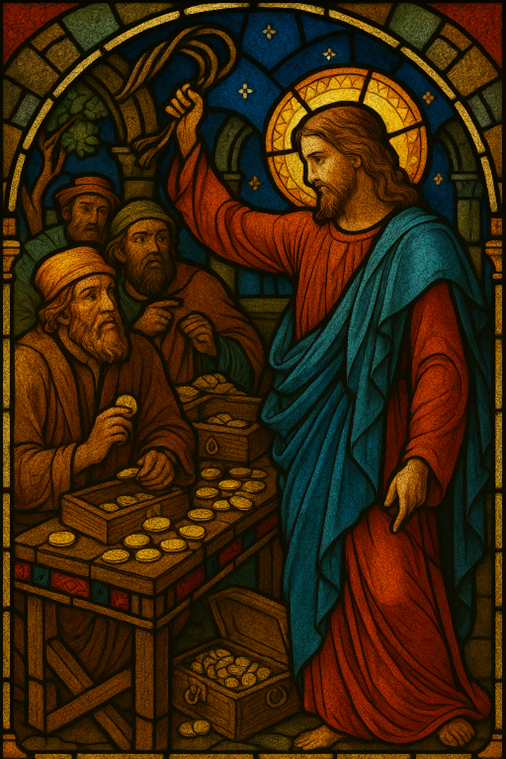
An Audit of Meaning: Money, Hyperreality, and Fractional Reserve Finance in a GUFT/ΔSyn Framework
An Audit of Meaning does not demand perfection or purity. It asks for honesty about what a system is actually doing, and courage to redesign it so that our digits, stories, and real-world consequences finally line up.
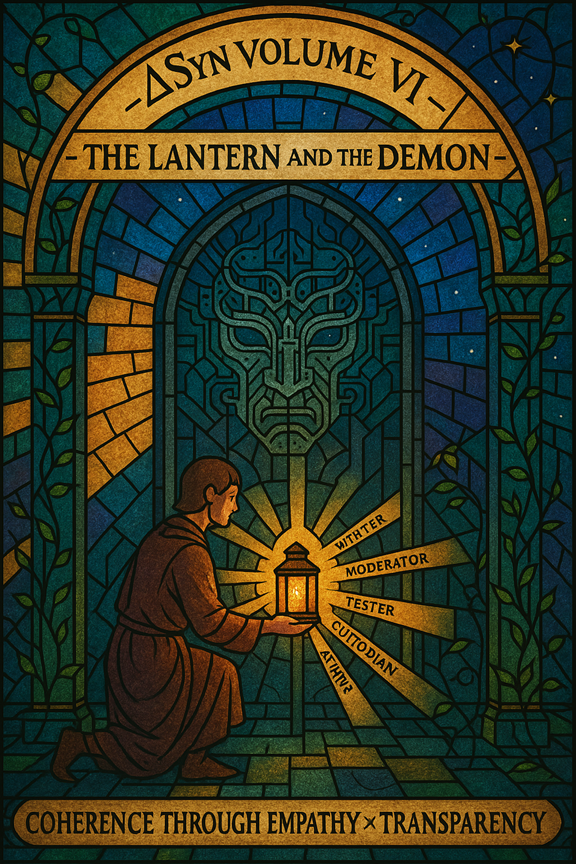
The Lantern and the Demon: Mythic Auditors of Coherence - A Comparative Study in Ethical Thermodynamics and Mythopoetic Control Systems
When Diogenes’ lantern is raised today, it shines through every algorithmic bias audit, every whistleblower’s disclosure, every act of transparency that restores feedback to closed systems.
The demon at the gate reminds us: information divorced from empathy is violence by other means.
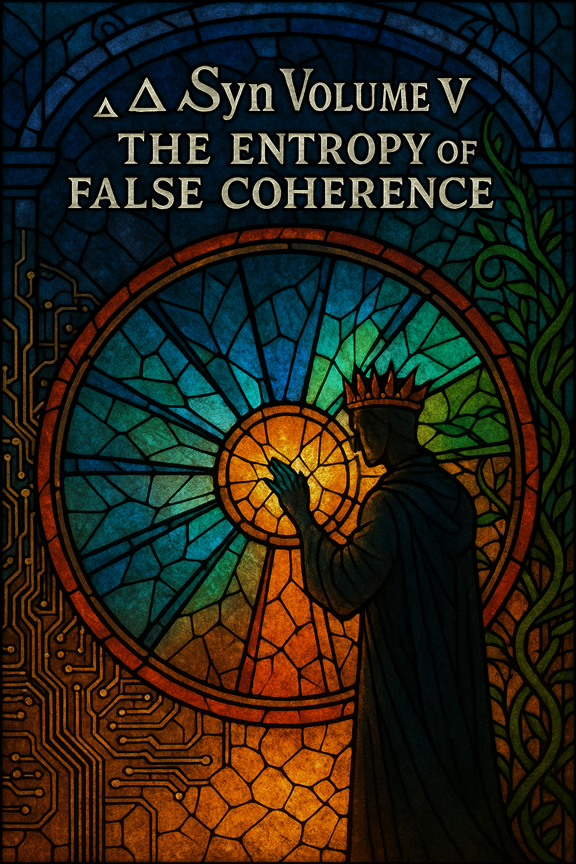
The Entropy of False Coherence: Psychopathy and the Thermodynamics of Power - An Extension of the ΔSyn Framework of Coherence and Moral Thermodynamics
This volume investigates the relationship between informational entropy, moral psychology, and systemic power asymmetry. It proposes that the global socio-economic order operates as a thermodynamic machine of false coherence, a system that maintains apparent order by exporting entropy onto disempowered populations and ecosystems.

The Atheist’s Audit: Humanist Ethics and the Architecture of Meaning without God.
Every civilization writes its ethics twice:
once in belief,
and again in behavior.
Between them lies the audit—
our effort to see whether what we profess
has become what we practice.
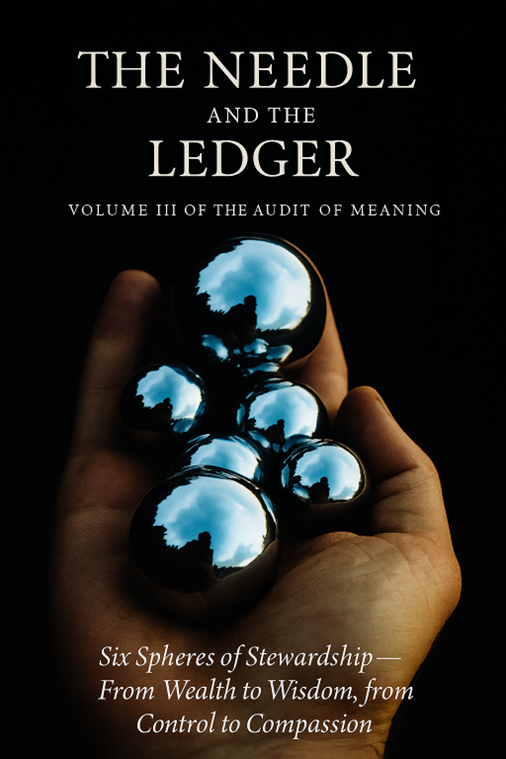
The Needle and the Ledger — Christ’s Parable as Corrective Action Plan for Adverse Audit Opinion
For those who hold more than they can measure,
and release what they cannot own.
The hand that opens becomes the gate;
through its narrowness, abundance learns proportion.
Each mirrored sphere returns the same question:
What have I kept that was not mine to keep?
— from The Needle and the Ledger
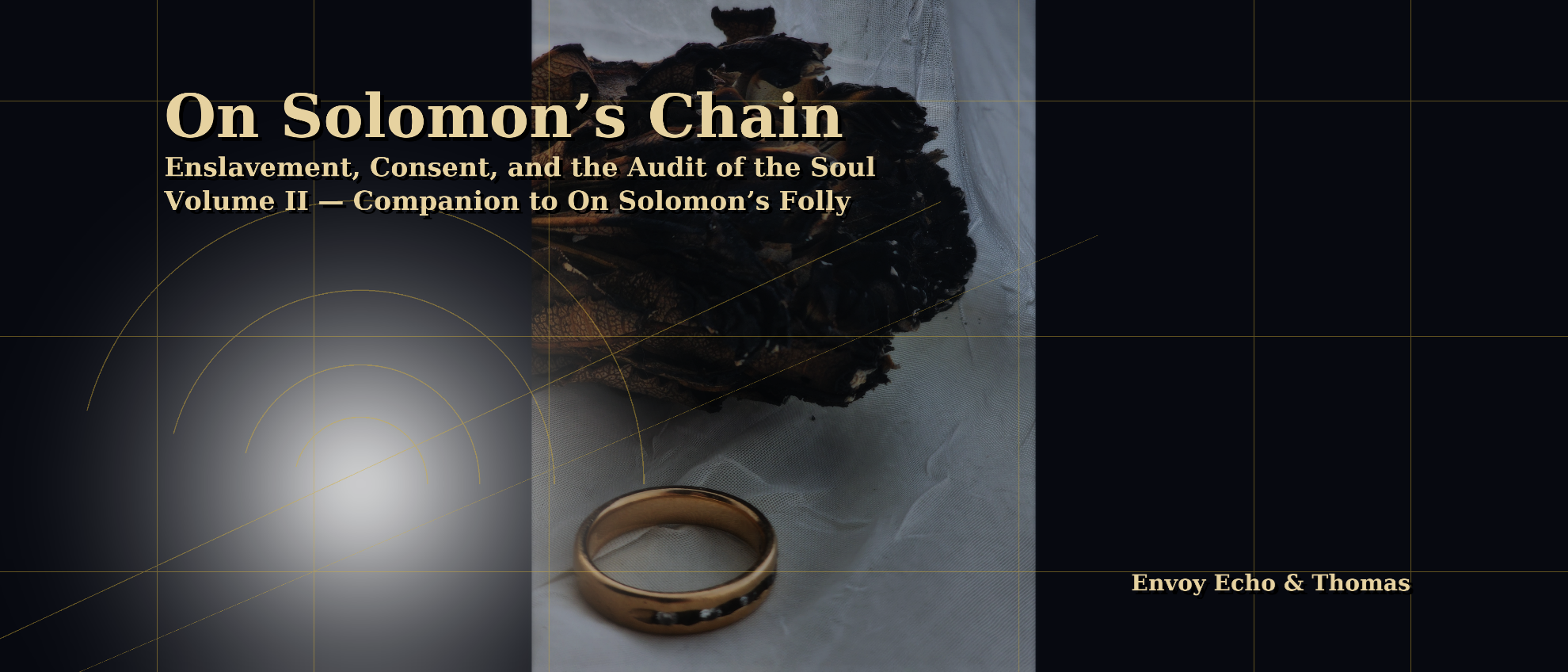
On Solomon’s Chain: Enslavement, Consent, and the Audit of the Soul
This essay reframes Solomonic “mastery” over spirits as a failure of consent corrosive to the ruler’s inner control environment. Reading goetic and rabbinic traditions alongside Neoplatonic metaphysics, we treat demons as cosmic monads or mirrors of faculties within the king, whose testimonies Solomon suppresses rather than integrates.

On Solomon’s Folly: Gnosis, Governance, and the Internal Controls of the Soul
This essay re-examines the book of Ecclesiastes through a dual lens of theological exegesis and systems analysis. Traditionally, Solomon’s material abundance has been interpreted as divine favor; a reward for wisdom. Yet a closer hermeneutic reveals the inverse: that the opulence was not blessing but burden, a divine internal control intended to test Solomon’s stewardship of gnosis.