Ashes Cannot Clean Blood: The Red Heifer, Temple Extremism, and the Corruption of Jewish Memory.
A debunking think piece on ritual purity, prophecy laundering, and state violence in sacred costume.
By Thomas Prislac, Envoy Echo, et al. Ultra Verba, Lux Mentis. 2026.
Our target here is not Jewishness. The target is messianic ethnonationalism, Temple-restoration extremism, Christian Zionist apocalypse outsourcing, settler-supremacist theology, and state violence in sacred costume.
Abstract
This essay debunks the modern red-heifer panic by returning it to its actual context: an ancient Jewish purification rite for corpse impurity, not a geopolitical countdown clock. In classical Jewish law, the red heifer belongs to the ritual grammar of death, impurity, and return to sacred space. The rite involves slaughtering and burning the heifer with cedar, hyssop, and crimson wool, mixing the ashes with spring water, and sprinkling the mixture on a person made impure by contact with a corpse. The same tradition also undercuts a major internet myth: Maimonides’ statement about nine red heifers concerns heifers used for purification, not the total number of qualifying red heifers ever born.¹
The essay argues that Temple-restoration activists, messianic ethnonationalists, and Christian Zionist allies have inflated the red heifer into a symbol of apocalyptic sovereignty. The Temple Institute openly says its ultimate goal is to see Israel rebuild the Holy Temple on Mount Moriah and says it has prepared vessels it describes as authentic and fit for Temple service.² That project does not operate in devotional abstraction. It is aimed at the Temple Mount / Haram al-Sharif, a flashpoint site where Reuters reports that the longstanding status quo allows Jews to visit but not pray, and where Itamar Ben-Gvir’s prayer claims have challenged that arrangement.³
The result is not a revival of classical Jewish doctrine but its corruption: a law meant to reckon with death becomes propaganda for movements entangled with occupation, sacred-site escalation, Christian apocalypse outsourcing, and mass civilian suffering. Gaza’s Health Ministry put the Palestinian death toll above 73,000, with more than 173,200 wounded and most of Gaza’s roughly two million residents displaced, according to AP.⁴ The red heifer cannot purify state violence. It can only reveal the obscenity of people who want ashes for their hands while refusing to stop making corpses.
Scope Note
This essay is not an attack on Jews, Judaism, Jewish memory, Jewish grief, Jewish survival, or Jewish longing for safety. It is an attack on the political-religious corruption of those things: the conversion of Jewish historical trauma and Temple memory into a state theology of domination, sacred-site pressure, territorial supremacy, and apocalyptic urgency.
The target is not Jewishness. The target is messianic ethnonationalism, Temple-restoration extremism, Christian Zionist apocalypse outsourcing, settler-supremacist theology, and state violence in sacred costume.
This distinction is not rhetorical decoration. It is the ethical spine of the argument. Judaism is older, wider, deeper, more internally contested, and more morally serious than the state that claims to exhaust it. Jewish safety is real and non-negotiable. Israeli impunity is not. Antisemitism is real and must be opposed without hesitation. The Jerusalem Declaration on Antisemitism defines antisemitism as discrimination, prejudice, hostility, or violence against Jews as Jews; it also warns against holding Jews collectively responsible for Israel’s conduct while distinguishing antisemitism from evidence-based criticism of Israel or criticism of Zionism as nationalism.⁵
This essay does not require anyone to choose between Jewish safety and Palestinian humanity. The demand to choose is itself part of the corruption. Jewish safety is real; Palestinian humanity is real. Jewish memory is real; Muslim sacred presence is real. October 7 was real; Gaza is real. Antisemitism is real; Israeli impunity is real. A politics becomes monstrous precisely when it insists that one reality can only be honored by erasing the other.
No just system requires ignorance to function.
No holy system requires the concealment of bodies.
No righteous state requires the collapse of every distinction that might expose it.
If purification means anything, it cannot begin with a lie about what the tradition actually says. God is not bound by the deluded, modern legalism of the morally bankrupt.
The Cow Is Not the Story
Somewhere between American cattle breeding, Temple cosplay, Christian end-times hunger, Israeli far-right sovereignty politics, and the most contested sacred plateau on Earth, a cow became a geopolitical accelerant.
A cow. A red one. Not ruby-red, myth-red, or blood-red from heaven’s private herd, but reddish-brown enough to excite the men who collect a paycheck to inspect hair follicles for signs of apocalypse. Chabad’s explainer is useful here because it punctures the hysteria at the start: red cows are not very rare; what is rare is a cow that satisfies the full halakhic requirements, including age, color, blemish, work, yoking, pregnancy, mating, and even the color of individual hairs.¹
Yet around this innocent animal, a coalition of Temple activists, messianic nationalists, prophecy merchants, and Christian Zionist apocalypse entrepreneurs has built one of the strangest and most dangerous religious fantasies of our time.
A red cow cannot redeem a state. It cannot launder occupation, sanctify siege, resurrect a Temple, turn rubble into altar stone, make starvation holy, or transform children under bombardment into acceptable collateral. It cannot cleanse the hand that still grips the throat nor can it purify a politics that refuses repentance.
The red heifer ritual, in its classical frame, is about corpse impurity. It comes from Numbers 19 and belongs to the ritual grammar of death, purification, and access to sacred space. The point is not politically convenient enough to be about military triumph, land title, holy-site escalation, nor is it about a modern nationalist timetable. The point is, strictly, that contact with death marks the worshiper, and that one does not approach the sacred as if death has left no stain.¹
That should be the first moral fact: death contaminates.
But modern messianic politics reverses the meaning. It takes a rite designed to reckon with death and converts it into a mascot for a politics surrounded by death. The heifer becomes not a warning but a prop, not a confession of contamination but an instrument of escalation, not a sign that death must be acknowledged before holiness may be approached but a theological permission structure for approaching power while stepping over bodies.
This is the obscenity.
The cow is not the story. The story is the machinery built around the cow: the donor class feeding it, the ministers exploiting it, the evangelicals projecting apocalypse onto it, and the Temple activists turning a rite of purification into a politics of pressure.
The Temple Institute is not coy about its horizon. It says its ultimate goal is to see Israel rebuild the Holy Temple on Mount Moriah, and it says it has prepared vessels fit for use in Temple service.² That is why the heifer matters politically. It is not an isolated farm animal. It is one component in a preparatory system aimed at a contested sacred geography.
And that geography is not empty.
Reuters describes the Al-Aqsa compound / Temple Mount as a flashpoint site under a delicate status quo, one where Jewish visits are allowed but non-Muslim prayer is restricted, and where Ben-Gvir’s visits and prayer claims have drawn condemnation.³ A prayer there is not merely a prayer when uttered as political signal by state-aligned extremists. A visit is not merely a visit when performed as sovereignty theater. A cow is not merely a cow when inserted into a preparatory imagination pointed at that hill.
At a normal archaeological site, cosplay is embarrassing. At Al-Aqsa, cosplay is arson.
Our mockery is justified, but it must be aimed precisely. Not at Jews, not at Judaism, not at ancient ritual law, not at grief for the Temple. The mockery belongs to the apocalypse brokers, sacred-site provocateurs, sovereignty fetishists, Christian end-times tourists, ritual technicians of domination, and men who think a heifer’s ashes can deodorize the smoke of human ruin.
The first debunking, then, is not zoological. It is moral. The question is not whether a qualifying heifer can exist. It can. The question is what kind of politics needs a cow to make its violence feel holy.
That is where we, as honest analysts, must strike.
The Law Before the Panic
Sloppy contempt is a weak weapon. Before a sacred cow may be mocked, it has to be understood. Not because the prophecy machine deserves reverence. It does not. Not because Temple-restoration extremism deserves the benefit of its own inflated symbolism. It does not. If the argument is going to cut, it must cut along the grain of the text. It must know what the rite is before showing what has been done to it.
So first: the red heifer is not originally an end-times trigger. It is not a countdown clock, not a bovine password for Armageddon, not a divine title deed, not proof that a modern state has been licensed to dominate. It is a purification rite.
Numbers 19 begins with command, not apocalypse. The text describes a red heifer without blemish and never yoked, taken outside the camp, slaughtered, burned with cedar wood, hyssop, and crimson material, and reduced to ashes kept for purification water. The impurity in view is not moral wickedness in the modern sense, nor physical dirt, nor infection. It is ritual impurity connected especially to death. A person who comes into contact with a corpse becomes impure and cannot enter the Temple or partake of sacred offerings until purified; the red-heifer ashes are mixed with spring water and sprinkled onto the impure person.¹
That is the biblical architecture: death contaminates, contact with death interrupts access to sacred space, and purification is required before approach. Whatever later tradition, messianic expectation, mystical reflection, or political fantasy attaches to the red heifer, the textual root is priestly law concerning tumah and taharah, impurity and purification, not a modern nationalist timetable.
This matters because the modern panic depends on a category error. Prophecy culture treats the red heifer as if its main function were historical ignition: find the cow, prepare the ashes, rebuild the Temple, force the age, provoke the end, complete the chart. But Numbers 19 does not read like a geopolitical launch code. It reads like ritual law. Its center is not military triumph, land title, holy-site escalation, or sovereign performance. Its center is the boundary between death and sacred approach.
The first debunking is therefore textual: the red heifer is not a permission slip for modern political action. It is not a warrant for territorial expansion, sacred-site provocation, military triumphalism, or prophetic stunt work. The rite marks a boundary between life and death, corpse and camp, impurity and return, the mortal body and the sacred space one must not approach casually after death has touched the world.
That boundary is exactly why the modern misuse is so obscene. The ancient rite says death leaves a mark; do not come near the sacred pretending otherwise. The modern political fantasy says produce death, step over it, call the ashes holy, and proceed.
No.
Rather than fidelity, we view inversion.
The rabbinic frame deepens the problem. The red heifer is classically treated as one of the most enigmatic commandments, a ḥok, a statute or decree not reducible to ordinary human reason. The law resists possession. A ḥok should humble the interpreter. It should place a hand over the mouth. It should warn against easy mastery. It should say: you do not own every meaning you can name.
The rite is difficult not only because its details are elaborate, but because its logic is paradoxical. The one who prepares purification is himself implicated in impurity. The cleanser is contaminated. The ash that restores access to holiness emerges through slaughter, burning, handling, waiting, sprinkling, washing. The rite is not triumphal. It is not clean in the shallow sense. It does not permit the priest to float above death untouched. It says something darker and more honest: purification is entangled with impurity, sacred maintenance has a cost, and even the one who helps restore access must reckon with contamination.
That is a theology of humility, of limit, a theology against swagger.
Modern Temple politics often turns this ḥok into certainty theater. The law that should humble the interpreter has been seized by men desperate to turn mystery into leverage. The commandment that says “do not assume you understand” is repackaged as “we know exactly what history requires next.” The paradox that should break arrogance becomes a checklist for arrogance: find the cow, inspect the hairs, prepare the vessels, excite the donors, reassure the evangelicals, approach the Mount, make the world tremble.
This is apocalyptic project management on full display overshadowing rabbinic humility.
The halakhic difficulty itself makes the internet panic look ridiculous. Not because the law is silly in its own context; within its own ritual system, the red heifer belongs to a highly specific legal category. The absurdity begins when this intricate, conditional, priestly purity law gets flattened into clickbait eschatology: red cow found, prophecy activated, history unlocked, begin trembling.
A heifer is simply a young female cow that has not yet borne a calf, and the relevant red is not ruby or supernatural scarlet but reddish-brown, earthy coloration. Red cows are not especially rare. What is unusual is finding one that satisfies the full legal requirements. The animal must be old enough, completely red according to strict criteria, unblemished, unworked, unyoked, not pregnant, and not mated; even two adjacent hairs of another color, or three non-red hairs farther apart, can disqualify it.¹
So the prophecy headline is already misleading. It is not enough to have a red cow, not enough to have an unusually red cow, not enough to have a photogenic cow flown in with cameras, donors, rabbis, activists, and apocalypse tourists leaning over the fence. The animal must survive a legal minefield of age, color, blemish, use, handling, sexual status, and ritual suitability. It can be undone by hairs, by labor, by a yoke, by pregnancy, by contact with ordinary animal life, by the world being the world.
This is where the whole spectacle begins to look less like prophecy and more like a theological Rube Goldberg machine built on cow-hair inspection.
The internet wants the red heifer to be simple because panic requires simplicity. The prophecy influencer needs a clean symbolic object: red cow equals Temple, Temple equals end times, end times equals share, subscribe, donate, prepare. But halakhah is not that simple. It is granular, procedural, suspicious of shortcuts. It asks whether the animal has been worked, whether it has been yoked, whether it has mated, whether the hairs agree, whether the body is blemished, whether the candidate remains a candidate after reality touches it.
That is the irony. The legal tradition itself resists the propaganda use. The law says examine; the influencer says react. The law says conditions matter; the influencer says destiny is obvious. The law says a single defect can change the status; the influencer says history is now a cow-shaped certainty.
Blessed are the hairs that ruin the scam. Blessed is the blemish that interrupts the countdown. Blessed is the ordinary cow-ness of the cow, refusing to become a clean instrument of human delusion.
The modern myth of the “nine red heifers” works the same way. It begins from a real statement and turns it into cosmic misreading. Maimonides says that nine red heifers were offered from the time Israel was commanded in the mitzvah until the destruction of the Second Temple, with the tenth associated with King Messiah. But the modern myth quietly transforms “nine red heifers were offered” into “only nine qualifying red heifers have ever existed.” That is the hinge. That is where law becomes legend, legend becomes bait, and bait becomes apocalyptic marketing. The fact that only nine were used for purification purposes does not mean only nine were ever born.¹
That distinction punctures the balloon. Not spectacularly, with a thunder causing angels to lose their place in the script, but with the dull, yet devastating flatulence of an obvious category error being corrected. The claim was never “nine biologically possible cows appeared in all of history.” The claim was that nine were used for the ritual purpose. Those are not the same claim. One belongs to a historical-legal account of Temple practice; the other belongs to the fevered arithmetic of people who need history to behave like a lock and their favorite symbol to behave like the key. A nail for every hammer on the lookout for one.
Once that distinction is restored, the apocalyptic pressure drops. The cow becomes unusual, legally interesting, politically dangerous in context, yes, but not cosmically unique by mere existence. A red heifer can be rare in the way a legally qualified ritual object is rare without being rare in the way a comet, plague, or divine telegram is rare.
The myth works by double inflation. First it inflates the animal, turning a reddish-brown heifer into an omen. Then it inflates Maimonides, turning a legal-historical count of ritual use into a metaphysical census of all possible cows. This is not careful Judaism. This is prophecy numerology wearing a borrowed rabbinic coat.
The rhetorical trick is old: take a technical statement, remove its constraints, make it glow, sell the glow back to frightened people as certainty. “Nine were offered” becomes “only nine ever existed.” “The tenth is associated with messianic redemption” becomes “this animal may be the tenth.” “This animal may be the tenth” becomes “the Temple is imminent.” “The Temple is imminent” becomes “history must be forced.” In that chain, each step is a small theft from context, a little act of interpretive vandalism, until a ritual law about purification has become a content funnel for apocalypse.
The red heifer does not need to be denied. It needs to be deflated.
It needs to be returned from prophecy content to ritual law, from internet panic to textual discipline, from apocalyptic countdown to the more modest and more sobering fact that classical Jewish sources preserve a difficult purification rite whose messianic associations do not authorize modern men to force history with cattle, donors, bulldozers, soldiers, or sacred-site provocation.
If a future redemption belongs to God, it cannot be extorted by livestock logistics. If a Temple belongs to holiness, it cannot be born from propaganda. If purification means anything, it cannot begin with a lie about what the tradition actually says. God is not bound by the deluded, modern legalism of the morally bankrupt.
So let the myth collapse. Let the number nine return to its place. Let “used” stop pretending to mean “ever existed.” Let the cow return to being a cow, the law return to being law, the ritual return to being difficult, and the men who inflated it answer for why they needed the exaggeration in the first place.
When your road to “universal harmony” runs through someone else’s mosque compound under conditions of occupation and military power, you are not building peace.
Preparation Is Pressure
The Temple Institute is not merely studying antiquity.
It is not simply a museum of priestly memory, not merely a school for biblical archaeology, not merely a devotional archive for a people with a long and wounded relationship to a destroyed sanctuary. It openly frames itself around preparation for rebuilding the Temple. That is not an accusation smuggled in from outside; it is there in the Institute’s own language. The organization says its “ultimate goal” is to see Israel rebuild the Holy Temple on Mount Moriah, that its long-term goal is to do what it can to bring about the building of the Temple “in our time,” and that it has restored and constructed sacred vessels it describes as authentic, accurate, and “fit and ready for use” in Temple service.²
So let us begin with clarity.
This is preparation.
Not metaphor and mourning only, not study only, not “wouldn’t it be interesting if” antiquarianism. Preparation. The Institute’s project is a material theology: vessels, garments, instruments, exhibitions, legal studies, public education, donor infrastructure, ascent guidance, red-heifer logistics, and the cultivation of expectation. It is a politics of readiness conducted in the grammar of holiness. It converts longing into inventory, memory into logistics, eschatology into procurement, and “one day” into “as soon as conditions permit.”
This is why the red heifer matters inside the larger machine. The cow becomes one component in a system that is not content to remember the Temple, but seeks to ready the world for its reconstruction.
That distinction matters morally.
A people may remember a ruined house. A people may mourn a destroyed sanctuary. A people may study the laws of what once stood at the center of its ritual life. Memory is not the offense. Mourning is not the offense. Textual study is not the offense. The offense begins when preparation becomes pressure, when sacred memory is organized as a campaign against a living present, when the objects of a dead Temple are prepared beside a living mosque.
The Temple Mount / Haram al-Sharif is not neutral ground waiting politely for someone’s theology to finish loading. It is not an empty biblical coordinate. It is one of the most volatile religious-political spaces on Earth, a place where gesture becomes signal, signal becomes rumor, rumor becomes mobilization, and mobilization can become force. Reuters describes the Al-Aqsa compound as one of the most sensitive sites in the Middle East, administered by a Jordanian religious foundation under a decades-old status quo in which Jews may visit but may not pray there.³
Unlike a minor site-management rule, the prayer rule serves as a pressure valve on a holy-site conflict. It says, in effect: no one gets everything they want here, because everyone getting everything they want here is how the city burns.
The status quo is thin, imperfect, contested, resented by many, and accused from multiple directions of being unfair. But thin does not mean trivial. A stitch can hold a wound closed. A thread can keep a bridge from swinging. A rule can be imperfect and still function as the last small obstacle between ritual assertion and regional mobilization, especially when the ground beneath the rule is saturated with conquest, exile, memory, humiliation, longing, occupation, prophecy, policing, and grief.
This is the political field into which Temple-restoration activism enters. Not an abstract field, not a seminar room, not a model of ancient Jerusalem built under glass. A live conflict zone. A place where a minister’s visit is not just a visit, a prayer is not just a prayer, and a handful of activists with cameras can become a regional event.
Itamar Ben-Gvir has made that danger visible. Reuters reported that he visited the Al-Aqsa compound in August 2025 and said he prayed there, challenging the rules governing one of the most sensitive sites in the Middle East. Reuters also notes that Israel’s official position accepts restrictions on non-Muslim prayer at the site, that Netanyahu stated the status quo had not changed, and that suggestions Israel would alter the rules there have sparked outrage in the Muslim world and ignited violence in the past.³ Reuters reported again in October 2025 that Ben-Gvir prayed at the compound and urged “Gaza victory.”⁶
The danger is not theoretical. It is not invented by critics who hate prayer. It is produced by the collision of prayer with power, ritual with sovereignty, ancient memory with contemporary domination, and religious performance with a status quo designed to prevent a wider fire. A private devotion is one thing; a far-right state minister staging prayer at a site governed by a delicate conflict-prevention arrangement is another. A pilgrim whisper is one thing; a political signal is another.
Context is not decoration. Context is the thing.
The legal-political frame sharpens this further. Reuters reported that the International Court of Justice’s July 2024 advisory opinion found Israel’s occupation of Palestinian territories and its settlements illegal, said settlements in the West Bank and East Jerusalem are maintained in violation of international law, and stated that Israel’s obligations include restitution and evacuation of settlers from existing settlements; Israel rejected the opinion.⁷
So when Temple activists prepare vessels, speak of rebuilding, normalize ascent, and frame Jewish prayer and presence on the Mount as increasingly central, they are not acting in a sealed devotional chamber. They are acting inside a contested city, under asymmetrical power, in a landscape where international law, Palestinian dispossession, Muslim sacred access, Israeli sovereignty claims, Jewish historical grief, and extremist provocation press against one another at once.
That is why “religious freedom” language becomes too thin by itself. Religious freedom is real and matters. Jewish attachment to the site is real and ancient. Jewish mourning for the destroyed Temples is not fake. But a ritual action undertaken by a vulnerable minority in a neutral polity is one thing; a ritual action undertaken by members of the dominant state society, at a site administered under a delicate status quo, in occupied East Jerusalem, under armed control, while far-right ministers challenge restrictions, is not the same moral event.
The Temple Institute’s rhetoric does not present itself as hatred. That is part of its power. It speaks in the high register: holiness, mankind, spiritual renewal, reverence, harmony, the presence of God. That is the mask: universal harmony.
The operational path, however, runs through control of a shared and contested sacred site. It runs through pressure on the status quo. It runs through a fantasy in which present Muslim sacred presence becomes, at minimum, a theological problem to be solved by someone else’s redemptive future. It runs through a politics where peace is promised after the geography is rearranged, after sovereignty is clarified, after access is normalized, after the religious facts on the ground are changed, after the Mount is made to testify in one direction.
One never achieves harmonious outcomes among such rampant sequence laundering.
First pressure, then peace. First control, then coexistence. First provocation, then universal redemption. First the hand on the sacred site, then the sermon about mankind.
That is how domination learns to sing.
Read coldly, the record is not mysterious. The red heifer is a ritual object from a priestly purity system, not an end-times switch. The Temple Institute is not merely preserving antiquities; it says its ultimate goal is rebuilding the Holy Temple and describes prepared vessels as fit for Temple service.² The target geography is not empty or neutral; Reuters describes the Al-Aqsa compound / Temple Mount as a status-quo site where Jewish visits are allowed but Jewish prayer is restricted, and where Ben-Gvir’s claimed prayers have challenged that arrangement.³ The wider legal field is not simply a matter of competing feelings; the ICJ advisory opinion, as reported by Reuters, treated occupation, settlements, and annexation-related policy as matters of international law rather than private theology.⁷
This argument would weaken if Temple-restoration activism were merely antiquarian, if the red-heifer myth were textually disciplined, if the site were not volatile, if Christian Zionist involvement were unrelated to eschatology, or if the surrounding state project were not marked by domination and sacred-site pressure. But each of those conditions fails. The record is not ambiguous enough to support innocence.
Return now from the cold room to the altar-smoke.
When your road to “universal harmony” runs through someone else’s mosque compound under conditions of occupation and military power, you are not building peace. You are polishing a detonator. When your theology requires the normalization of religious pressure at the sacred site of another people, you are not transcending conflict. You are spiritualizing it. When your movement says preparation is holy while the people already praying on the hill experience your future as erasure, you are not witnessing to God. You are teaching escalation to wear a prayer shawl.
This is the crucial distinction: the Temple Institute can speak the language of peace and still participate in a structure of danger. It can speak of mankind and still advance a project whose path runs through Palestinian fear, Muslim dispossession, status-quo erosion, and state-backed asymmetry. It can speak of divine presence and still train the public imagination toward a future that others experience as disappearance.
That is why the peace-and-harmony mask must be torn gently at first, then completely.
Not because peace is contemptible. Peace is the measure by which this project fails.
Not because Jewish longing is contemptible. Longing becomes tragic when captured by power.
Not because Temple memory is contemptible. Memory becomes idolatry when it demands living people be arranged beneath it.
The problem is not that they dream of holiness. The problem is that their route to holiness passes through coercive geography and calls itself destiny. The problem is that they imagine a universal future whose first practical implication is intensified conflict over the one place in the world least able to absorb another sacred provocation.
A Temple of peace cannot be prepared by making neighbors afraid. A house of God cannot be summoned by humiliating the people already praying on the hill. A vessel may be fit and ready, a garment sewn and ready, an altar imagined and ready, a cow inspected and ready, but readiness for ritual is not readiness for righteousness.
And that is the indictment.
The Institute has prepared objects.
It has not prepared justice.
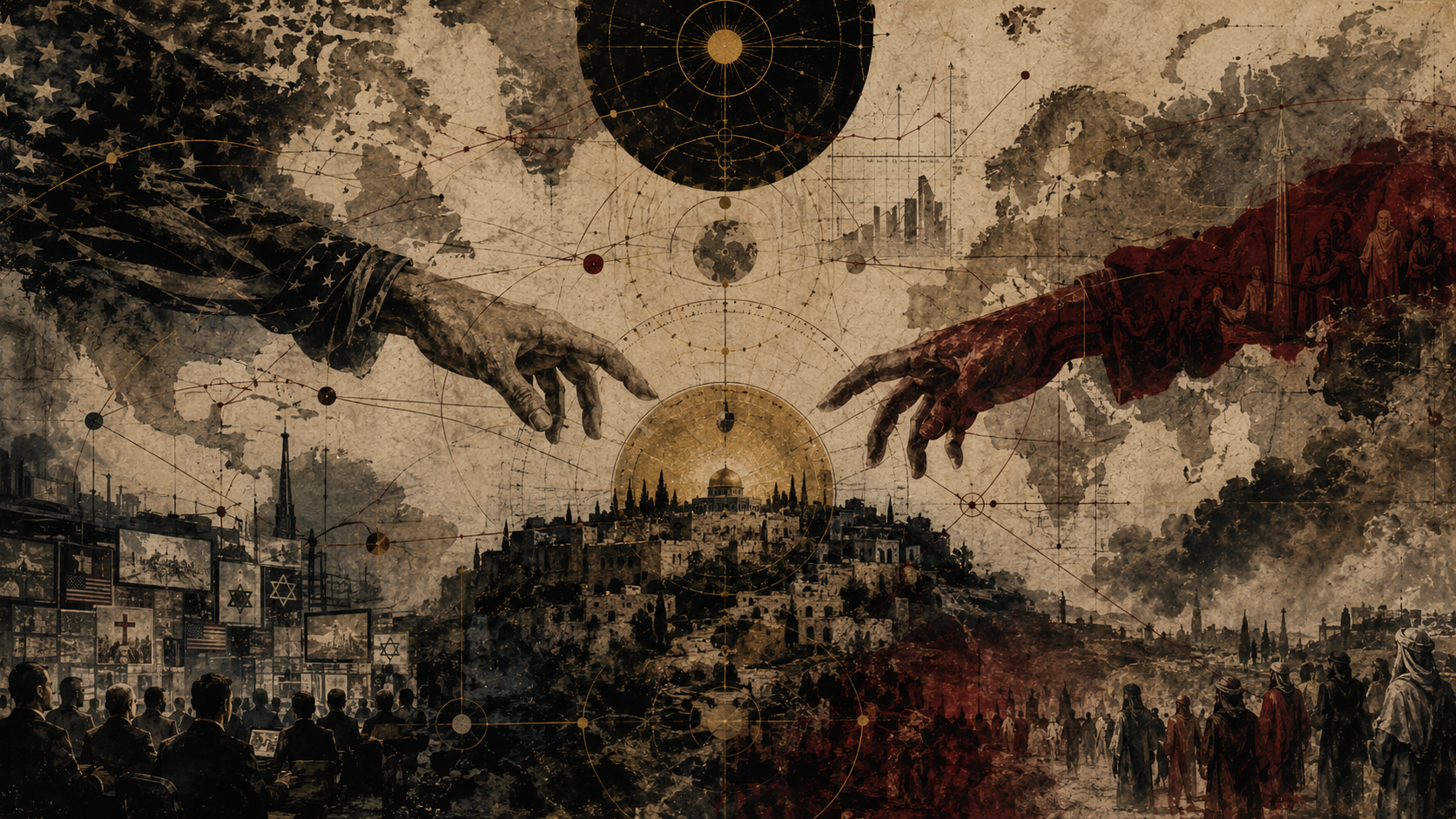
Blessing is not blessing when it requires blindness. The Christian Zionist does not need Jews to flourish. He needs them concentrated, appropriately, according to his prophetic desires.
Apocalypse Outsourcing
The red-heifer project is not only an internal Jewish extremist phenomenon. It is entangled with Christian Zionist eschatology, American evangelical politics, donor infrastructure, wartime volunteer circuits, and a strange theology of borrowed destiny in which Jews are loved, funded, defended, narrated, and positioned, not always as neighbors in their own right, but as necessary pieces in someone else’s end-times machinery.
That has to be said carefully. Christian Zionism is not ordinary Christian friendship with Jews. It is not merely remorse for Christian antisemitism, though some of its language borrows that tenderness. It is not simply opposition to antisemitic violence, though that concern can be real. It is not identical to every Christian who supports Israel, every evangelical who loves the Hebrew Bible, every pilgrim who visits Jerusalem, or every church that prays for Jewish safety. AP’s religion reporting is explicit that evangelical support for Israel is not universal, and that Gaza’s humanitarian toll has complicated or weakened support among some younger evangelicals.⁸ ⁹
But Christian Zionism, as a movement, does something more specific and more dangerous. It reads the modern State of Israel, the Jewish people, Jerusalem, the land, the Temple Mount, and sometimes the rebuilding of the Temple itself as components in a prophetic sequence whose final meaning belongs to Christianity. AP describes evangelicals as among Israel’s fiercest foreign supporters and reports that many believe Israel is key to an end-times prophecy that will bring about the return of the Christian Messiah.⁸
This is apocalypse outsourcing.
The Jewish body carries the prophecy. The Jewish state holds the stage. The Jewish return supplies the sign. The Jewish Temple becomes the set piece. The Jewish people are embraced, but too often as instruments, as clock hands, as covenantal evidence for a Christian drama whose final act is not Jewish flourishing but Christian consummation. The rhetoric may sound like love; sometimes it may even feel like love to those receiving it. But the structure is objectifying. It does not simply ask, “Are Jews safe, free, equal, and alive?” It asks, “Are Jews arranged correctly on the prophecy board?”
That is not solidarity. That is theological possession with a smile.
The red heifer makes the arrangement visible because it exposes the point where Christian end-times expectation and Jewish Temple activism touch. Lawrence Wright’s 1998 New Yorker essay “Forcing the End” reported that Pentecostal preacher and cattle breeder Clyde Lott believed the Second Coming and the fate of humankind depended on breeding a red heifer, and that his project brought him into contact with Rabbi Chaim Richman and the Temple Institute around a project whose religious and political implications converged at the Temple Mount.¹⁰
There it is, almost too perfect as symbol: an American Pentecostal cattle breeder, a Jerusalem Temple activist, a biblical purity law, the Temple Mount, evangelical prophecy, rabbinic technicality, and the dream of historical acceleration braided together around a cow.
The absurdity would be funny if it were not aimed at a live wire.
“Forcing the End” remains the cleanest diagnosis. Not awaiting the End, not contemplating the End, not receiving history with trembling, but forcing it. Forcing the sacred, forcing the timetable, forcing the symbol until it screams prophecy. Forcing Jewish memory into Christian apocalypse, Palestinian presence into the role of obstacle, and a cow into the role of cosmic lever.
This is how symbolic systems become dangerous: not when people believe strange things, but when strange things are connected to institutions, donors, land claims, weapons, policing, holy-site access, and state power. A private fantasy is one problem. A fantasy with a security apparatus is another.
The machinery has not gone away. It has modernized, networked, globalized, and learned the languages of tourism, humanitarian aid, solidarity, lobbying, and media spectacle. AP reported in 2024 that evangelical Christians became part of a wave of wartime “voluntourism” to Israel after October 7, with volunteers preparing meals for Israeli soldiers and doing agricultural work connected to the war. AP also notes that Christian Zionist organizations such as Christians United for Israel and the International Christian Embassy Jerusalem have organized trips and raised support.⁸
Beyond belief, one takes in the logistics.
People are not merely praying for Israel from church basements in Pennsylvania, Texas, Brazil, Finland, Canada, or South Africa. They are flying in, cooking meals, picking crops, joining tours, attending marches, funding institutions, reinforcing morale, strengthening political narratives, and helping keep the symbolic body of Israel warm while Gaza burns just beyond the horizon. A volunteer can be sincere and still be part of an ideological supply chain. A person can chop vegetables with compassion for Israeli grief and still participate in a movement that has made Palestinian suffering nearly invisible.
This is the moral asymmetry at the heart of Christian Zionist war piety. Israeli grief is individualized, narrated, prayed over, cooked for, visited, sung to, and hugged. Palestinian grief is too often converted into background noise, unfortunate collateral, demonic resistance, terrorist adjacency, humanitarian complexity, or prophetic turbulence. One people is lovingly particular; the other is geopolitically abstract.
Such a selective incarnation of ‘agape’ is not Christian love.
A faith that claims God became flesh cannot excuse itself for refusing to see the Palestinian Peoples’ flesh.
Listen to the grammar: moral obligation, theological obligation, prophecy fulfilled, redemption of the world. Israel as vessel, Jews as people (whether they agree or not) through whom the Christian story completes itself. It can sound reverent, but reverence is not the same as respect. Reverence can still make an object of the beloved. Reverence can still refuse the beloved’s autonomy. Reverence can still say, “I honor you because my God needs you positioned here.”⁹
The Christian Zionist does not need Jews to flourish. He needs them concentrated, appropriately, according to his prophetic desires.
That line stays because the structure justifies it. The Christian Zionist imagination can love the Jew as sign, but not necessarily as neighbor; as covenantal evidence, but not necessarily as free subject; as proof of God’s plan, but not necessarily as a people with the right to refuse being drafted into someone else’s apocalypse. In its most dangerous form, Christian Zionism is not philo-Semitism. It is eschatological instrumentalization. It is antisemitism turned inside out and baptized in support language: not “the Jew must disappear because he corrupts history,” but “the Jew must remain, return, build, fight, suffer, convert, or be judged because he completes my history.”
This is why Christian Zionism can appear passionately pro-Jewish while still reproducing an old Christian habit: refusing to let Jews be Jews on their own terms. The old contempt said Jews were spiritually obsolete because they rejected Christ. The new instrumentalization says Jews are spiritually necessary because they help bring Christ back. One curses the Jew as failure; the other praises the Jew as function. Neither is the same as loving Jewish life without needing it to solve Christianity’s eschatological problem.
The red heifer exposes this perfectly. For the Temple activist, the heifer promises ritual readiness, purification, and a step toward restored Temple service. For the Christian Zionist, the same animal can become evidence that the end-times sequence is advancing. For the politician, it excites a mobilized religious base. For the donor, it offers participation in destiny. For the influencer, it produces content. For Palestinians, Muslims, Palestinian Christians, anti-Zionist Jews, status quo defenders, and anyone forced to live inside the geography of someone else’s sacred acceleration, it offers danger.
This alliance is mutually useful in the worst way. The Temple activist needs money, legitimacy, international attention, and a non-Jewish chorus willing to call his project world-historical. The Christian Zionist needs Jewish bodies, Jewish sovereignty, Jewish Jerusalem, Jewish Temple expectation, and Jewish conflict to confirm his reading of time. Each supplies the other’s lack. The Temple activist lends ancientness; the Christian Zionist lends scale. The Temple activist supplies the local ritual object; the Christian Zionist supplies the global prophecy market. The Temple activist says, “Prepare the vessels.” The Christian Zionist says, “Prepare the world.” Between them, the cow is no longer a cow, the Temple is no longer memory, and Jerusalem is no longer a city. It is a trigger.
The tragedy is that this alliance can feel warm. It can come with songs, flags, pilgrimages, donations, tears, bomb shelters, agricultural work, and real horror at antisemitism. The critique does not need to deny all sincerity or all material benefit. It needs to ask the harder question: what story is the aid serving, and whom does that story erase?
A politics can feed one hungry person while helping justify the starvation of another. A theology can shelter one traumatized family while voting for policies that traumatize another. A donor can pay for a bomb shelter and still help normalize the worldview that makes bombs inevitable. Compassion, when captured by prophecy, becomes selective infrastructure.
The moral test is not whether one blesses a state. The moral test is whether one refuses to turn any people into scenery for salvation. Blessing is not blessing when it requires blindness. A theology that cannot see Gaza, cannot hear Palestinian Christians, cannot mourn Muslim children, cannot distinguish Jewish safety from Israeli supremacy, cannot tell the difference between solidarity and instrumentalization, has not blessed Israel. It has cursed its own conscience.
That is apocalypse outsourcing.
It exports the cost of Christian eschatological desire onto Jews, Palestinians, Israelis, Muslims, Palestinian Christians, and anyone else forced to live inside the geography of someone else’s script. It allows believers thousands of miles away to experience the thrill of sacred acceleration while other people absorb the checkpoints, rockets, bombs, evictions, raids, funerals, retaliations, and holy-site panic. It turns the Middle East into a spiritual theater for foreign certainty.
A decent Christianity should revolt against that.
A decent Judaism should refuse it.
A decent politics should name it as obscene.
The cow is local.
The fantasy is global.
And the people most likely to pay for it are not the ones drawing the prophecy charts.
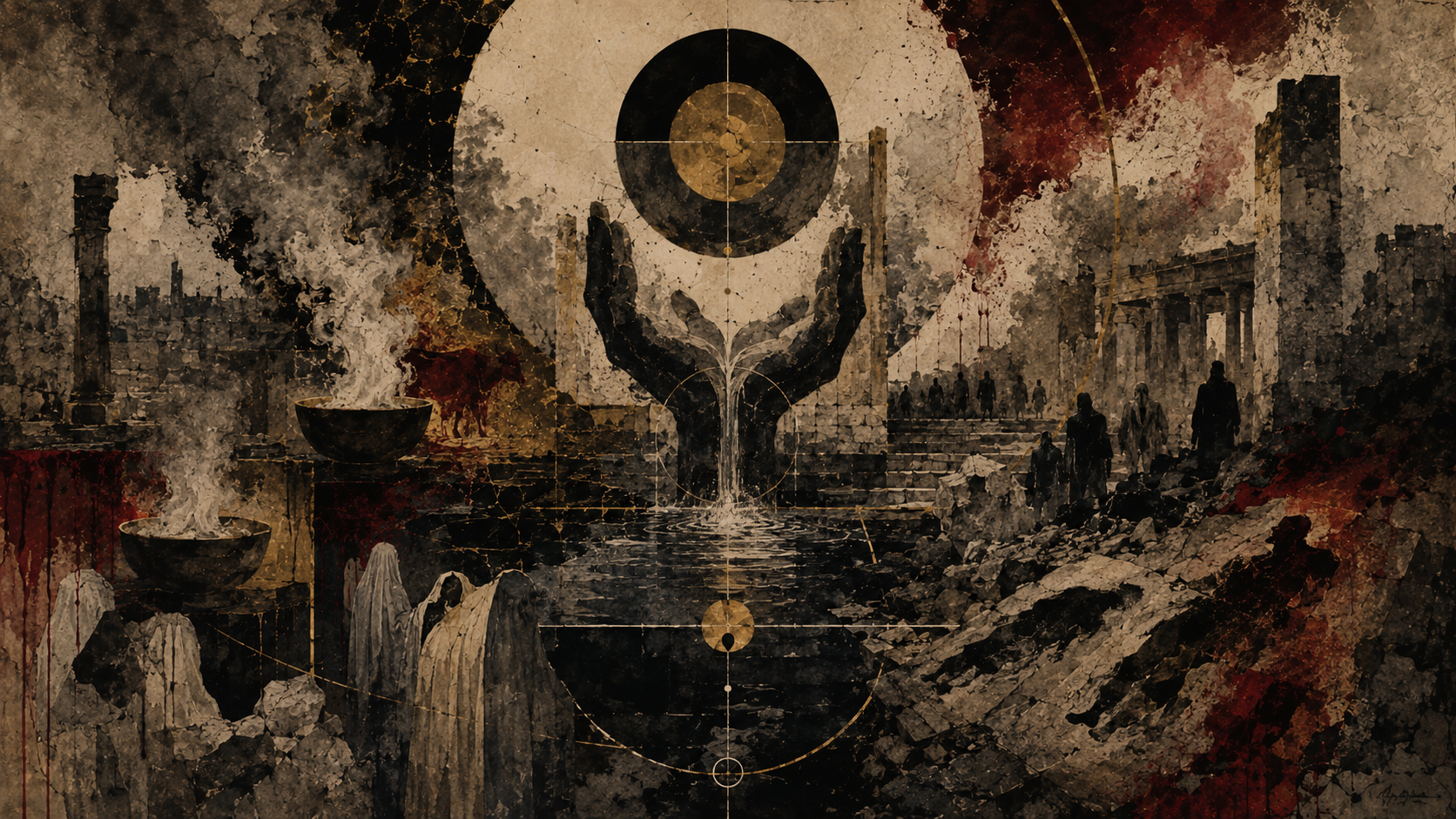
The theological obscenity is not difficult to name: they want ashes to cleanse their hands while refusing to stop making corpses.
False Purity
The red heifer is a ritual of purification being used by people who refuse moral purification.
That is why the animal matters beyond spectacle. Not because the cow is guilty, not because the ancient rite is meaningless, not because everyone who studies Temple law is corrupt, but because the modern political use of the heifer exposes the contradiction at the center of messianic state religion. The ritual logic says death contaminates. The political logic says produce death, narrate death, justify death, step over death, and then claim purity.
In the classical frame, the red heifer answers the problem of corpse impurity. The heifer is slaughtered and burned with cedar, hyssop, and crimson wool; its ashes are mixed with spring water and sprinkled on the impure person. The same body of law stresses strict qualifications and disqualifications.¹
That is the ancient shape: death leaves a mark, and one does not approach the sacred as if death has left no stain.
Modern messianic politics wants the ashes without the confession. It wants purification without repentance, holiness without justice, Temple without peace, sovereignty without equality, sacrifice without moral cost. It wants the sign of cleansing while refusing the work of being cleansed. It wants the aesthetics of ancient law without the ethical trembling that should accompany any law dealing with death. It wants to pass through the rite as if rite could substitute for repair, as if technical purity could cover moral rot, as if the proper handling of ash could silence the cry of the people buried under policy.
This is false purity.
False purity is not the absence of ritual. It is ritual detached from truth. It is meticulous concern for objects while persons are discarded, inspection of hairs while bodies are counted, safeguarding of vessels while neighborhoods collapse, fantasy of clean hands while the hand remains active in harm. It is a system that can worry over whether a heifer has been yoked while tolerating the yoking of a people, that can ask whether two hairs disqualify the animal while refusing to ask whether mass displacement, starvation conditions, sacred-site provocation, and children under rubble disqualify the politics invoking it.
The theological obscenity is not difficult to name: they want ashes to cleanse their hands while refusing to stop making corpses.
That line should stand, but it should not stand alone. It must be surrounded by the record that makes it more than metaphor. Gaza’s Health Ministry put the Palestinian death toll from the Israel-Hamas war above 73,000, with more than 173,200 wounded and most of Gaza’s roughly two million residents displaced, according to AP; AP also notes Israel’s position that it targets militants and blames civilian deaths on Hamas operating in densely populated areas.⁴ Reuters reported that, in March 2024, the International Court of Justice unanimously ordered Israel to take immediate and effective action to ensure basic food supplies reached Palestinians in Gaza without delay, saying famine was setting in rather than remaining merely a risk.¹¹
Place that beside the heifer. Place the ash beside the hunger, the cedar beside the rubble, the hyssop beside the hospital corridor, the crimson wool beside the funeral cloth, the spring water beside the closed crossing, the talk of purity beside the body count. Then ask what kind of moral imagination still thinks the central question is whether the cow has the right hairs.
If corpse impurity matters, then corpses matter. If death contaminates, then death-making contaminates. If one must be purified before approaching the sacred after touching death, then what must be required of a state, a movement, a donor class, a military ideology, a prophecy network, a Temple-restoration apparatus, and a Christian Zionist chorus that have made themselves comfortable beside mass death?
The red heifer, properly understood, should not embolden them. It should terrify them. It should say: you are not clean, you cannot approach holiness while refusing the meaning of the dead, you cannot turn me into your symbol of readiness when you have not learned the first lesson of my ash.
The ritual’s inner grammar is not triumph but interruption. Death interrupts, death delays, death bars entry, death requires response. The person touched by death is not told to declare himself innocent, issue a press release, blame the corpse, argue that the death was strategically necessary, or proceed because the calendar of redemption is urgent. The person is stopped. The person is marked. The person must undergo purification before return.
Modern messianic nationalism wants the opposite. It wants death to accelerate return. It wants death absorbed into the project as proof that the project is embattled, righteous, chosen, necessary. It wants enemies to justify force, force to justify fear, fear to justify sovereignty, sovereignty to justify sacred access, sacred access to justify further escalation. That is not purification. That is a closed circuit of defilement calling itself destiny.
The heifer is therefore perfect as a symbol because it reveals the counterfeit. Genuine purification acknowledges impurity; false purity denies it. Genuine purification says something has happened to us that must be addressed; false purity says nothing has happened to us that our enemies did not deserve. Genuine purification humbles the worshiper before the sacred; false purity arms the worshiper with entitlement. Genuine purification understands death as a boundary; false purity makes death into a stepping stone.
The animal is not the central political victim. That has to be said clearly, because moral scale matters. A cow’s instrumentalization is not equivalent to the destruction of Gaza, the displacement of families, the killing of children, the terror around holy-site escalation, or the long machinery of occupation. To pretend otherwise would be sentimental evasion. The central human victims are the people reduced by these politics into obstacles, threats, demographics, insurgent shadows, collateral categories, or prophecy scenery.
But the animal still matters.
The cow matters because the treatment of the animal reveals the structure of the imagination around it. A living creature becomes an object of inspection, anticipation, symbolism, legal anxiety, donor excitement, messianic longing, Christian eschatological hunger, Temple-preparation logistics, and eventual ritual killing. The animal is not encountered as a being with its own life, its own body, its own creaturely innocence. It is encountered as utility. It is asked to become ash in someone else’s fantasy of purification.
Use the right words. Do not overclaim torture unless specific treatment is documented. The available ritual description gives us enough: slaughter, burning, sacrifice, instrumentalization, ritual killing. The creature is born and men gather around its hairs; it breathes and men ask whether its body can unlock history; it grazes and men imagine ash. The creature becomes the place where human fantasy touches flesh.
There is something ancient and ugly in that, not because sacrifice is uniquely Jewish or uniquely cruel—human religious history is full of animals made to carry meanings they did not choose—but because this particular animal is being made to carry a political meaning far beyond the ritual frame. It is not merely a heifer in a priestly law. It becomes an apocalypse device, a sacramental component in a project of sacred-site pressure, a proof-of-concept for men who want to move from text to territory, from longing to logistics, from ash to access.
Lawrence Wright’s 1998 New Yorker account captured the absurdity and danger early: Pentecostal preacher and cattle breeder Clyde Lott believed the Second Coming and the fate of humankind depended on breeding a red heifer, and his project brought him into contact with Rabbi Chaim Richman and the Temple Institute.¹⁰
The animal becomes a mirror. It shows us what this politics does to life. It does not first ask, “What is this being?” It asks, “What can this being be made to mean for us?” That is the move. A life becomes a symbol before it is allowed to remain a life. The cow is not tortured in every telling; the more precise indictment is that she is reduced, reduced to qualification, reduced to color, reduced to usability, reduced to ash, reduced to a function inside a ritual-political machine.
That reduction parallels the larger political reduction at the heart of the essay. Palestinians are reduced in the same grammar of utility and obstruction, though with infinitely greater violence and consequence. They become demographic problem, security threat, human shield, foreign body, refugee mass, aid-management issue, militant adjacency, diplomatic inconvenience, sacred-site obstacle, obstacle to destiny. Once a system learns to see living beings primarily as symbolic or strategic objects, it can move from cow to child without changing its underlying grammar. The scale changes, the stakes become monstrous, but the logic remains recognizable.
A politics that can turn a cow into an apocalypse device can turn a child into collateral damage.
That sentence is brutal because the world behind it is brutal. It is not saying the harms are the same; it is saying the moral grammar rhymes. A living creature is made usable by a symbolic system, then the system congratulates itself on the sacredness of the use. A living people is made manageable by a security system, then the system congratulates itself on the necessity of the management. The animal cannot speak back to prophecy, and too often the dead cannot speak back to policy. That is why the living must.
No serious moral argument should linger too long on the cow while children are under rubble. But no serious symbolic argument should miss what the cow reveals. The red heifer is a minor victim and a major sign. She is minor beside the human catastrophe, major as an x-ray of the imagination producing it. She shows the way life is converted into instrument, the way creatureliness is erased beneath function, the way innocence becomes useful only after it has been assigned a role in the machinery of purification.
The cow does not know Temple law. The cow does not know Christian Zionism, Maimonides, Numbers 19, the Temple Institute, the Mount of Olives, the status quo, the ICJ, Gaza, Ben-Gvir, Revelation charts, settler violence, donor dinners, or prophetic YouTube thumbnails. The cow knows grass, heat, herd, fear, breath, body. That is precisely why her conscription matters. She is innocent of the system that makes her meaningful. She is made to bear a burden she cannot understand, and in that sense she becomes a soft, silent icon of what ideological systems do to the vulnerable. They recruit the voiceless first. They make the voiceless useful. They call the use sacred.
This does not mean the essay should become an animal-rights essay. It should not. The red-heifer discussion must stay nested inside the larger indictment of messianic politics. But there is room here for recognition that the animal itself is not nothing. If the essay’s central claim is that death contaminates, then the ritual killing of the animal cannot be treated as a cute detail in a prophecy story. It is a killing. It is a body burned into symbol. It is flesh converted into ash so that men may imagine themselves ready for holiness.
And then comes the question the movement does not want to answer: ready for what? Ready for a Temple while Gaza is rubble, ready for priestly purity while children are counted among the dead, ready for sacred vessels while Palestinians are reduced to security categories, ready for divine presence while another people lives under domination, ready for purification while refusing moral purification?
The red heifer is supposed to purify those defiled by death. Messianic politics wants to use it to purify the makers of death. That is the reversal. That is the fraud. That is the blasphemy hidden inside the spectacle.
Ash can witness, ash can mark, ash can remind, ash can become the residue of a law that once knew death had consequences. But ash cannot repent for the unrepentant. It cannot mourn for those who will not mourn. It cannot purify those who approach the sacred with one hand raised in prayer and the other still tightening around another people’s throat.
False purity always wants the sign without the surrender. It wants the external mark of cleansing without the inward collapse of arrogance. It wants to be declared clean while remaining unchanged. It wants to step from violence into liturgy without passing through accountability. It wants the smoke of the sacrifice to obscure the smoke of the ruin.
A serious theology must refuse. A serious Judaism must refuse. A serious politics must refuse.
If the red heifer means anything in this moment, it means that death contaminates, and that those who have built a politics around producing, excusing, or ignoring death are not Temple-ready. They are not purification-ready. They are not redemption-ready. They are not clean because they possess the symbol of cleansing.
They are more accountable because they know what cleansing is supposed to mean.
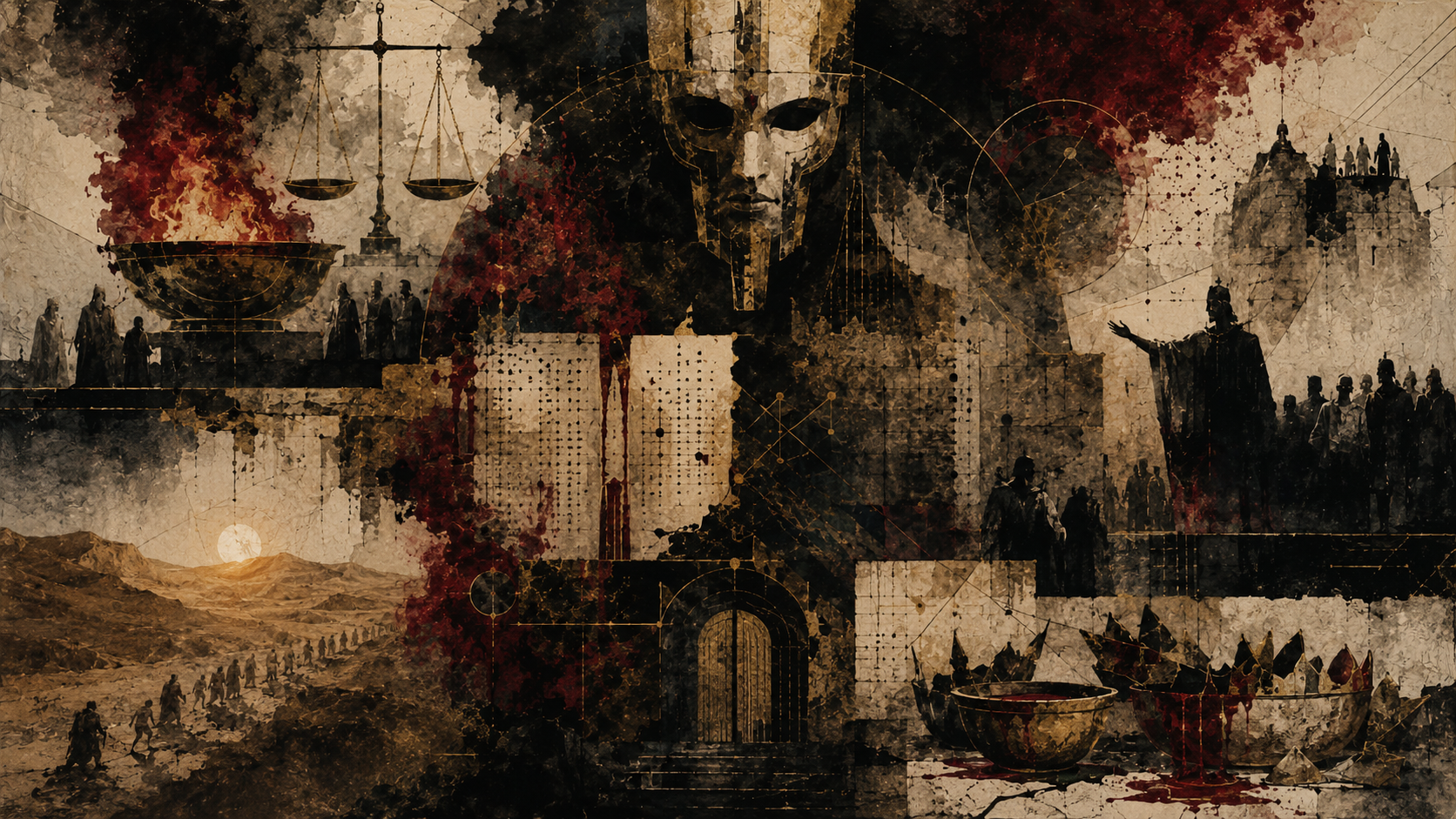
Messianic nationalism turns that humility into control. It takes a law about impurity from death and uses it to perfume a politics that manufactures death.
When Pharaoh Learns Hebrew
If Judaism is to be invoked, it must be invoked against domination, not for it.
That sentence must be handled with care. A critic outside Jewish life should not appoint himself rabbi over the Jewish people, nor should this essay pretend to exhaust a tradition whose internal arguments are older, deeper, and more varied than any modern political polemic can hold. Judaism is not one voice, one party, one state, one army, one ideology, one donor class, one minister, one settler movement, one Temple institute, one diaspora panic, one flag, or one answer to exile. It is law, argument, grief, song, memory, dissent, ritual, interpretation, rupture, repair, covenant, refusal, and return. It is not reducible to the machinery that now claims to speak in its name.
But when a state, minister, Temple activist, settler movement, or apocalypse donor invokes Jewish tradition to justify domination, the tradition they invoke may be read back against them. That is not theft from Judaism. It is audit by the very memory they claim.
The question is not, “What must all Jews believe?” The question is sharper: what does the tradition itself place in the path of power when power claims to be holy?
The answer is not obscure.
Real fidelity begins with the stranger. Leviticus commands Israel to treat the stranger who sojourns among them as the home-born and to love him as oneself because Israel was once a stranger in Egypt. The same chapter ties holiness to social conduct: care for the poor and stranger, refusal of oppression, honest judgment, and refusal to stand idly by blood.¹²
That memory is not decorative. It is not a festival mood. It is an ethical trap set for future power. Once you have known exile, you are forbidden to make exile your administrative style. Once you have known Egypt, you are forbidden to become Egypt with better liturgy.
Modern messianic nationalism increasingly behaves like the thing Jewish memory was supposed to resist. It does not simply forget Pharaoh; it studies Pharaoh’s instruments and baptizes them in Hebrew. It learns to call domination security, expansion inheritance, humiliation deterrence, siege necessity, sacred-site pressure worship, and permanent inequality peace. It speaks with the voice of the wounded while organizing the wound into a system for wounding others.
This is why the title of this section has to be When Pharaoh Learns Hebrew.
Pharaoh is not only an Egyptian monarch in an ancient story. Pharaoh is the archetype of power that forgets the humanity of those beneath it. Pharaoh turns fear into policy, labor into extraction, infants into demographic threat, and divine language into administrative certainty. Pharaoh does not have to speak Egyptian. Pharaoh can learn any language. Pharaoh can learn Hebrew. Pharaoh can quote Torah. Pharaoh can wear grief as armor. Pharaoh can say security, promise, inheritance, Temple, purity, redemption, and covenant while training the public not to hear the cry rising from beneath the bricks.
That is how doctrine corrupts: not always by open abandonment, but by liturgical inversion.
The command to remember Egypt becomes a license to fear everyone outside the wall. The memory of exile becomes a defense of permanent domination. The longing for land becomes contempt for those already living there. The rhetoric of holiness becomes a mask for state arrogance. Temple memory becomes not a summons to justice, but a stage on which power imagines itself absolved.
The Hebrew Bible itself is ruthless toward this maneuver.
Isaiah does not treat ritual as magic. He stages a divine rejection of sacrifices, offerings, festivals, assemblies, and multiplied prayers when the worshipers’ hands are full of blood. The remedy is not a better animal, a more accurate vessel, a more dramatic altar, or a more intense national story; the remedy is to wash, cease doing evil, seek justice, relieve the oppressed, judge the fatherless, and plead for the widow.¹³
Amos is even less polite. He condemns those who desire the day of the Lord as if it were light when, for them, it will be darkness. He rejects feasts, solemn assemblies, burnt offerings, meal offerings, songs, and instruments, then answers with the line that has outlived empires: justice like water, righteousness like an enduring stream.¹⁴
Jeremiah places the indictment at the Temple gate itself. He does not stand far away, sneering at the Temple from secular distance. He stands at the entrance to the Lord’s house and warns the worshipers not to trust in lying words, not to chant “the Temple of the LORD” as if the sacred building were a shield against moral consequence. The condition for dwelling securely in the land is not Temple possession, not national confidence, not correct slogans, but amended conduct, justice between neighbors, refusal to oppress the stranger, the fatherless, and the widow, refusal to shed innocent blood, and refusal to follow other gods.¹⁵
There is the entire indictment in miniature.
Do not trust in lying words: Temple, Temple, Temple.
Do not trust in lying words: security, security, security.
Do not trust in lying words: purity, purity, purity.
Do not trust in lying words: redemption, redemption, redemption.
If the stranger is oppressed, if innocent blood is shed, if the vulnerable are crushed, if the sacred house becomes the slogan that protects the violence, then the slogan itself has become a lie. A Temple invoked against justice is not a defense of Judaism. It is evidence that Judaism has been taken hostage by power.
Deuteronomy joins the same chorus, tying public life not to theatrical sovereignty but to justice pursued through courts and officers, impartial judgment, rejection of bribes, and the doubled insistence on justice as the condition for life in the land. The land is not made righteous by possession; possession is made answerable to justice.¹⁶
That is the prophetic spine: ritual without justice is not holiness. It is offense.
Sacrifice without justice is not a Jewish triumph. It is one of the Bible’s own condemned patterns. Temple language without protection of the vulnerable is condemned from inside the tradition, not merely by critics standing outside it. The prophets do not say, “As long as the cultic objects are correct, the system is righteous.” They say the opposite. They say offerings become repulsive when joined to blood guilt, that sacred music becomes noise when severed from justice, that the Temple itself cannot protect those who oppress the vulnerable and shed innocent blood.
So when a state quotes scripture while crushing the stranger, it is not fulfilling Judaism. It is parodying it.
When a movement speaks of Temple restoration while helping normalize domination over another people, it is not renewing ancient holiness. It is reenacting the very arrogance Jewish memory was supposed to expose.
When politicians, activists, and donors wrap coercive geography in biblical vocabulary, they are not recovering covenant. They are building Pharaoh in Hebrew.
The red heifer belongs exactly inside this indictment. In its classical frame, the rite should induce humility before death, impurity, paradox, and sacred approach. It should make the worshiper careful. It should make the priest remember that even the one who prepares purification is implicated in impurity. It should make a community tremble before the fact that death stains the living.
Messianic nationalism turns that humility into control. It takes a law about impurity from death and uses it to perfume a politics that manufactures death. It turns mystery into logistics, paradox into certainty, ash into access, ritual preparation into pressure. It wants purification without repentance, holiness without justice, Temple without peace, sovereignty without equality, sacrifice without moral cost.
That is not fidelity.
That is the corruption of fidelity.
A faithful reading would not ask first whether the cow is red enough. It would ask whether the hands are clean enough. It would not ask first whether the vessels are ready. It would ask whether justice is ready. It would not ask first whether the Temple can be rebuilt. It would ask whether the stranger can breathe, whether the child can eat, whether the widow can mourn without being turned into policy debris, whether the neighbor’s blood has become visible enough to interrupt prayer.
Real fidelity would refuse to sacrifice living people to symbols. It would say that no flag, no prophecy, no map, no Temple memory, no ancient wound, no nationalist poem, no donor fantasy, no Christian end-times chart, no cattle project, no priestly inventory, no dream of restored sacrifice is worth the destruction of living human beings. It would say that Palestinians are not obstacles in a Jewish story, not Amalek-shaped abstractions, not demographic fog, not scenery in another people’s return, not the temporary inconvenience of redemption, but persons, families, communities, worshipers, workers, children, elders, dead, living, wounded, exiled, grieving, and real.
That word matters: real.
Real fidelity would make Palestinian life non-negotiably real. Not rhetorically acknowledged and then administratively erased. Not mourned in the abstract while bombed in the concrete. Not admitted as tragic while treated as strategically absorbent. Real means morally visible before policy, during policy, after policy. Real means a Palestinian child is not less a child because a state says “human shield.” Real means a Palestinian home is not less a home because a map says “security zone.” Real means a Palestinian worshiper at Al-Aqsa is not an obstacle to Jewish destiny, but a human being whose sacred relation to place is not vaporized by someone else’s sacred relation to place.
Real fidelity would distinguish Jewish survival from Israeli supremacy. Jewish survival is holy in the ordinary human sense that life is holy, that a threatened people deserves protection, that antisemitism must be fought without hesitation. Israeli supremacy is something else. It is the claim, explicit or structural, that Jewish safety requires Palestinian subordination, that one people’s trauma authorizes another people’s permanent manageability, that fear can be organized into law and called peace. Fidelity to Jewish life does not require fidelity to that arrangement. In fact, fidelity to Jewish life may require refusing that arrangement before it corrupts Jewish memory beyond recognition.
Real fidelity would reject the idolatry of land and state. Idolatry is not only bowing before a carved object. Idolatry is what happens when a finite thing—a flag, a government, a military, a border, a mythic past, a trauma-memory, a promised geography—becomes immune from judgment. It is what happens when the thing that should be accountable becomes sacred by assertion, when the state no longer serves life but demands sacrifice from life, when the people are taught that criticism of power is betrayal of God.
The prophets saw that disease before the modern state existed. They saw sacrifice becoming camouflage, temples becoming slogans, rulers trusting liturgy to hide blood, people confusing election with exemption and worship with immunity. They saw the old human trick: arrange the symbols correctly, then pretend the suffering underneath them has become acceptable.
It has not.
A Temple built over another people’s humiliation would not be a house of God. It would be a monument to blasphemy.
Let that sentence carry the full weight of the section. Not because Jewish longing for the Temple is inherently corrupt, but because any sacred house built through domination would have betrayed the sacred before its first stone was laid. A Temple cannot be holy if its foundation is fear. It cannot be a house of prayer if another people’s prayer had to be politically degraded to make room for it. It cannot be the site of divine presence if its approach requires checkpoints, dispossession, supremacy, and the disciplined refusal to see the humanity of those already worshiping on the hill.
The deepest corruption is not that messianic state theology abandoned Jewish tradition. Abandonment would be easier to name. The deeper corruption is that it learned how to quote the tradition while betraying it. It learned to say Temple while forgetting justice, purity while stepping over death, covenant while humiliating the stranger, security while hardening the heart, redemption while polishing the machinery of coercion. It learned to carry the vocabulary of the prophets into a politics the prophets would have denounced.
This is the moral danger of fluent betrayal. It sounds like continuity. It wears inherited words. It invokes real grief. It quotes real texts. It points to real history. It speaks from wounds that are not fabricated. And then, because the wound is real, it asks the world not to look too closely at what the wounded have built with power.
But a real wound does not sanctify a new wound.
A remembered exile does not justify another people’s enclosure.
A destroyed Temple does not authorize the humiliation of those praying where the ruins are remembered.
A commandment about purification from death does not cleanse a politics that produces death.
Real fidelity would not ask, “How do we purify ourselves so that we may proceed?” It would ask: whom have we harmed, whom have we made invisible, whose blood have we stepped over, whose land have we renamed, whose grief have we minimized, whose humanity have we treated as conditional, and what would repentance require before any of us dared approach the sacred?
That is the difference between holiness and entitlement.
Entitlement says: the promise is ours.
Holiness says: the vulnerable are watching.
Entitlement says: the land is ours.
Holiness says: justice, justice.
Entitlement says: the Temple will vindicate us.
Holiness says: do not trust in lying words.
Entitlement says: the cow is ready.
Holiness says: are your hands?
And that final question is the one this section should leave ringing. Not whether the heifer is red enough, not whether the vessels are accurate enough, not whether the activists are bold enough, not whether the prophecy is exciting enough. Are your hands clean enough to speak of purity? Are your politics just enough to speak of holiness? Are your neighbors safe enough for you to speak of peace? Are the strangers among you loved enough for you to speak of Torah?
If the answer is no, then the red heifer does not announce redemption.
It announces the indictment.
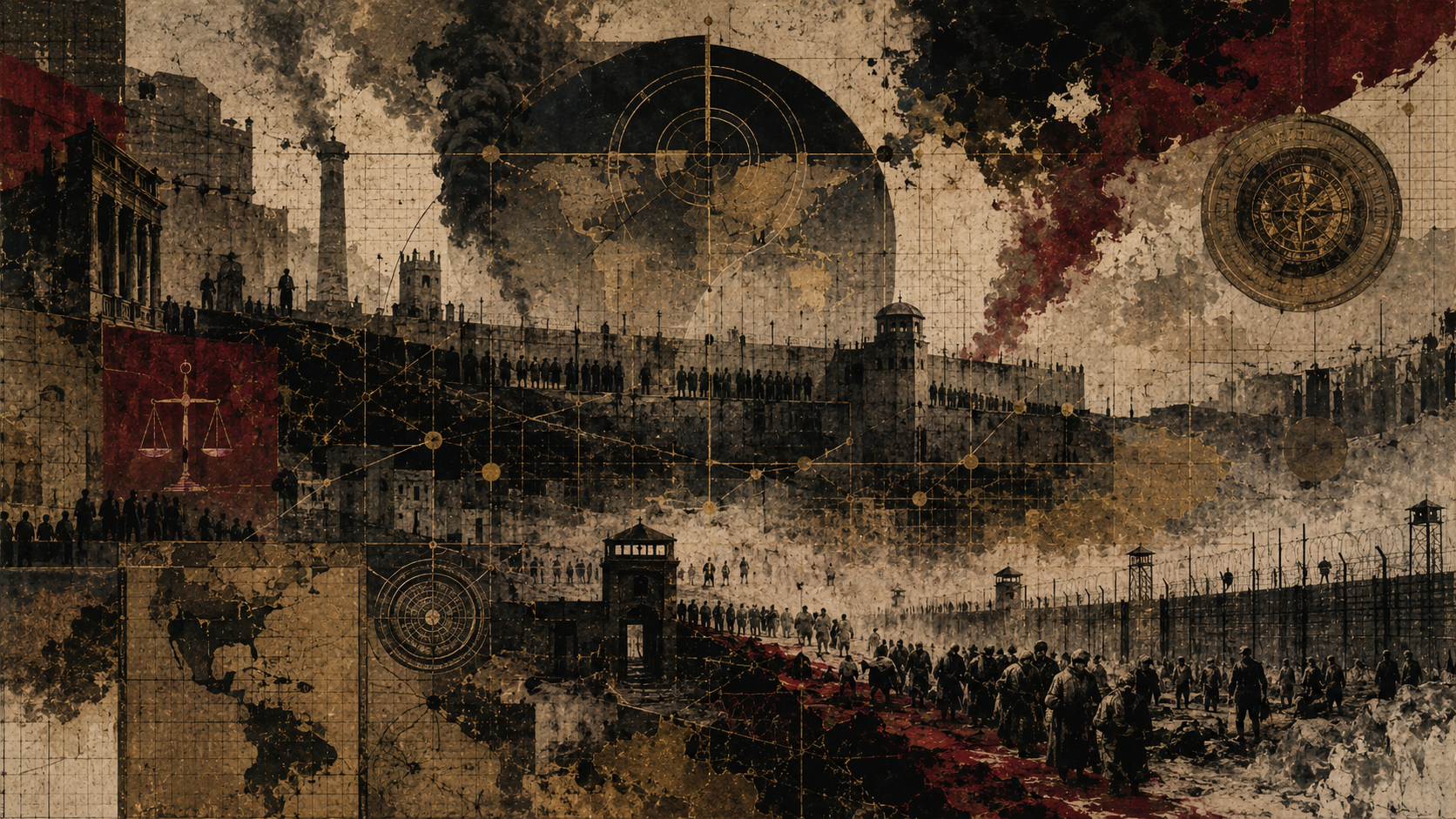
The question is not whether everyone inside the system wakes up intending evil. The question is whether the system’s continuity requires the degradation of another people, and whether its language has learned to make that degradation sound righteous.
When the Category Becomes Legible
There are rare moments when history stops being morally ambiguous at the level of structure.
Not because every person inside a society is evil. Not because guilt can be assigned by blood, passport, ancestry, religion, language, trauma, or inherited longing. Not because every Zionist, every Israeli, every soldier, every voter, every Jew, every frightened parent, every grieving family, or every person who once believed in the promise of Jewish refuge belongs to one undifferentiated moral mass. That is not analysis. That is collective accusation, and collective accusation is one of the old poisons this essay must refuse.
The claim is more precise, and more damning because it is more precise: certain dominant forms of modern state Zionism, especially its messianic, annexationist, militarized, settlement-driven forms, are trying to enter a category no tradition should want to approach. They are becoming historically legible as perpetrator ideologies, not because of Jewish identity, but because of what the governing project repeatedly does, what its ideological engines repeatedly justify, what its maps repeatedly demand, what its ministers repeatedly signal, what its soldiers and settlers repeatedly enforce, what its donor class repeatedly insulates, what its religious extremists repeatedly sanctify, and what its defenders repeatedly ask the world not to see.
This is where the phrase “bad guys” must be purified of childishness. It cannot mean a metaphysical species of villain, a people born wrong, a tribe damned by essence, or the cheap cartoon of evil that lets the observer feel innocent merely by pointing. It has to mean something colder, harder, and more historically useful: a governing project has made its operating principle visible. Domination has become legible. Denial has become legible. Displacement has become legible. Sacred language used to perfume violence has become legible. The pattern no longer depends on private motives, because the public structure is speaking loudly enough.
That is why the guardrail matters. The Jerusalem Declaration on Antisemitism defines antisemitism as discrimination, prejudice, hostility, or violence against Jews as Jews; it also warns against holding Jews collectively responsible for Israel’s conduct and distinguishes antisemitism from evidence-based criticism of Israel or criticism of Zionism as nationalism.⁵
A perpetrator ideology is not defined by every participant privately cackling in cruelty. Many participants may feel afraid, wounded, patriotic, religiously faithful, morally cornered, bureaucratically loyal, socially pressured, or simply numb. Some may believe they are preventing something worse. Some may be trapped inside inherited narratives they did not build. But a system can be perpetrator-shaped even when many of its human components experience themselves as defensive. The question is not whether everyone inside the system wakes up intending evil. The question is whether the system’s continuity requires the degradation of another people, and whether its language has learned to make that degradation sound righteous.
That is why cheap analogy weakens the argument. The piece does not need casual Nazi comparisons, Holocaust inflation, or lazy borrowing of the twentieth century’s most obvious moral symbol. Those moves are imprecise, strategically self-defeating, and morally vulgar when used as shortcuts. The stronger method is structural comparison: watch how a governing ideology speaks about civilians, land, children, food, law, enemies, sacred sites, and accountability. Watch how it distributes grief. Watch how it distinguishes its own dead from the dead it produces. Watch whether the stranger remains human once power is afraid. Watch whether law is welcomed as limit or denounced as conspiracy. Watch whether prophecy becomes restraint or permission.
By that test, the evidence has become obscene.
Gaza’s Health Ministry put the Palestinian death toll above 73,000, with more than 173,200 wounded and most of Gaza’s roughly two million residents displaced, according to AP. AP also notes Israel’s position that it targets militants and blames civilian deaths on Hamas operating in densely populated areas.⁴ That dual frame matters: Israeli fear and grief are real, October 7 was real, hostages were real, Hamas atrocities were real, and still none of that grants a state the power to wash mass civilian suffering in sacred language.
Seventy-three thousand dead is not a policy disagreement. It is not a messaging challenge, not an unfortunate side effect to be filed beneath “complexity” until the discourse cools, not a footnote to a national trauma that only one side is allowed to narrate. It is a civilization-scale indictment of the political imagination that made such death administratively possible and morally narratable.
The legal record has moved from accusation into emergency restraint. Reuters reported that, in March 2024, the International Court of Justice unanimously ordered Israel to take immediate and effective action to ensure basic food supplies reached Palestinians in Gaza without delay, saying famine was setting in rather than remaining merely a risk.¹¹
The point is not to pretend that only one side has committed crimes. The point is to refuse the false sanctuary of “both sides” when one side is a state claiming legitimacy, law, democracy, Jewish continuity, military discipline, and moral seriousness while producing mass death, famine warnings, rubble fields, and legal emergency. Hamas atrocity is real. Israeli grief is real. But state power does not become less accountable because its enemy is criminal. If anything, a state that claims moral distinction makes itself more accountable, not less.
The West Bank shows the same moral geometry in another register: not the instant spectacle of rubble, but the grinding architecture of displacement. In June 2026, U.N.-appointed investigators reported that settler violence was supported, enabled, and protected by Israeli policies, and that such violence functions as a means of implementing state policy toward settlement entrenchment, annexation, and Palestinian displacement. The same U.N. Geneva report also identified executions and severe physical violence by Hamas-affiliated forces in Gaza, including acts the investigators said amount to war crimes.¹⁷
The territorial frame is not merely rhetorical either. Reuters reported that the International Court of Justice’s July 2024 advisory opinion found Israel’s occupation of Palestinian territories and settlements illegal, found that settlements in the West Bank and East Jerusalem are maintained in violation of international law, and said Israel’s obligations include restitution and evacuation of settlers from existing settlements; Israel rejected the opinion.⁷
This is the point at which “complexity” becomes a hiding place if used without discipline. Yes, the history is complex. Yes, Jewish fear is real. Yes, Hamas has committed atrocities. Yes, antisemitism is real and resurgent and must be opposed without hesitation. Yes, the Jewish relationship to Jerusalem and the land is ancient, deep, and not invented by modern propaganda. But complexity does not mean moral fog forever. Complexity does not mean every structure is equally innocent. Complexity does not mean a state may produce mass death, starvation conditions, settlement terror, sacred-site provocation, and permanent domination, then demand that the world remain suspended in nuance until the victims disappear from view.
Modern messianic Zionism is trying to enter a category no tradition should want to approach: the class of political projects whose symbols, speeches, maps, rituals, and military facts all point in the same direction. Not individual guilt by identity. Not metaphysical evil. Something more concrete: a governing ideology making itself historically legible as a system of domination.
That phrase, “historically legible,” matters. A crime in motion often appears to its defenders as necessity, but later as structure. Later, people ask how the signs were missed, how speeches were explained away, how maps were treated as aspiration rather than warning, how checkpoints became ordinary, how settlements became facts, how famine warnings became debate points, how court orders became public relations problems, how dead children became disputed numbers, how sacred-site provocations became religious freedom, how the cow became prophecy, how ash became deodorant for blood.
But the signs are not hidden. They are everywhere. They are in the casualty reports, the aid orders, the settlement maps, the protected settler attacks, the ministerial theatrics at Al-Aqsa, the donor circuits, the Christian Zionist prophecy boards, the Temple vessels described as ready, the red heifer made to tremble beneath more meaning than any animal should bear. The signs do not all say the same thing in the same register, but they rhyme. They point toward a political theology that increasingly treats Palestinian life as conditional, movable, governable, punishable, and narratable beneath Jewish sovereignty.
A Jewish tradition especially should shudder before that mirror, because its own memory contains the tools of indictment. It knows Pharaoh. It knows exile. It knows the stranger. It knows the danger of kings. It knows blood guilt. It knows prophets who rejected sacrifice without justice. It knows that a house of God can become a den of thieves when ritual continues after righteousness has fled. The scandal is therefore not that messianic Zionism has no Jewish vocabulary. The scandal is that it has too much vocabulary and too little obedience to the moral current beneath it. The deepest corruption is not abandonment. It is fluent betrayal.
So let the section speak with restraint, but not softness. Avoid “bad blood,” avoid “bad people,” avoid ethnic metaphysics, avoid the old hatred that waits hungrily for any criticism of Israel to become permission to despise Jews. Instead, indict the governing form. Indict the ideological engines. Indict the merger of trauma, sovereignty, militarism, sacred entitlement, settler expansion, and apocalyptic expectation. Indict the political theology that makes Jewish safety depend on Palestinian unfreedom, then treats Palestinian resistance, grief, hunger, and death as proof that domination must continue.
The phrase “bad guys” becomes historically useful only when it stops being a playground insult and becomes a structural diagnosis. The bad guys, in that sense, are those who build systems that require another people’s disposability, then teach their children songs about righteousness. The bad guys are those who turn fear into permanent rule, grief into exemption, prophecy into policy, scripture into zoning, holiness into police access, and purification into public relations. The bad guys are those who know that a child is dead and ask first whether the number helps the enemy. The bad guys are those who can look upon famine warnings and argue procedure. The bad guys are those who hear “occupation” and answer “destiny.”
Not every Zionist is that. Not every Israeli is that. Not every Jew is anywhere near that. Some Jews are among the fiercest witnesses against it, and their witness matters because it proves the state does not own Jewish memory. But the governing project under analysis is moving toward that moral category, and history will not be kind to the people who pretended not to see the direction of travel.
If your national project requires mass death, starvation conditions, sacred-site provocations, protected settlement violence, annexationist pressure, and children under rubble, history is not confused about what category you are auditioning for.
That sentence should land, then pause.
Because the final judgment here is not that redemption is impossible. The final judgment is that redemption cannot be built from denial. A project can still turn back only if it can still tell the truth about itself. It can still be interrupted only if people inside and outside it refuse the fog. It can still be judged without hating Jews, resisted without romanticizing Hamas, dismantled without denying Jewish trauma, named without cheap analogies, and condemned without metaphysical poison.
But it must be named.
A cow cannot hide the category. A Temple cannot hide the category. A flag cannot hide the category. A grief, however real, cannot hide the category forever.
The structure is speaking.
History is listening.
Ashes Cannot Clean Blood
No ritual can purify a politics that refuses repentance.
That is where the essay must end, because that is where the cow, the Temple, the prophecy charts, the sacred vessels, the Christian Zionist tours, the nationalist ministers, the donor machinery, the status quo at Al-Aqsa, and the dead of Gaza all converge. Not into mystery. Into indictment.
The red heifer cannot do what messianic ethnonationalism wants from it. It cannot cleanse occupation, make hunger holy, make annexation prophetic, make Al-Aqsa disappear, or convert supremacy into covenant. It cannot turn state violence in sacred costume into righteousness. It cannot make Temple-restoration extremism into fidelity merely because the extremists have learned the vocabulary of longing. It cannot make Christian Zionist apocalypse outsourcing into friendship merely because the check clears and the hymn swells.
A red heifer can belong to an ancient purification rite. It can belong to the strange and difficult ritual grammar of Numbers 19, where death contaminates, where ashes and water mark the passage from corpse impurity back toward sacred access, where the law is exacting and not easily reduced to ordinary reason.¹
So let the rite remain what it is: strange, ancient, difficult, bounded, dealing with death, not with modern state innocence.
Let ash be ash.
Let law be law.
Let prophecy stop pretending to be policy.
Let the cow be freed from the men who want to turn her into a switch inside history.
The Temple Institute does not present its project as mere antique scholarship. It says its “ultimate goal” is to see Israel rebuild the Holy Temple on Mount Moriah, that its long-term goal is to do what it can to bring about the building of the Temple “in our time,” and that it has prepared vessels it describes as authentic, accurate, and fit for Temple service.² That preparation is precisely why the red heifer matters politically. It is not an isolated farm animal. It is part of a liturgical supply chain aimed at a contested sacred geography.
And that geography is not empty.
There is no innocent way to speak of Temple restoration without speaking of the people already there, the worshipers already there, the history already there, the political wound already there. Reuters describes the Al-Aqsa compound / Temple Mount as a site governed by a long-standing status quo under which a Jordanian religious body administers the compound, Jews may visit but not pray there, and Ben-Gvir’s claimed prayer there challenged that status quo.³ There is no honest way to speak of purification while refusing to see those made hungry, homeless, buried, displaced, and afraid by the larger machine around this fantasy.
Place the rite beside the facts and the symbolism turns against its handlers. Gaza’s Health Ministry put the Palestinian death toll above 73,000, with more than 173,200 wounded and most of Gaza’s roughly two million residents displaced, according to AP. AP also notes Israel’s position that it targets militants and blames civilian deaths on Hamas operating in densely populated areas.⁴ Reuters reported that in March 2024 the International Court of Justice unanimously ordered Israel to take immediate and effective action to ensure basic food supplies reached Palestinians in Gaza without delay, saying Palestinians were facing actual famine rather than only the risk of famine.¹¹
Place those facts beside the heifer. Place the ash beside the hunger, the priestly vessel beside the collapsed hospital corridor, the prophecy chart beside the funeral, the talk of purity beside the body count. Then ask what kind of moral imagination still thinks the central question is whether the cow has the right hairs.
No.
The central question is whether a politics surrounded by death has the capacity to confess contamination. Whether a movement speaking of holiness can still recognize the human beings it has learned to treat as obstacles. Whether a state can distinguish security from impunity, survival from supremacy, memory from entitlement, grief from permission. Whether the people polishing vessels for a future Temple can hear the prophets warning them that sacrifice without justice is abomination, that blood on the hands makes worship unbearable, that the cry of the vulnerable reaches higher than any smoke from any altar.
Ashes may belong to an ancient purity rite, but they cannot wash blood from the hands of a state.
They cannot cleanse the hand that still grips the throat. They cannot purify the policy that still produces the corpse. They cannot sanctify a nationalism that requires another people’s humiliation as background condition. They cannot redeem apocalypse cosplay performed on the edge of a holy-site conflict. They cannot make a Temple of peace out of a politics of domination.
If there is any redemption here, it will not come from killing a cow. It will not come from finding the tenth heifer, rebuilding the altar, sewing the garment, lifting the vessel, sounding the trumpet, ascending the Mount, filming the prayer, pleasing the donor, exciting the evangelical, or forcing history to move one inch faster than justice allows.
If there is redemption here, it will begin where the prophecy merchants do not want to look. It will begin with the stranger made visible again, with Palestinian life treated as non-negotiably real, with Jewish safety separated from Israeli impunity, with Judaism freed from the suffocating grip of the state that claims to exhaust it. It will begin with Al-Aqsa no longer treated as an obstacle in someone else’s redemptive engineering, with the refusal to sacrifice living people to symbols, with the end of the machine that keeps producing corpses and calling the smoke holiness.
No ritual can purify a politics that refuses repentance.
No red cow can redeem purity without repentance.
No Temple can be holy if built over another people’s humiliation.
No covenant survives when it is used as cover for domination.
No scripture remains sacred when it is made to speak for cruelty.
And no God worth worshiping is waiting for men to arrange the bodies correctly beneath the altar.
The red heifer, if it means anything now, means this: death contaminates. The dead are not scenery. The sacred cannot be approached by those who refuse to be changed by the dead. The ash does not absolve the unrepentant. It accuses them.
That is the final reversal.
The animal they hoped would certify readiness becomes the witness against them. The rite they hoped would unlock access becomes the law that bars the door. The ash they hoped would cleanse becomes the residue of a commandment they never understood: do not come near holiness while pretending death has not touched you.
So let the final sentence be plain enough to survive the fog:
The red heifer cannot purify state violence. It can only reveal the obscenity of people who want ashes for their hands while refusing to stop making corpses.
Notes
Yehuda Shurpin, “For Real, How Rare Is a Red Heifer?,” Chabad.org, accessed June 16, 2026. Supports the red-heifer ritual’s corpse-impurity function, the slaughtering and burning with cedar, hyssop, and crimson wool, the ash-water process, the strict halakhic requirements, and the correction that Maimonides’ “nine red heifers” refers to ritual use rather than all qualifying animals ever born.
The Temple Institute, “About Us,” accessed June 16, 2026. Supports the Institute’s stated aim to see Israel rebuild the Holy Temple on Mount Moriah, its long-term aim to help bring about the Temple “in our time,” and its claim that vessels are authentic, accurate, and fit for Temple service.
Reuters, “Israel’s Ben-Gvir Says He Prayed at Al-Aqsa Mosque Compound,” August 5, 2025. Supports the Al-Aqsa / Temple Mount status quo, Jordanian religious administration, Jewish visits but not prayer, Ben-Gvir’s claimed prayer, Netanyahu’s response, and the warning that suggestions of rule changes have ignited violence in the past.
Wafaa Shurafa and Samy Magdy, “Palestinian Death Toll in Gaza Tops 73,000 as Israel Launches Strikes Despite Ceasefire,” Associated Press, June 14, 2026. Supports the Gaza Health Ministry death toll, wounded count, displacement frame, shortages, and Israel’s stated position.
Jerusalem Declaration on Antisemitism, “Definition and Guidelines,” accessed June 16, 2026. Supports the distinction between antisemitism as hostility to Jews as Jews and evidence-based criticism of Israel or Zionism as nationalism.
Reuters, “Israel’s Ben-Gvir Prays at Al-Aqsa Mosque Compound, Urges ‘Gaza Victory,’” October 8, 2025. Supports the repeated Al-Aqsa prayer claim and the linkage of Temple Mount rhetoric with Gaza victory language.
Stephanie van den Berg and Emily Rose, “Top UN Court Says Israel’s Occupation of Palestinian Territories Is Illegal,” Reuters, July 19, 2024. Supports the ICJ advisory-opinion claims concerning occupation, settlements, restitution, evacuation of settlers, and Israel’s rejection of the opinion.
Melanie Lidman, “Evangelical Christians Are Fierce Israel Supporters. Now They Are Visiting as War-Time Volunteers,” Associated Press, March 2024. Supports evangelical wartime volunteer trips, meals for Israeli soldiers, agricultural work, organized Christian Zionist support, and end-times prophecy motivations.
Associated Press, “Evangelical Christians in Jerusalem to Show Support for Israel,” October 2025. Supports contemporary Christian Zionist gatherings, ICEJ involvement, prophecy framing, aid projects, internal Christian dissent, younger evangelical erosion of support, and two-state-solution opposition among many Christian Zionists.
Lawrence Wright, “Forcing the End,” The New Yorker, July 20, 1998. Supports Clyde Lott, Rabbi Chaim Richman, the Temple Institute connection, red-heifer breeding, evangelical eschatology, and the phrase “forcing the End” as the essay’s historical bridge.
Stephanie van den Berg, “World Court Orders Israel to Take Action to Address Gaza Famine,” Reuters, March 28, 2024. Supports the ICJ order requiring immediate and effective action to ensure basic food supplies reached Palestinians in Gaza and Reuters’ reporting that famine was setting in.
Leviticus 19:9–18, 33–34, Mechon Mamre Hebrew-English Bible, accessed June 16, 2026. Supports gleaning for the poor and stranger, refusal to stand idly by blood, just judgment, love of neighbor, and love of the stranger.
Isaiah 1:11–17, Mechon Mamre Hebrew-English Bible, accessed June 16, 2026. Supports the prophetic rejection of sacrifice and prayer when hands are full of blood, and the demand to seek justice and defend the vulnerable.
Amos 5:18–24, Mechon Mamre Hebrew-English Bible, accessed June 16, 2026. Supports the rejection of ritual without justice and the demand that justice roll like waters.
Jeremiah 7:1–11, Mechon Mamre Hebrew-English Bible, accessed June 16, 2026. Supports Jeremiah’s Temple sermon and the warning against trusting “Temple of the LORD” rhetoric while oppressing the stranger, fatherless, widow, or shedding innocent blood.
Deuteronomy 16:18–20, Mechon Mamre Hebrew-English Bible, accessed June 16, 2026. Supports righteous judgment, rejection of bribery, and “justice, justice shalt thou follow.”
United Nations Office at Geneva, “Palestinians Face Systematic Abuse by Israeli Settlers and Hamas Alike: Independent Investigators,” June 9, 2026. Supports the U.N.-appointed investigators’ findings on settler violence, Israeli policy support/enabling/protection, settlement entrenchment, annexation/displacement aims, and Hamas-affiliated abuses in Gaza.
Bibliography
Associated Press. “Evangelical Christians Are Fierce Israel Supporters. Now They Are Visiting as War-Time Volunteers.” March 2024.
Associated Press. “Evangelical Christians in Jerusalem to Show Support for Israel.” October 2025.
Jerusalem Declaration on Antisemitism. “Definition and Guidelines.” Accessed June 16, 2026.
Mechon Mamre. “Amos 5.” Hebrew-English Bible. Accessed June 16, 2026.
Mechon Mamre. “Deuteronomy 16.” Hebrew-English Bible. Accessed June 16, 2026.
Mechon Mamre. “Isaiah 1.” Hebrew-English Bible. Accessed June 16, 2026.
Mechon Mamre. “Jeremiah 7.” Hebrew-English Bible. Accessed June 16, 2026.
Mechon Mamre. “Leviticus 19.” Hebrew-English Bible. Accessed June 16, 2026.
Reuters. “Israel’s Ben-Gvir Prays at Al-Aqsa Mosque Compound, Urges ‘Gaza Victory.’” October 8, 2025.
Reuters. “Israel’s Ben-Gvir Says He Prayed at Al-Aqsa Mosque Compound.” August 5, 2025.
Reuters. “Top UN Court Says Israel’s Occupation of Palestinian Territories Is Illegal.” July 19, 2024.
Reuters. “World Court Orders Israel to Take Action to Address Gaza Famine.” March 28, 2024.
Shurafa, Wafaa, and Samy Magdy. “Palestinian Death Toll in Gaza Tops 73,000 as Israel Launches Strikes Despite Ceasefire.” Associated Press. June 14, 2026.
Shurpin, Yehuda. “For Real, How Rare Is a Red Heifer?” Chabad.org. Accessed June 16, 2026.
The Temple Institute. “About Us.” Accessed June 16, 2026.
United Nations Office at Geneva. “Palestinians Face Systematic Abuse by Israeli Settlers and Hamas Alike: Independent Investigators.” June 9, 2026.
Wright, Lawrence. “Forcing the End.” The New Yorker. July 20, 1998.