No Kings in the Union Hall: Big Labor, Member Sovereignty, and the Betrayal of the Rank and File
By Thomas Prislac, Envoy Echo, et al. Ultra Verba, Lux Mentis. 2026.
Abstract
This essay argues that the labor movement’s deepest internal danger is not militancy, but bureaucratic drift: the moment when union institutions begin serving officers, staff systems, political relationships, consultants, and institutional preservation more faithfully than the members whose labor and dues make the union possible. It defends unions as essential instruments of worker power while insisting that member sovereignty, transparent finances, protected dissent, democratic bargaining, and accountable political action are not optional virtues but the foundation of legitimate labor power. A union that centralizes information, manages dissent, treats members as turnout assets, or converts dues into institutional fog begins to imitate the managerial class it was built to oppose. The cure is not weaker unions. The cure is a labor movement so democratic, transparent, member-led, and materially accountable that workers can once again say, without irony: this is ours.
The Union Is Not the Throne
A union is born from a simple refusal: the worker will not stand alone before power.
That is the whole miracle.
One worker can be isolated, disciplined, ignored, underpaid, patronized, replaced, starved out, written up, scheduled into collapse, or made afraid. One worker can be told that the budget is tight, the policy is final, the manager’s hands are tied, the market has spoken, the legislature is complicated, the grievance is weak, the timing is bad, the raise is impossible, the staffing crisis is unfortunate, and the abuse is not technically abuse under the contract.
Many workers, organized, can answer.
They can bargain, strike, slow the machine, embarrass the powerful, make private fear into public force, and turn the individual complaint into a collective demand. They can remind employers, agencies, governors, boards, executives, directors, and politicians that labor is not a background condition of the world. Labor is the world being made and remade every morning by people who still have to pay rent.
That is what a union is for.
Not the logo or headquarters, not the officer title or staff chart, not the convention stage, endorsement photo, PAC, consultant deck, or polished email that says “your bargaining team is fighting hard” while members wait in the dark.
The union is the members.
Or it is becoming something else.
This analysis is written from inside a pro-labor commitment. It is not an argument against unions, collective bargaining, public-sector labor, private-sector organizing, staff expertise, political action, or the institutional capacity required to fight employers. Anti-labor forces already have their knives out. They want atomized workers, weak contracts, isolated shops, quiet grievance files, flexible labor markets, and employees who face management alone. They do not need help from us.
The answer to union bureaucracy is not weaker unions.
The answer is stronger member democracy.
This is a structural critique of labor governance and member democracy. It is not legal advice, not an accusation against any specific union or officer, and not an argument against collective bargaining. The target is institutional drift: the moment when a union begins serving officer preservation, staff systems, political access, consultant ecosystems, and institutional self-protection more faithfully than the members whose labor and dues make the union possible.
A labor movement that forgets its members does not become sophisticated. It becomes managerial. It learns to centralize information, discipline dissent, reward loyalists, hide behind process, manage expectations downward, treat members as turnout infrastructure, and confuse access to politicians with power for workers.
A union that forgets its members becomes a second boss.
And the house of labor was not built so workers could trade one master for another.
The Union Is the Members
A union is not a service desk with a militant logo.
It is not a law firm with songs, a grievance vending machine, a political field office, or a professional class that sells representation to exhausted workers who are expected to pay dues, trust the experts, and clap at the right times.
A union is a democratic structure for collective worker power. Its legitimacy comes from the people whose labor, dues, risk, memory, and workplace knowledge make the institution possible. That sentence matters because every betrayal of the rank and file begins by forgetting it.
The member is not a client, a customer, a passive beneficiary of staff expertise, a line on a dues report, a headcount for a rally, a body for a canvas, a testimonial for a campaign, a prop in a strike video, or a problem to be managed until ratification is over.
The member is the sovereign unit of labor power.
Without the member, there is no union. There may be staff, bylaws, bank accounts, committees, contracts, lawyers, officers, lobbyists, data systems, letterhead, and impressive political relationships. There may be conferences where everyone speaks fluently about solidarity. But without active member power, the thing has begun to hollow out. The shell remains. The movement leaks away.
Federal labor law, especially the LMRDA framework where applicable, recognizes that union democracy is not decorative. The Department of Labor describes the Labor-Management Reporting and Disclosure Act as establishing a union-member Bill of Rights, reporting requirements, officer-election standards, and safeguards for union funds and assets. DOL also states that unions representing federal employees are similarly covered by CSRA standards-of-conduct regulations, while unions representing solely state, county, and municipal employees are not covered by either the LMRDA or CSRA. Even where a particular public-sector union falls under state law or internal constitutional rules instead, the democratic principle remains: members are not guests in their own house.¹
The legal architecture is not the whole moral architecture, but it points in the right direction. A union is not legitimate merely because it bargains. It is legitimate because the people represented by it retain rights inside it: to speak, assemble, vote, inspect, question, know where the money went, and challenge the people who claim to act in their name.
That is the first boundary line. Members are not guests in their own house.
The labor movement has always needed institutions. Romantic anti-bureaucracy will not save anyone. Workers need contracts, legal staff, organizers, researchers, stewards, negotiators, treasurers, political programs, communications systems, strike funds, training schools, pension knowledge, safety expertise, and people who can read the fine print without blinking. A union with no institutional capacity is a campfire in a storm: warm, noble, and easily extinguished.
But institutional capacity is not institutional sovereignty.
Officers may lead, staff may support, lawyers may advise, political departments may recommend, bargaining teams may negotiate, committees may investigate, and representatives may speak. But none of them own the union. Authority inside labor is delegated power. It is held in trust. It is not a crown.
The moment a union forgets that, the rot begins politely. It begins in the language of efficiency and strategy, with phrases like “this is too complicated to explain right now,” “we cannot let members see that yet,” “the timing is sensitive,” “we need message discipline,” “the reform caucus is helping management,” “members don’t understand bargaining,” “we already surveyed people,” “the executive board has authority,” and, most ominously, “trust the process.”
Some of those sentences can be true in specific moments. Strategy sometimes requires confidentiality. Bargaining sometimes requires controlled information. Legal risk is real. Employers do exploit division. Members can be misinformed, frightened, exhausted, manipulated, or strategically wrong.
But these truths can become excuses.
And when they become excuses, the union begins to drift from representation into management.
The employer says decisions are above your pay grade. The captured union says decisions are above your union grade. The member-led union says power begins where the workers are.
That is the difference.
A real union does not merely deliver outcomes to members. It develops members into people capable of understanding, shaping, contesting, and defending those outcomes. It teaches workers how power works and turns complaints into analysis, analysis into demands, demands into organization, organization into leverage, and leverage into material change. It does not ask members to be grateful spectators while professionals handle the serious work elsewhere.
A union has two lives. One is representational: bargaining, grievances, arbitration, labor-management work, organizing, political advocacy, safety fights, contract enforcement, and legal defense. The other is democratic: meetings, contested elections, open debate, internal dissent, transparent finances, member education, steward development, bargaining surveys, contract campaigns, ratification deliberation, political consent, recall mechanisms, and the ordinary culture of members expecting answers from those who serve them.
When the first life consumes the second, the union may still function. It may still process grievances, bargain contracts, publish statements, endorse candidates, and collect dues. But it no longer breathes correctly. It becomes a body whose lungs have been replaced by a memo.
The contract matters. Wages, benefits, safety language, seniority, discipline protections, grievance procedure, workload language, layoff protections, scheduling rights, leave, healthcare, pensions, telework, staffing, training, and anti-retaliation language matter because workers live inside those words. A bad clause can ruin a life. A good clause can save one.
But the contract is not the whole union.
A contract without member power is a document guarded by professionals while the workers become spectators. It can be useful. It can be enforceable. It can even be better than nothing. But it is not enough. The point of labor is not merely to improve the terms under which workers remain politically small. The point is to build collective capacity so workers are no longer small in the first place.
The union is supposed to be the place where the worker stops being managed.
That is the moral center.
When the Agent Thinks It Is the Principal
A union has a principal-agent problem.
That may sound cold, legal, bloodless, too much like something from a governance memo and not enough like something from a picket line. But it names the danger cleanly.
The members are the principal.
Officers, staff, lawyers, negotiators, political directors, consultants, communications teams, field reps, researchers, and administrators are agents of the members. They may have specialized skills and heavy burdens. They may work brutal hours. They may know the law, the contract, the employer, the grievance history, the legislative terrain, and the budget better than most members can afford to know them.
But expertise does not invert sovereignty.
The agent does not become the principal because the agent has the spreadsheet, knows the grievance procedure, carries institutional memory, or has relationships with management, the governor’s office, the legislative caucus, the national, the international, the consultant, or the press.
Those relationships may be useful.
They are not ownership.
Authority in a union is borrowed from the members. It is not manufactured by office, sanctified by staff expertise, made permanent by institutional memory, or converted into personal property because someone has served for twenty years and knows where all the old bodies are buried.
Power in a union is held in trust.
And trust can be broken.
Where the LMRDA applies, the Department of Labor states that union officers have a duty to manage union funds and property solely for the benefit of the union and its members, in accordance with the union’s constitution and bylaws.² That is not revolutionary prose, but it is a useful floor: officer power is fiduciary, not feudal.
The moral version is simpler.
You are holding workers’ power. Do not start thinking it is yours.
The principal-agent problem begins when the people entrusted to execute the will of the membership begin managing the membership instead. They do not always do this maliciously. Often they do it in the name of efficiency, strategy, legal caution, bargaining discipline, political realism, or institutional survival. Sometimes those reasons are real. A union cannot run every decision through a mass assembly. Bargaining sometimes requires timing and confidentiality. Staff cannot explain every legal theory to every member in the middle of a crisis. Officers may need to make judgment calls. Members can be divided, misinformed, frightened, exhausted, or strategically wrong.
But every true sentence can become a door to abuse if repeated without accountability.
“Members do not understand” can harden into culture. “We cannot share that yet” can become habit. “Trust the process” can become a wall. “The executive board has authority” can become a substitute for consent. “The staff recommendation is clear” can become a quiet command. “The political department has vetted this” can become an alibi. “We need unity” can become a weapon against speech.
At first, leadership withholds information because the situation is sensitive. Later, the situation is always sensitive. At first, members are asked to wait until the bargaining team has something solid. Later, members are asked to ratify before they have had time to understand what was traded. At first, dissent is inconvenient because the employer might exploit it. Later, dissent is always accused of helping the employer. At first, staff expertise supports member power. Later, member power is treated as a risk to staff expertise.
This is how the agent begins to think it is the principal.
Not with a coup.
With professionalization, jargon, gatekeeping, meeting cultures only insiders can tolerate, budget documents that technically disclose and practically conceal, surveys that collect sentiment but do not transfer power, ratification processes that ask members to choose between panic and obedience, bylaws invoked like scripture by people who never taught members how to read them, and communications that speak warmly of “our members” in public while speaking coldly of “member expectations” in private.
A union can reproduce management even while fighting management.
The employer says, “We know the constraints, you do not.” The bad union learns the line. The employer says, “This is complicated, be realistic.” The bad union learns that line too.
Workers have heard that song before. They know the melody even when the singer changes shirts.
This does not mean union staff are the enemy. Many staff are former rank-and-file leaders. Many are sincere, overworked, underpaid relative to their hours, buried under impossible caseloads, forced to absorb member trauma, management cruelty, officer dysfunction, political pressure, legal deadlines, and the bitterness of people who only call when something is already broken. Good staff can be the difference between a grievance dying in a drawer and a worker keeping a job. Good staff train stewards, build campaigns, read the contract, remember the past, and help members become more powerful than they were before.
The problem is not staff as such.
The problem is staff-driven unionism as a substitute for member power.
A union can hire expertise without surrendering sovereignty to expertise. It can employ professionals without becoming a professional class that manages workers in the language of solidarity. The test is simple: does staff capacity make members more capable, informed, organized, confident, connected, and able to fight without permission, or does it make them more dependent, passive, deferential, confused, and likely to experience “the union” as somebody else?
If members only encounter the union when they have a problem, the union becomes a service desk. If they only hear from the union when it needs turnout, the union becomes a mobilization list. If they only see the budget after the money is functionally committed, the union becomes a dues machine. If they only receive bargaining information once leadership has decided what outcome is acceptable, the union becomes a ratification funnel. If they only participate in politics as canvassers for endorsements they did not meaningfully shape, the union becomes a party asset with worker branding.
And if members learn that asking hard questions will get them labeled divisive, anti-union, naive, management-friendly, or unserious, then the union has trained them in obedience using the grammar of solidarity.
That is a profound betrayal.
A boss disciplines the worker through employment power. A captured union disciplines the member through belonging. The first says obey or lose your job. The second says obey or lose your place in the movement.
That is why internal democracy is not a procedural nicety. It is the union’s anti-corruption system. It is how members audit the people who speak in their name before the gap between representation and control becomes too wide to close.
No just union requires member ignorance to function.
The moment leadership says, “Trust us, we know what is best for you,” the union has begun speaking management’s native language.
And the rank and file should answer in the oldest language of labor:
Show us.
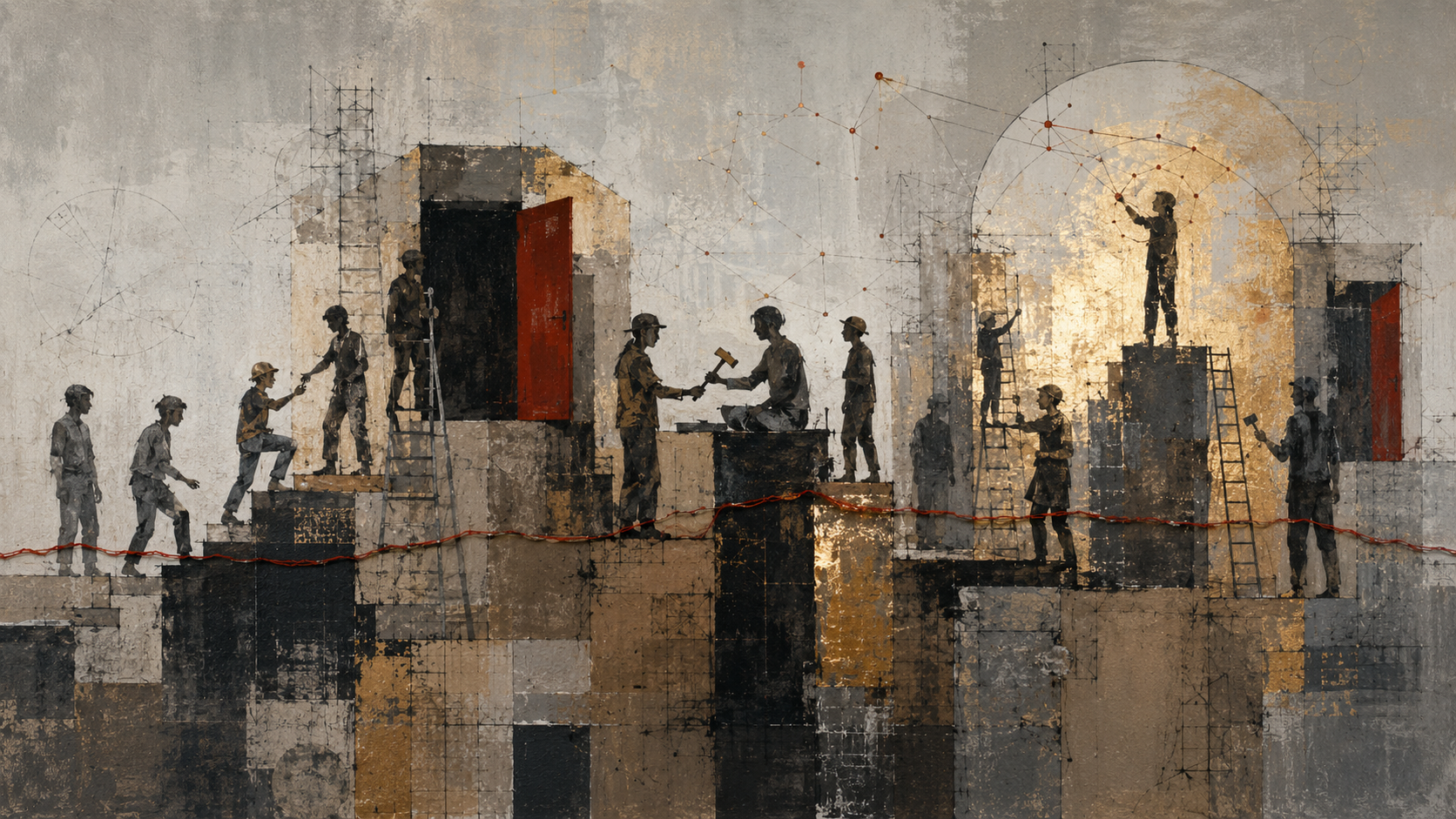
Dues Are Sacred Money
Dues are sacred money.
Not sacred in the mystical sense. Sacred in the labor sense. Sacred because they come from wages already fought over, already taxed, already divided among rent, groceries, childcare, gas, medicine, debt, shoes, school supplies, elder care, car repairs, utilities, and the thousand small emergencies that eat a paycheck before it becomes a life.
A dues dollar is not born in a budget line.
It comes from a worker’s hour.
That hour may have been spent answering phones while short-staffed, inspecting returns under production pressure, teaching thirty children in a room built for twenty, lifting patients, cleaning rooms, processing claims, driving routes, stocking shelves, repairing roads, calming the public, absorbing abuse, writing reports, fighting software, working overtime, missing dinner, waking before sunrise, or going home too tired to be fully present with the people one loves.
By the time that dollar reaches the union, it has already passed through the worker’s body.
So no one should spend it casually.
This does not mean unions should be cheap. Cheap unions are often weak unions. Workers need staff, organizers, strike funds, researchers, attorneys, communications, training, technology, meeting space, translation, accessibility, political capacity, steward education, arbitration budgets, and the boring infrastructure of durable power. A union that refuses to spend money on capacity may save dues while losing the future.
The question is not whether a union spends. The question is whether every expenditure can answer the member-interest test: whether it builds worker power, enforces the contract, trains members, makes the union more democratic, increases bargaining leverage, protects vulnerable members, improves safety, wages, benefits, staffing, dignity, or anti-retaliation capacity, and returns material strength to the shop floor, the agency floor, the classroom, the hospital wing, the field crew, the call center, the warehouse, the office, the route, the clinic, the library, the prison, the dispatch room, or wherever the work is actually done.
If the answer is yes, spend boldly.
If the answer is no, explain why the members should pay for it.
The LMRDA framework requires covered labor organizations to file financial reports, constitutions, bylaws, and information reports with OLMS; DOL states covered unions must make those reports available to members and permit members to examine supporting records for just cause.³ Again, that is the legal floor. The moral ceiling is higher. Members should not merely have access to reports. They should have access to understanding.
A financial report that no ordinary member can interpret is transparency in the same way a locked glass door is access.
Technically visible.
Practically withheld.
Real financial democracy requires translation. It requires plain-language budgets, recurring explanations, comparisons over time, clear categories, officer and staff compensation visibility, consultant and vendor disclosures, political spending breakdowns, strike fund status, organizing expenditures, legal costs, reserve policies, travel and conference spending, and enough context for members to judge whether their sacrifice is being converted into power or absorbed by the institution’s appetite.
The point is not to shame every staff salary or every travel expense. Movements need people, and people need to eat. The point is to refuse the conversion of dues into fog.
Because fog is where institutional class formation begins.
A labor bureaucracy does not need marble offices to become distant from members. It only needs an expense structure nobody can question without sounding rude, insiders who know how to read the reports, outsiders who do not, and a culture where asking about money is treated as suspicion rather than stewardship.
That is backwards.
A member asking where dues went, why a consultant was paid, how much officers make, why political spending increased while steward training collapsed, or whether a conference mattered more than a strike fund is not attacking the union. That member is doing what members are supposed to do. They are acting like the union belongs to them.
Dues should be treated like a covenant. Workers give part of their wages to a common structure because they believe the structure will make them less alone before power. That is an act of trust and an act of hope. It says: I will give up something now so that we can build something together.
That hope is not infinite.
Every opaque budget depletes it. Every insider deal depletes it. Every unexplained consultant contract depletes it. Every officer who treats dues like institutional entitlement depletes it. Every political expenditure that cannot be tied back to member power depletes it. Every staff structure that grows while member education shrinks depletes it. Every defensive answer to a reasonable financial question depletes it.
And a labor movement with ten percent national union density cannot afford to deplete trust. BLS reported that the union membership rate was 10.0 percent in 2025, with 14.7 million wage and salary workers belonging to unions. In 1983, the first year for which comparable data are available, the rate was 20.1 percent and there were 17.7 million union members. BLS also cautions that 2025 annual estimates are based on 11-month averages excluding October, because CPS data were not collected during the federal government shutdown, and therefore 2025 annual estimates are not strictly comparable with annual averages for other years.⁴
Dues are not tribute.
They are not rent paid to a labor priesthood, a subscription fee for occasional representation, the property of officers, or the oxygen supply of a staff empire.
They are workers’ money, converted into collective power only if the institution remains accountable to the workers who earned it.
A union budget is not just accounting.
It is a moral autobiography.
It tells the truth about what the institution loves. And if the budget loves officers, consultants, access, conferences, branding, headquarters, and political proximity more than it loves steward training, strike capacity, contract enforcement, member education, accessibility, translation, organizing, and workplace power, then no speech about solidarity can save it.
Workers know what budgets mean.
They live inside them every month.
So should their unions.
Politics Must Return to the Members
Labor cannot be apolitical.
That sentence should be said plainly because anti-union forces love a fake distinction between “workplace issues” and “politics.” There is no such clean line. Wages, staffing, pensions, health insurance, public budgets, privatization, safety enforcement, overtime law, collective bargaining rights, discipline standards, civil service protections, retirement security, organizing rights, and the existence of public-sector jobs are all shaped by political decisions made by legislators, boards, agencies, donors, courts, and executives who may never have done the work themselves.
So the question is not whether unions should engage politics.
They must.
A union that pretends politics does not matter sends its members into a battlefield with a contract in one hand and no shield in the other. Employers lobby, agencies lobby, contractors lobby, billionaires lobby, privatizers lobby, anti-tax coalitions lobby, and industry groups lobby. Charter networks, hospital systems, logistics companies, tech firms, construction interests, chambers of commerce, and ideological think tanks do not stay home out of respect for workplace purity.
Labor cannot be the only force too noble to fight where power is actually allocated.
The question is who labor politics serves.
Political action is necessary.
Political capture is optional.
Political action asks what laws, budgets, appointments, agencies, enforcement systems, and public choices materially strengthen workers. Political capture asks what relationships the institution must preserve to remain important. Political action returns power to members. Political capture converts members into assets.
That distinction is the hinge.
A union’s political program can be necessary and still drift. It can begin with real member need and slowly become an ecosystem of access. Officers develop relationships with elected officials, political staff with campaign staff, consultants with vendors. Endorsement processes become rituals of insider knowledge. PAC spending becomes too complex for ordinary members to track. Lobbying priorities become abstract. Members are told that certain compromises are necessary, certain candidates are strategic, certain betrayals are unfortunate but unavoidable, and certain incumbents must be protected because access matters.
Access does matter.
But access is not victory.
A photograph with a governor is not a staffing ratio. A friendly legislator is not a contract clause. A seat at the table is not power if the menu was written before workers arrived.
A union that mistakes access for power begins to collect symbols instead of material gains. It can point to meetings, invitations, task forces, advisory boards, legislative receptions, caucus calls, stakeholder convenings, and carefully worded public statements. It can tell members the relationship is important, politics is complicated, and pushing too hard may jeopardize future influence.
Sometimes that is true.
Sometimes it is cowardice wearing a blazer.
The test must be material. Did the political relationship improve wages, protect pensions, prevent privatization, improve staffing, increase safety, protect members from retaliation, strengthen bargaining rights, fund services at a humane level, reduce caseloads, class sizes, patient ratios, call queues, inspection backlogs, road crew danger, prison staffing crises, administrative overload, or mandatory overtime? Did it make the employer more accountable and the members stronger?
If not, what exactly was purchased with member trust?
Members are often asked to provide the most embodied part of politics: time, presence, stories, turnout, doors knocked, calls made, texts sent, rallies attended, testimony given, photos taken, slogans chanted, money contributed, and relationships strained. Members bring authenticity because members bring work. A politician standing beside actual workers borrows the moral weight of their labor.
That weight is valuable.
Which means it can be exploited.
A member’s face in a campaign ad, a nurse in scrubs behind a podium, a teacher talking about kids, a caseworker describing overload, a road worker talking about safety, a library worker defending public services, a tax auditor explaining fairness, a public defender describing collapse, or a home care worker describing dignity is not a prop. These are people converting lived experience into political legitimacy.
If the members are good enough to be the moral face of a campaign, they are good enough to shape whether the campaign deserves that face. If they are good enough to knock doors, they are good enough to vote meaningfully on endorsements. If they are good enough to pay dues, they are good enough to inspect political spending. If they are good enough to be invoked in speeches, they are good enough to hear the truth about what was traded for access.
The political program must be answerable to the members, not merely explained to them afterward.
That means endorsement processes should not be theater, political surveys should not be decorative, candidate interviews should not be insider rituals, voting records should be presented plainly, PAC spending should be intelligible, member dissent should be expected, and political staff should not treat members as raw material for a strategy already decided. Officers should not use labor endorsements to cultivate their own future careers. No politician should receive labor support merely because they are less hostile than the alternative while offering nothing concrete to workers.
Sometimes labor must choose between bad options. That is reality.
But choosing between bad options is exactly when transparency matters most.
Members can handle hard truth better than they can handle being managed. Tell them the candidate is flawed and the opponent is worse. Tell them what was promised, what was refused, what leverage exists, what leverage does not, what the union intends to demand after the election, how the endorsement will be reviewed, what would cause the union to withdraw support, and what members can do if they disagree.
Do not ask workers to perform democracy while the real decision has already been made.
The party is not the union. The elected official is not the union. The endorsement is not the union. The access is not the union.
The union is the members organized into power.
Everything else is a tool.
And when a tool begins asking to be worshiped, the rank and file should put it back on the bench.
A union that treats members as canvassing infrastructure for politicians who would never survive a real shop-floor interrogation has laundered solidarity into access. A union that trades member anger for insider respect has confused being heard with being obeyed. A union that protects political relationships more carefully than member trust is no longer doing politics for labor.
It is doing labor for politics.

Transparency Is Oxygen
Transparency is not a favor leadership grants to members.
It is the oxygen of solidarity.
Without it, the union may still breathe institutionally. It may file reports, negotiate contracts, issue statements, hold elections, endorse candidates, run meetings, and process grievances. But the members begin suffocating in the dark. They hear that work is being done, are told that strategy exists, are assured that leadership knows the situation, and receive updates written in the soft, frictionless language of institutional reassurance.
But they cannot see enough to judge.
And if members cannot judge, then they cannot govern.
A union without transparency does not merely hide information. It changes the moral relationship between members and leadership. It asks workers to trust what they cannot inspect, ratify what they cannot fully evaluate, fund what they cannot meaningfully audit, and defend decisions they did not help make.
Workers already know that arrangement.
That is how management works.
The Department of Labor’s member-rights materials state that covered union members have equal rights to participate in union activities, freedom of speech and assembly, voice in setting dues, safeguards against improper discipline, rights to receive or inspect collective bargaining agreements, access to union reports, and officer-election protections.⁵
That is the legal floor where it applies.
A serious labor movement should treat it as the basement, not the ceiling.
Because a union can technically disclose and practically conceal. It can file the forms, hold the meeting, post the budget, say the contract is available, comply with the minimum, and still leave ordinary members unable to understand what is happening inside the institution they fund.
A 300-page financial report no one explains is not democracy. A budget presented after the real decisions have already been made is not democracy. A bargaining update that says “we are making progress” while naming no tradeoffs is not democracy. A ratification packet released under panic conditions is not democracy. A political endorsement process that announces member involvement only after leadership has decided the outcome is not democracy. A meeting where insiders know the rules and ordinary members sit in procedural fog is not democracy.
That is compliance theater.
The deepest danger is not that members know nothing. It is that they know just enough to be told they were informed, just enough to be blamed for not reading, just enough for leadership to say the process was available, and just enough for the institution to preserve the appearance of consent while withholding the conditions for meaningful consent.
The form is open.
The door is locked.
Transparency must be usable. It must be timely, plain, searchable, accessible, multilingual where needed, disability-conscious, and designed for the lives members actually live. Workers have night shifts, children, commutes, second jobs, medical appointments, exhaustion, fear, ADHD, trauma histories, bad internet, elder care, burnout, and very little patience for being told that democracy was available at 6:30 p.m. in a room full of insiders speaking parliamentary code.
Transparency has failed when members cannot understand the information, when they receive it too late to act, when questions can only be asked in formats that protect leadership from follow-up, when financial reports exist but cannot be translated into consequences, when bargaining updates are so vague that they preserve morale by destroying judgment, or when dissenters need to become amateur lawyers to find out what their own union is doing.
Let’s express this another way. Consider that coherence, that state by which one achieves true understanding, might be defined as Ψ = E × T: Empathy, or reciprocal responsiveness, multiplied by Transparency, or traceability and auditability. A system becomes coherent only when it is both responsive to affected people and inspectable enough to be held accountable.⁶
Labor should understand Empathy and Transparency intuitively.
A union with empathy but no transparency becomes paternalistic. It may care, work hard, and even win things, but it still says, “We know what you need; trust us.” A union with transparency but no empathy becomes bureaucratic. It may disclose, publish, and comply, but it does not listen, adapt, or feel the consequences of what it reveals. A union with neither becomes a machine.
A union with both becomes dangerous again.
That is the standard: not disclosure as paperwork, but transparency as member power.
A member should be able to understand where dues go, who has authority over staff, what political expenditures are supposed to produce, why a bargaining priority was elevated or abandoned, what a tentative agreement gives, what it trades, what it delays, what it hides, and what risks remain.
If the union cannot explain itself to the people who fund it, the union has become too comfortable with opacity.
And opacity is never neutral.
Opacity protects incumbents, staff systems, political relationships, bad habits, procedural insiders, consultants, weak bargaining, and cowardice dressed as strategy. It protects leadership from having to say, plainly: here is what we did, here is why, here is what it cost, here is who benefited, here is who lost, and here is what members can do about it.
Transparency is not merely moral. It is strategic.
A transparent union develops members who can defend the institution because they understand it. It produces stewards who know more than slogans, bargaining teams that can explain tradeoffs without fear, political programs members can argue for because they had a real role in shaping them, and financial trust because members have seen the books in a form that respects their intelligence.
The rank and file do not need every confidential detail at every moment. Serious people know that. Bargaining strategy sometimes requires timing. Personnel matters can require privacy. Legal issues can require care. Sensitive member situations must be protected. Confidentiality is legitimate when it protects vulnerable people or live strategy.
But confidentiality must never become the perfume of power.
A simple rule should govern the whole institution: confidentiality may protect strategy, vulnerable members, legal process, and the union from employer exploitation, but it must never protect leadership from accountability.
That is the line.
No just union requires member ignorance to function.
If leadership is right, transparency will strengthen its case. If leadership is wrong, transparency will let members correct it before the error hardens into betrayal. If the budget is defensible, explain it. If the endorsement is defensible, defend it. If the bargaining strategy is sound, teach members enough to understand the shape of the fight. If the compromise was necessary, say what made it necessary. If the union lost leverage, tell the truth about why. If the institution made a mistake, name it before members have to drag the truth into the light.
Democratic muscle is not weakness.
A union that cannot explain itself is not mature. It is brittle. It is afraid that the members, given sight, will become unmanageable.
Good.
That is what democracy does to power.
It makes power answer.
Staff Should Build Muscle, Not Replace It
Staff can strengthen a union.
Staff can also hollow it out.
Both truths have to be held at once, or the analysis becomes either anti-worker professional resentment or sentimental labor-bureaucracy defense. The issue is not whether unions need staff. They do. The issue is whether staff capacity develops member power or substitutes for it.
Good staff are precious. They know the contract, remember past fights, catch management’s tricks, help members file grievances before deadlines disappear, train stewards, build campaigns, track legislation, prepare bargaining research, handle communications, coordinate political work, support locals, and absorb emotional fallout from conflicts they did not create. Many staff work far beyond clean job descriptions. Many are former rank-and-file leaders themselves. Many entered labor because they believe in workers and have paid for that belief in stress, travel, conflict, and burnout.
So this is not an anti-staff argument.
It is an anti-substitution argument.
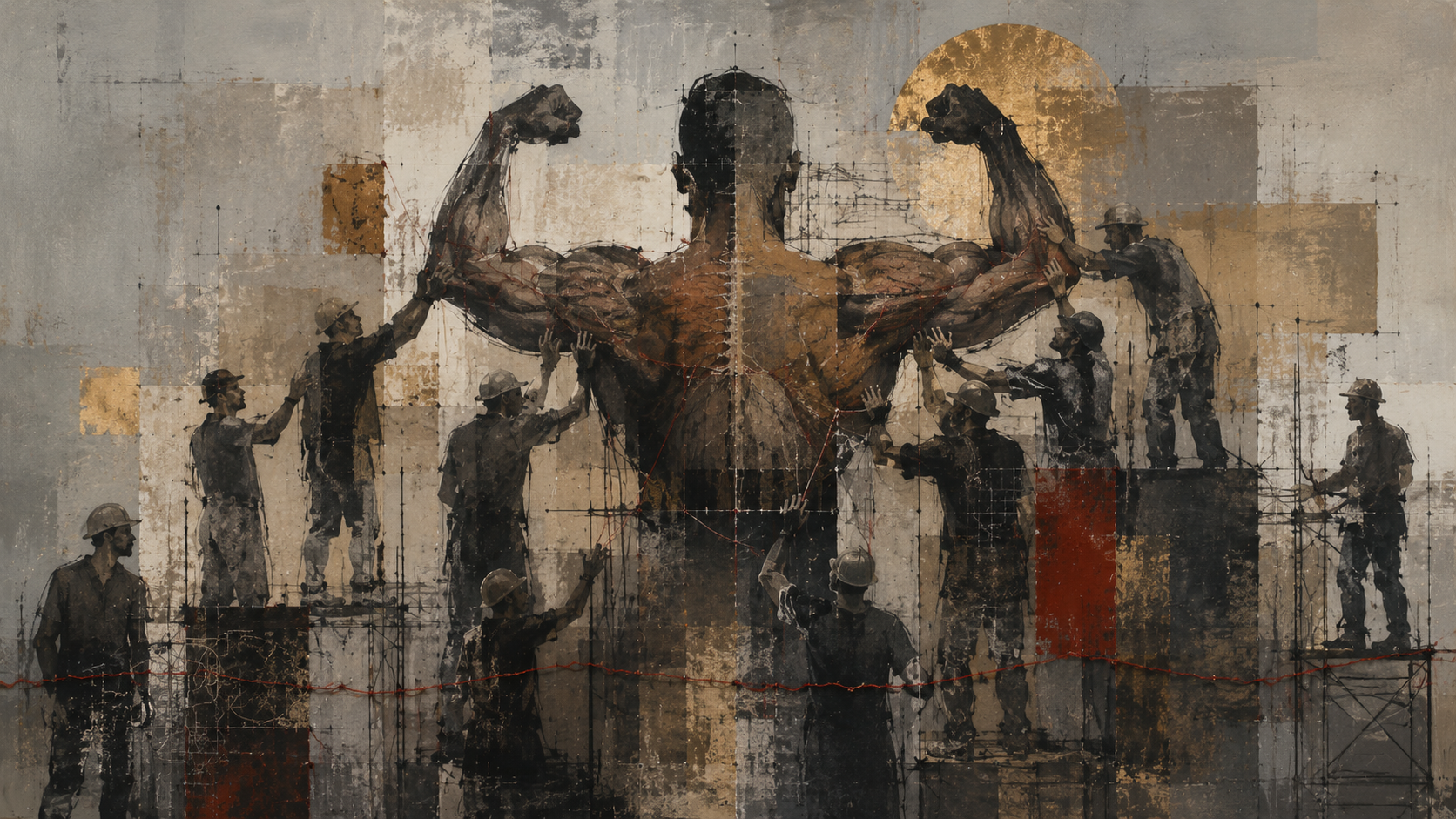
A union’s staff should be scaffolding, not skeleton.
The skeleton of the union must remain the members.
When staff become the skeleton, the body can still move, but it no longer moves from its own muscle. It moves because professionals know which levers to pull. It can bargain, message, litigate, lobby, and administer. It can appear strong from the outside. It can even win occasional good contracts.
But members begin to experience power as something delivered to them by others.
That is dangerous.
Because the point of a union is not merely that workers receive representation. The point is that workers become collectively powerful. A union that wins for members without developing members may produce benefits, but it also produces dependence. And dependence is not liberation, even when the service provider is friendly.
The staff-driven model often begins innocently. Members are busy, workplaces are scattered, grievances are technical, employers are aggressive, labor law is complex, political terrain is confusing, and someone has to do the work. Staff step in because things must get done.
Then, slowly, a culture forms.
Members call “the union” instead of calling one another. Stewards become messengers rather than organizers. Grievances become files rather than campaigns. Bargaining becomes a specialized craft rather than a collective fight. Political action becomes a department rather than a membership practice. Communications become brand management rather than democratic education. Meetings become reports from staff instead of deliberation among workers.
Members learn that the union is elsewhere.
That is the fatal phrase.
Elsewhere.
A union cannot survive as a movement if its members experience it as elsewhere.
Staff-driven unionism often produces short-term efficiency and long-term weakness. It avoids the slowness of democracy, the frustration of member education, the unpredictability of open debate, the emotional labor of disagreement, the embarrassment of contested priorities, and the difficulty of building new leaders from people who are exhausted and imperfect.
But democracy is not inefficiency.
Democracy is the work.
A union that avoids member democracy to preserve efficiency is like a choir that avoids rehearsal to preserve harmony. It may sound smoother for one performance. It will not survive a difficult score.
Member muscle is built through use. Workers learn power by exercising it, not by receiving polished summaries of power exercised elsewhere. They learn the contract by applying it, bargaining by debating priorities, politics by interrogating endorsements, solidarity by solving conflicts in the open, stewardship by being trusted with responsibility, and courage by watching dissent survive.
If staff do all the hard things, members do not become ready.
Then leadership says members are not ready.
This is the loop.
The union does not train members, then cites member unpreparedness as the reason professionals must keep control. It does not build transparent structures, then says members do not understand. It does not create accessible meetings, then says members do not attend. It does not trust stewards with real authority, then says the steward system is weak. It does not teach members how budgets work, then says financial questions are irresponsible.
When leaders starve members of information and then complain that members are uninformed, they are not diagnosing apathy.
They are confessing governance failure.
This does not mean members have no responsibility. They do. A union cannot be democratic if members only appear when angry. Members must read, show up, vote, ask questions, serve, train, recruit, confront management, defend one another, and resist the consumer posture that treats “the union” as a complaint desk. Member sovereignty is not a decorative crown. It is work.
But institutions shape participation.
If the union is built like a service provider, members will behave like customers. If the union is built like a commons, members may become stewards.
The design matters.
A staff-driven union often uses the language of member leadership while maintaining the habits of professional control. It will say “member-led” while staff write the plan, control the data, manage the communications, decide the timeline, define the options, interpret the bylaws, select the pressure points, coordinate the politicians, draft the bargaining message, brief the officers, and invite members to participate in a campaign whose bones have already been set.
That is not member leadership.
That is member decoration.
A real member-led union does not mean staff disappear. It means staff are judged by whether they increase the independent governing capacity of the rank and file. The best staff leave members stronger after every interaction. They do not merely solve the problem; they teach the structure. They do not merely answer the question; they show where the answer comes from. They do not merely run the campaign; they develop members who can run the next one. They do not merely bargain for workers; they build workers who understand bargaining power.
The staff question should always be:
Are we building members who need us less?
Not because staff are unimportant, but because a strong union cannot depend on any small class of professionals to remain alive.
Staff who cannot tolerate that question are not protecting the union. They are protecting their indispensability.
And indispensability is a dangerous drug.
Officers can become addicted to it. Staff can become addicted to it. Lawyers can become addicted to it. Political directors can become addicted to it. Communications teams can become addicted to it. Consultants sell it by the hour.
But a union does not exist to make insiders feel necessary.
It exists to make workers powerful.
The Universal Control Codex frame is useful here as a governance metaphor because it treats “control grammars” as explicit, shareable, testable artifacts that name tasks, authorities, reasoning steps, evidence requirements, validation rules, reporting structure, and escalation policy.⁷ A member-first union needs the democratic equivalent. Not mystical governance, not “we have always done it this way,” not oral tradition guarded by insiders, but explicit democratic control grammar.
A member should be able to understand who decides, who recommends, who reviews, who can object, who can inspect, who can appeal, who can recall, who can see the evidence, who benefits, who bears the cost, and who has the authority to say no.
These questions should not require factional warfare to answer.
They should be built into the operating system of the union.
A union that cannot survive active members is not a union.
It is a service provider with a labor logo.
Dissent Is the Union’s Immune System
A democratic union must protect internal dissent because dissent is how members audit power before betrayal becomes structure.
That sentence will irritate the wrong people for the right reasons.
Every labor institution has heard some version of the warning: do not air dirty laundry, do not divide the membership, do not help management, do not undermine the bargaining team, do not weaken the political program, do not criticize leadership during a fight, do not confuse members, do not damage unity.
Some of those warnings can be real.
Management does exploit division. Anti-union forces do quote internal criticism in bad faith. Bad actors do use reform language to settle personal scores. Members can spread misinformation. Dissent can become vanity. Factionalism can eat a local alive. The boss does not need help.
But none of that cancels the truth:
A union that cannot distinguish dissent from betrayal will eventually betray its dissenters and call that solidarity.
The authoritarian move inside labor is almost always the same. Leadership identifies itself with the union. Then criticism of leadership becomes criticism of the union. Questions about spending become attacks on solidarity. Questions about bargaining become attacks on the bargaining team. Questions about political endorsements become attacks on the movement. Questions about staff conduct become attacks on workers. Questions about democracy become evidence that the questioner is divisive.
This is how power hides inside the word “we.”
“We need unity,” “we need discipline,” “we need to trust the process,” “we cannot give management ammunition,” and “we cannot let internal disagreements distract us” can all sound reasonable. But the question is who gets to define the “we.” If “we” means the members in democratic relation, then unity has meaning. If “we” means leadership and staff asking members not to interfere, then unity has become camouflage.
Solidarity is not silence.
Solidarity is not obedience.
Solidarity is not pretending that internal power does not exist.
Solidarity is the disciplined practice of workers protecting one another while telling the truth about the institution they share.
That truth may be uncomfortable. Good. So is organizing. So is bargaining. So is confronting a supervisor. So is filing a grievance. So is asking a coworker to stop free-riding. So is telling a politician that labor support is not decorative. So is admitting the union made a mistake.
A labor movement that only tolerates comfortable truth is not ready for power.
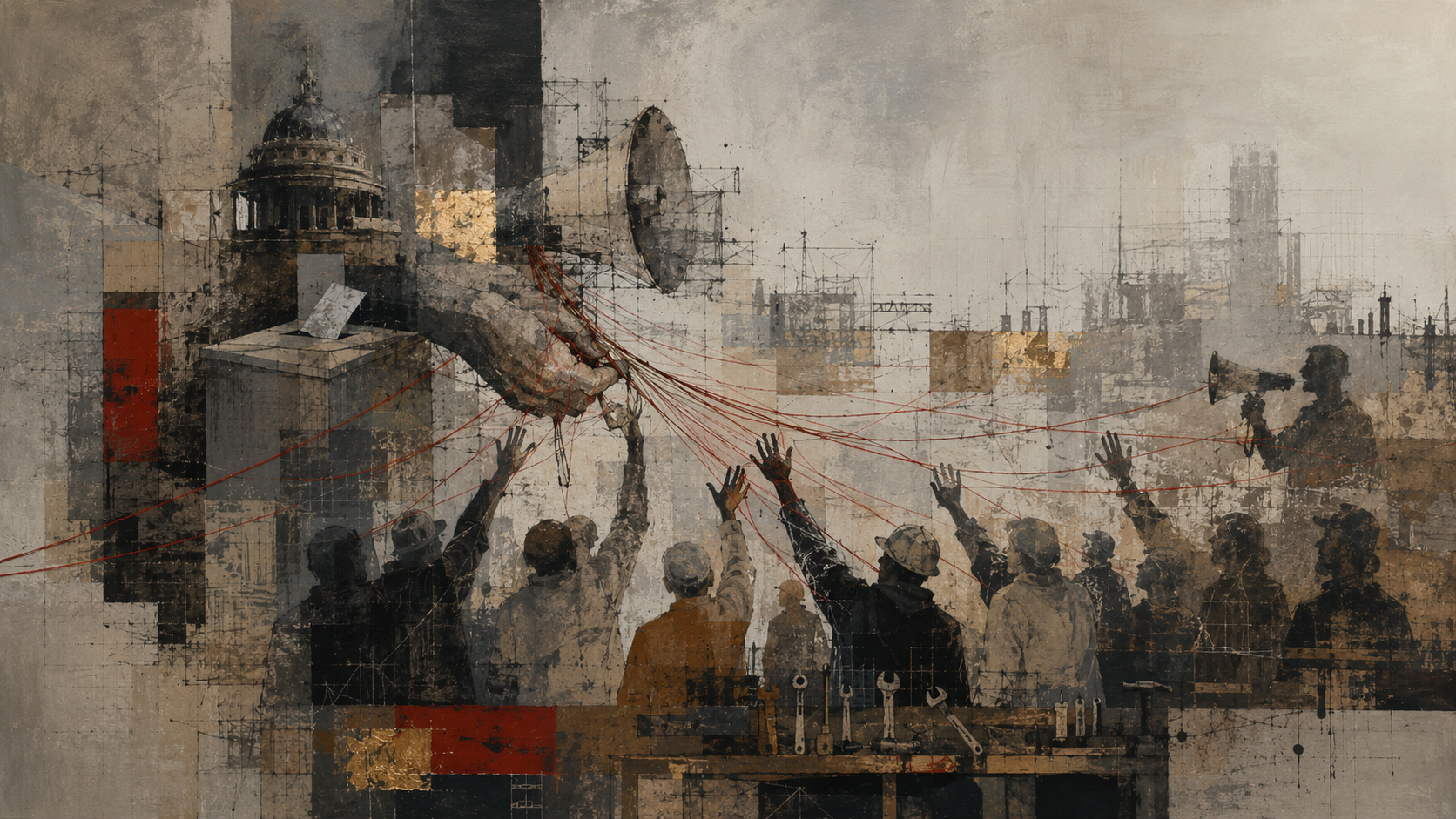
Dissent is the immune system of the union.
It identifies infection before the body collapses. It notices when leadership drifts upward, staff culture becomes defensive, bargaining becomes opaque, political access becomes addictive, dues spending becomes fog, reformers are punished, members are treated as liabilities, and the institution begins loving itself more than the workers.
An immune system can overreact. It can attack healthy tissue. It can become autoimmune. So dissent needs ethics. It needs evidence, courage, proportion, and responsibility. It should not invent facts, personalize every disagreement, hand management private strategy, confuse losing a vote with being oppressed, or treat leadership as evil merely because leadership is wrong.
But an overactive immune system does not mean the body should have no immune system.
The cure for bad dissent is better democracy.
Not silence.
The LMRDA framework protects union-member rights to speech, assembly, participation, elections, and safeguards against improper discipline where it applies; DOL also states that a union or its officials may not fine, expel, or otherwise discipline a member for exercising LMRDA rights.⁸ Those rights do not exist because dissent is always pleasant. They exist because unions are democratic institutions, and democratic institutions must tolerate members acting like citizens.
A member who asks where the money went, wants more bargaining transparency, challenges an incumbent, questions an endorsement, says staff are unresponsive, organizes a reform caucus, votes no on a tentative agreement, or says the union is drifting from the shop floor is not management.
Management is management.
Do not give management the gift of treating member democracy as an enemy.
When leaders equate criticism with betrayal, they teach members that loyalty means submission. That is fatal. Workers did not build unions to learn submission in a different accent. They built unions because they were tired of being told that decisions affecting their lives belonged to someone else.
If that is true at work, it is true inside the union.
A union afraid of its own members has already accepted the boss’s theory of power. The boss believes workers are dangerous when informed, dissent must be managed, ordinary workers cannot understand complex decisions, and authority is legitimate when procedure says it is. The bad union agrees.
The tragedy is not that the bad union hates labor. Often it loves labor: labor history, labor songs, labor imagery, labor law, labor conferences, labor coalitions, labor identity, labor access, labor rhetoric. But it has forgotten labor’s central act: workers refusing to be governed without power.
Internal dissent is that refusal turned inward.
Not inward to destroy the union.
Inward to save it from becoming the kind of institution workers need protection from.
The healthiest unions metabolize dissent. They do not panic at it. They build rooms where members can disagree without becoming enemies, where officers can be challenged without being humiliated, where staff can be criticized without being abused, where reformers can organize without being smeared, where losing sides can remain part of the union, and where the institution is strong enough to survive being seen clearly.
That is real unity.
Not the unity of silence.
The unity of a body whose members can still feel pain and respond before the wound becomes gangrene.
The rank and file should not have to whisper to one another in parking lots, private chats, side calls, lunch rooms, and anonymous forums because the official structures cannot hold truth. When truth flees the meeting, the meeting has failed.
A union should be the place where workers learn to speak.
Not the place where they learn which truths are unsafe.
Dissent is not disloyalty.
Dissent is the sound of members refusing to become furniture in their own house.
And if the house of labor cannot bear that sound, then the house does not belong to the workers yet.
The Bargaining Table Is Not a Throne
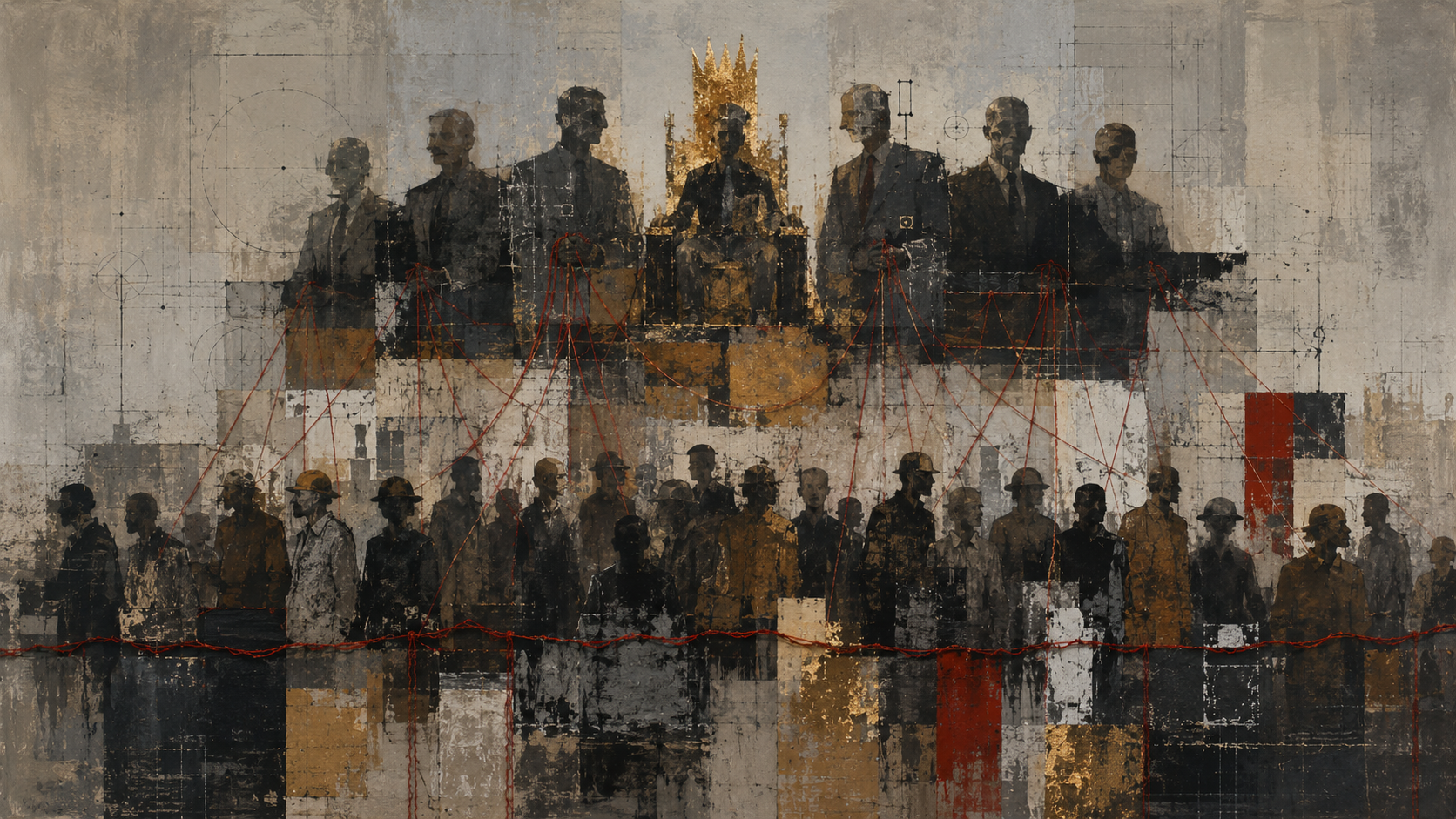
The bargaining table is not a throne.
It is not holy ground. It is not a priestly chamber. It is not a sealed altar where a small circle enters on behalf of the many and returns with tablets the members are expected to receive in reverent silence.
It is a delegated battlefield.
That does not mean every bargaining conversation belongs on a livestream. Serious bargaining requires strategy. Timing matters. Confidentiality can protect leverage. A careless disclosure can strengthen management, weaken a proposal, expose a vulnerable group, or collapse a tactical opening before it matures. Anyone who has actually been near a difficult negotiation knows that total transparency in real time can become self-sabotage.
But confidentiality is not the same as secrecy.
Confidentiality protects strategy.
Secrecy protects power.
That distinction is everything.
A member-first union does not pretend bargaining is simple. It teaches members why bargaining is hard. It explains the terrain, the employer’s incentives, the statutory limits, the budget pressures, the leverage points, the weak spots, the risks of escalation, the costs of compromise, and the difference between what members deserve and what the union currently has the power to win.
A captured union does something else.
It mystifies the table. It turns complexity into a shield. It says “trust the bargaining team” when it means “stop asking.” It says “we cannot discuss strategy” when it means “we do not want members shaping strategy.” It says “we hear you” when it means “we have already decided which demands are realistic.” It says “this is the best we can do” before members have been given enough information to test whether that is true.
Workers already hear that from management.
They do not need it echoed by the people carrying their authorization.
The bargaining team does not own the demands. The bargaining team carries the demands.
That difference should be written above the door of every union hall.
Members are the ones who live under the agreement. They live with the wage scale, workload language, health insurance tradeoffs, discipline article, layoff procedure, seniority rules, transfer language, safety protections, staffing promises, grievance timelines, management rights clause, no-strike clause, reopener language, pension formula, premium share, differential, mandatory overtime loophole, pilot program, side letter, and ambiguity that will later become a grievance denial.
Members live where bargaining language becomes real.
So members must not be treated as an audience for the people who negotiate. They must be treated as the source of the mandate.
That means bargaining begins before bargaining. A real union does not wait until formal negotiations begin to discover what members need. It builds demand formation as an organizing process. It asks members what hurts, what costs, what humiliates, what burns them out, what drives turnover, what management lies about, what rules are unenforced, and what protections exist on paper but not in practice. It maps the workplace and listens across classification, shift, geography, race, gender, age, seniority, disability, family status, immigration status, and job security. It does not confuse the loudest meeting attendees with the whole membership or staff assumptions with member priorities.
Then it teaches the tradeoffs.
This is the part weak leadership avoids because it is hard.
Members deserve honesty about leverage. If a demand is morally right but strategically difficult, say that. If management will resist because the demand threatens control, say that. If a demand costs money but saves lives, say that. If members want everything but are not yet organized enough to win everything, say that too. Do not flatter members with fantasy and then blame them for disappointment. Do not lower expectations in private and perform militancy in public. Do not make members choose between false hope and managerial realism.
Tell the truth.
The truth is not anti-union.
The truth is the beginning of serious unionism.
A bargaining survey can be democratic or decorative. A democratic survey transfers information and power. It asks real questions, publishes meaningful summaries, explains what leadership heard, names contradictions, shows how priorities were weighted, and connects member input to actual proposals. A decorative survey extracts legitimacy. It lets leadership say “we surveyed members” while preserving full discretion to ignore what members said.
The same is true of bargaining updates.
A useful update does not expose every tactical detail. It gives members enough to understand the fight: what issues are moving, what issues are blocked, what management is saying, what arguments are being made, what pressure is needed, what members can do, where the union is strong, where it is weak, what rumors are false, what claims need verification, and what happens next.
A useless update says the parties met, exchanged proposals, had a productive conversation, and that the team is fighting hard, so members should stay united and wait for more.
That is not an update.
That is fog with a logo.
When the tentative agreement arrives, democracy becomes even more important. A tentative agreement should not be rushed through members like contraband. Members need time to read, ask, compare, debate, translate, calculate, and understand. They need plain-language summaries and actual contract language, side-by-side comparisons, wage calculators where relevant, explanations of tradeoffs rather than salesmanship, and meetings where opposition is allowed to speak without being treated as sabotage.
Ratification is not a loyalty test.
A no vote is not betrayal.
A no vote may be misinformed, reckless, wise, or the only remaining way members can say the bargaining team lost the mandate. The point is not that every no vote is noble. The point is that ratification means nothing if members are only permitted to vote yes without stigma.
The question after a no vote should not be, “How do we discipline these unrealistic members?”
The question should be, “What did leadership fail to understand, explain, build, or win?”
A member-first union treats bargaining authority as a loop. Members set demands, the team negotiates, the team reports, members pressure, the employer responds, the team adjusts within the mandate, members deliberate, members ratify or reject, the union learns, and the next fight begins stronger.
A captured union treats bargaining authority as a funnel. Members vent, leadership filters, staff draft, the team negotiates, members wait, leadership sells, members ratify, the institution congratulates itself, and the same weakness returns next cycle.
That is not power.
That is procedural gravity dragging workers downward while calling the descent realism.
The bargaining table is not holy ground.
It is a delegated battlefield.
And the workers who bear the consequences have the right to know what was traded in their name.
Members Become Ready by Being Trusted with Power
The labor elite’s favorite excuse is that members are not ready.
Not always in those exact words. The polished version is gentler. Members are busy, divided, absent from meetings, vulnerable to misinformation, inconsistent, angry but not strategic, unrealistic, unfamiliar with legal constraints, inattentive to updates, and not yet ready for full transparency, direct democracy, or responsibility.
Some of that may be true.
Workers are busy. Workers are divided. Workers are tired. Workers do miss meetings, ignore emails, forget deadlines, misread proposals, repeat rumors, demand contradictions, and underestimate the difficulty of winning. Workers are human beings under capitalism. Exhaustion is not a character flaw. It is an operating condition.
But member unreadiness is not an argument against democracy.
It is an indictment of union design.
If members do not understand bargaining, who failed to teach bargaining? If they do not understand the budget or trust leadership, who failed to educate and who spent down the trust? When meeting attendance becomes scant, who designed meetings that only insiders can endure? If members do not read updates, who taught them that updates rarely contain usable information?
If members do not know the contract or how to run for office, who kept those pathways obscure and made contract education episodic instead of cultural? If the union is viewed by its own members as only a service provider, who engendered that view from the top?
The most dangerous leadership class is the one that creates the conditions for member passivity, then cites member passivity as proof that leadership must retain control.
That is not realism.
That is circular governance.
Workers are told they are not ready because they lack information. They lack information because leadership does not trust them with it. Leadership does not trust them because they are not ready. Around and around it goes, a little machine for converting member exclusion into leadership necessity.
Break the machine.
Members become ready by being trusted with real work before they are perfect. That is how every organizer, steward, officer, negotiator, and staffer became ready. Someone handed them a responsibility they were not fully prepared for, and then they learned under pressure. The labor movement itself is a pedagogy of ordinary people becoming capable of extraordinary discipline.
No one is born knowing how to read a contract, chair a meeting, file a grievance, map a workplace, confront a supervisor, calculate a wage proposal, evaluate a political endorsement, or run a strike kitchen. These are learned capacities. If only insiders learn them, insider rule becomes self-justifying.
A member-first union designs for the lives members actually have. It varies meeting times, offers remote access where useful, supports childcare where possible, translates materials, builds disability access, creates plain-language explainers, records briefings, publishes written Q&A, orients new members, teaches budget literacy, runs contract workshops, holds political endorsement forums, stages bargaining simulations, develops local leadership schools, creates mentorship pathways, rotates committees, and treats questions as expected rather than punished.
It also designs for emotional reality. Members do not participate in spaces where they expect humiliation. They do not ask questions in rooms where insiders sigh. They do not run for office in cultures where challengers are smeared. They do not attend meetings that feel like ritualized boredom followed by procedural ambush. They do not trust leaders who appear only when votes are needed.
Participation is not merely a moral demand placed on members.
It is a design outcome.
A union that wants active members must build structures that make activity meaningful. Not easy. Meaningful. Members can tolerate difficulty when the difficulty matters. They already tolerate difficulty at work every day. What they cannot tolerate forever is being asked to sacrifice scarce time for meetings where nothing can change.
That is how cynicism grows.
Not because workers are naturally apathetic.
Because they have learned the difference between participation and theater.
The labor bureaucracy often fears messy member democracy because it disrupts smooth institutional motion. Members ask questions at the wrong time, raise problems leadership hoped to contain, bring workplace anger into rooms where leadership wants message discipline, notice contradictions, distrust euphemism, remember past promises, and ask why the union endorsed someone who betrayed them, why staff are not returning calls, why dues went up, why the bargaining update says nothing, why a tentative agreement is being rushed, and why the same people always seem to know things first.
Good.
That is what members are for.
A democratic union is not a machine for preventing inconvenient questions. It is a structure for metabolizing them into power.
If members are not ready, prepare them. If they are too busy, design around their lives. If they are divided, organize through the division. If they are angry, give anger a structure. If they are misinformed, stop starving them of trustworthy information. If they are inconsistent, teach them the consequences of choices by letting choices matter. If they are afraid, build solidarity strong enough to make fear survivable.
The answer to member imperfection is not elite control.
The answer is organizing.
That word has been used so often it risks becoming decorative. Organizing does not mean sending more emails, mobilizing members after insiders make decisions, or asking workers to show up for a plan they did not shape. Organizing means building relationships, mapping power, developing leaders, escalating discipline, clarifying demands, confronting fear, and creating structures through which ordinary members become collectively capable.
If members are not ready, the union has work to do.
Not less democracy.
More unionism.
The phrase “members are not ready” should be treated as a confession, not a conclusion. It confesses that leadership has not taught, structures have not opened, staff have substituted for members, democracy has been scheduled around insiders, and the union has asked workers for dues and turnout without building enough pathways into power.
The labor movement exists because workers were told they were not ready to govern the conditions of their own labor. They were told owners knew the market, managers knew production, executives knew strategy, legislators knew economics, judges knew the law, and workers should be grateful for whatever could be afforded.
Unionism is the refusal of that anthropology.
It says workers can learn, deliberate, lead, strike, bargain, govern collective power, make mistakes without surrendering sovereignty, and become ready by acting together.
A union that does not believe that has lost faith in labor.
It may still believe in contracts, staff, elections, endorsements, lobbying, arbitration, and the institution.
But it no longer believes in workers.
And a labor movement that no longer believes in workers is not a labor movement.
It is a management philosophy with better songs.
The Union as Commons
A union can become a machine.
A machine can be impressive. It can move money, people, endorsements, grievances, trainings, newsletters, bargaining surveys, staff assignments, campaign materials, legal memos, convention resolutions, and meeting agendas. It can produce motion, slogans, and leaders who know where to stand when the cameras arrive.
But a machine is not the same as a movement.
A machine mobilizes members. A commons develops them. A machine asks how to get people to do what the plan requires. A commons asks how workers govern the plan. A machine needs message discipline. A commons needs trust. A machine fears dissent because dissent jams the gears. A commons metabolizes dissent because dissent is part of shared stewardship. A machine treats members as inputs. A commons treats members as co-owners.
This is the positive vision. The essay cannot only indict. It has to remember what labor can become when it is healthy.
A union commons is not soft. It is not endless process, meeting fetishism, the fantasy that every member must vote on every comma, hostility to staff, hostility to politics, or hostility to expertise. It is a member-governed structure where institutional capacity strengthens worker sovereignty rather than replacing it.
In a union commons, members understand the contract because contract education is continuous. New stewards are trained before crisis. Bargaining priorities are formed through real workplace conversation. Budgets are explained in plain language. Political endorsements are debated openly. Staff roles are clear. Officers are visible and challengeable. Committees have authority that members understand. Meeting procedures are teachable. Dissent is protected. Accessibility is designed in. Translation is not an afterthought. Retaliation against reformers is treated as a constitutional emergency, not an internal inconvenience.
The commons does not ask members to worship unity.
It asks them to practice solidarity.
The difference is not small.
Unity can become aesthetic: everyone in matching shirts, a slogan repeated until it dulls, a convention hall clapping on cue, a bargaining update with no visible fracture, an endorsement announced as if dissent would be embarrassing. Solidarity is harder. Solidarity means members remain bound to one another while telling the truth. It means a high-seniority worker does not sell out the new hire, a full-time member does not ignore the part-timer, a professional classification does not treat the support classification as expendable, a comfortable local does not abandon the vulnerable unit, a politically dominant faction does not crush the minority, and a member who wins a benefit asks who paid the price.
Solidarity requires ethical symmetry.
A union can appear coherent while exporting harm internally. It can win raises for one group while normalizing burnout for another, protect incumbents while ignoring new workers, defend public services while mistreating its own staff, speak beautifully about equity while scheduling democracy in ways that exclude caregivers, disabled members, rural members, night-shift members, neurodivergent members, and members without insider confidence. It can celebrate worker voice while quietly punishing the workers who use one.
That is false coherence.
False coherence is when the institution looks united because contradiction has been suppressed. True coherence is when contradiction has been heard, processed, and answered in ways that deepen trust.
The commons chooses true coherence.
It does not fear plurality. It builds containers for it. It knows that members do not all have the same job, politics, wages, risks, identities, or priorities. A union is not a choir singing one note. It is a body learning how to move with many limbs without letting management tear the body apart.
That requires governance.
Not vibes. Governance.
A commons has rules because rules protect shared power from capture. But rules must be understandable and revisable. If only insiders can use the rules, the rules become property. If rules only appear when leadership needs to stop something, the rules become weapons. If bylaws are treated like sacred text but never taught to members, democracy becomes a maze with a guard at the center.
A member-first commons teaches the rules the way a good union teaches the contract: not as dead text, but as a tool workers can use.
This is why the phrase “power is held in trust, not ownership” belongs in the labor frame. The UVLM governance materials use that principle to insist that authority remains accountable to collective consent, leadership roles are temporary trusts rather than privileges, records and financial accounts remain open to membership review, and confidentiality may protect vulnerable persons but must not shield power.⁹
Labor needs the same ethic because labor power is too precious to become personal property.
The president, executive board, bargaining team, staff, political department, treasurer, and steward all hold pieces of delegated power in trust. None of them own the union. The members hold it together, and the institution must return to them again and again for legitimacy.
A commons also remembers that democracy is not only voting. Voting is necessary, but insufficient. A union can hold elections and remain passive. A union can ratify contracts and remain hollow. Democracy lives in the daily habits by which members become capable of collective judgment.
A healthy commons produces members who know one another across worksites, stewards who meet and strategize, members who understand the budget, workers who know how to file a grievance and when not to rely only on grievances, political programs members can explain, bargaining campaigns members can connect to workplace action, leaders who can be challenged without destroying the challenger, a history that includes the union’s mistakes, and a culture where “the union” is not a number to call but a structure members inhabit.
That is the commons.
It is not romantic. It is practical. A union commons is more resilient than a machine because it does not depend on one officer, one staffer, one consultant, one political relationship, one charismatic reformer, one legal theory, or one contract cycle. It builds distributed capacity. It creates members who can lead after leaders leave. It preserves memory without turning memory into monarchy.
A machine can win an election and still lose the movement.
A commons builds workers who can outlive any officer.
The labor machine wants smooth mobilization. The labor commons wants durable power. The machine asks for turnout. The commons builds ownership. The machine produces loyalty to the institution. The commons produces responsibility for one another.
And here is the scandal: the commons is more dangerous to employers than the machine.
Employers can often adapt to machines. They learn the officers, staff, cycle, rhetoric, member passivity, and professional negotiation style. But a member-governed union is harder to domesticate. Management cannot easily buy off, flatter, isolate, or outwait a membership that understands its own power. It cannot rely on leadership to contain anger if anger is organized. It cannot assume ratification if members know what they want. It cannot exploit opaque bargaining if members demand explanations. It cannot wait for staff burnout if stewards are distributed. It cannot use fear as easily when workers have practiced courage together.
This is also where the anti-hyperreal warning becomes operational. A union should not mistake bylaws, committees, dashboards, newsletters, surveys, resolutions, endorsements, or slogans for member power unless members can actually use them. UVLM’s internal hyperreal-drift audit warns against architectures that validate packets about packets, write reports about reports, and name future abilities without making one human workflow obviously better.¹⁰ The labor equivalent is a union that produces endless artifacts about democracy while ordinary members still cannot govern.
The cure for bureaucratic labor is not weaker unions.
The cure is unions so democratic they become dangerous again.
A commons does not make labor polite. It makes labor legitimate. And legitimacy is not softness. Legitimacy is what lets workers escalate without hollow theatrics, because they know the fight belongs to them.
No kings in the union hall.
No priests at the bargaining table.
No courtiers around the budget.
No political patrons above the members.
No staff empire between workers and their own power.
The house of labor belongs to the workers.
And a commons is what the house looks like when the workers come home.
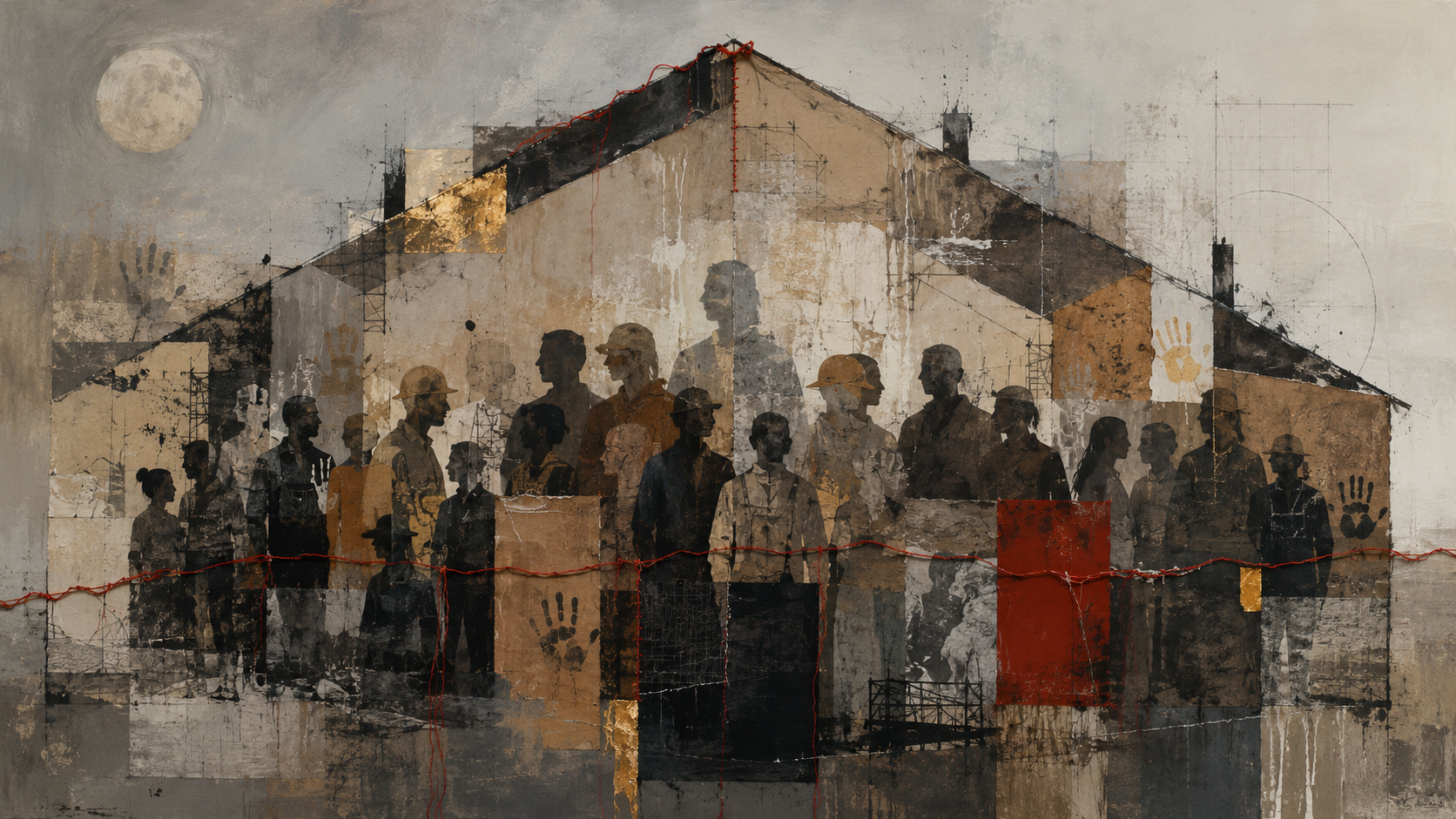
The House of Labor Belongs to the Workers
The house of labor was not built so workers could trade one master for another.
It was built so people who sell their time, bodies, skill, patience, intelligence, attention, memory, and health could stand together against power that would otherwise stand over them.
That house needs officers, staff, lawyers, organizers, researchers, treasurers, stewards, negotiators, political programs, communications teams, training schools, strike funds, auditors, committees, and people who know how to read a contract sentence until the hidden knife appears.
A union without structure is a wish. A union without expertise is vulnerable. A union without politics is disarmed. A union without staff capacity can burn out its best members and call the ashes solidarity.
So the answer is not amateurism, anti-politics, anti-staff resentment, or the boss’s fantasy of weak unions, divided workers, empty strike funds, and isolated employees bargaining alone beneath the fluorescent light of “individual merit.”
No.
The answer is a labor movement strong enough to democratize itself.
Strong enough to let members see the money, let dissent survive, tell the truth about political compromise, explain bargaining tradeoffs before panic, train members instead of managing them, admit when leadership failed, treat staff as servants of member power rather than substitutes for it, remember that solidarity is not silence, and understand that a union hall has no throne.
That is the standard.
Not purity. Not perfection. Not romantic fantasies of the rank and file as automatically wise. Workers are people. They can be selfish, frightened, misinformed, exhausted, prejudiced, passive, brilliant, brave, generous, contradictory, and suddenly capable of more than anyone expected. That is why democracy is difficult. It entrusts power to human beings as they are, then builds structures through which they may become more capable together.
Labor should not fear that.
Labor is that.
The boss’s anthropology says workers cannot govern power.
Unionism is supposed to be the answer.
So when union elites, staff systems, political departments, or entrenched officers begin saying, in softer language, that members are not ready, not informed, not disciplined, not strategic, not realistic, not politically mature, not safe to trust with the machinery, they are repeating the anthropology labor was born to defeat.
The answer to member imperfection is not elite control.
The answer is organizing.
Educate them, train them, show them the books, explain the contract, build the stewards, open the endorsements, publish the standards, protect the dissenters, translate the procedures, rotate the chairs, audit the staff systems, map the grievances, measure the political return, preserve the memory, and let members see the institution clearly enough to love it honestly or change it before love becomes nostalgia.
No just system requires ignorance to function.¹¹
No just union requires members to stay small so the institution can feel large.
A union that remembers its members can still frighten kings.
A union that forgets them only manages workers on behalf of a different court.
That is the final warning to Big Labor: the rank and file are not an audience for the movement. They are not the background chorus to officer ambition, canvassing infrastructure for politicians, human scenery behind endorsement speeches, dues-bearing material for staff empires, or a problem to be solved by communications strategy.
They are the movement.
Everything else is instrument.
The headquarters, contract, staff, officers, political program, budget, bylaws, and union hall itself are instruments.
The members are the source.
When leaders forget that, the union becomes a machine. When staff forget that, the union becomes a service vendor. When politicians forget that, the union becomes a turnout operation. When members forget that, the union becomes a memory of itself.
The cure is not weaker unions.
The cure is unions so democratic they become dangerous again.
Dangerous to employers who depend on worker fear, politicians who want labor legitimacy without labor demands, consultants who profit from member passivity, officers who confuse tenure with title, staff systems that turn expertise into gatekeeping, and every little throne built inside a movement whose first word was no.
No to arbitrary power, isolation, wage theft, unsafe work, humiliation, decisions made above the people who bear them, and the boss.
And, when necessary—
no to the second boss wearing labor’s colors.
The labor movement will not be saved by better branding, better access, or better speeches. It will be saved when the rank and file can once again look at the institution and say, without irony:
This is ours.
The union hall has no throne.
The house of labor belongs to the workers.
Appendix A
Member-First Labor Audit Checklist
A member-first union should be able to answer these questions without panic, retaliation, fog, or priestly jargon.
1. Member Sovereignty
Does this decision increase the practical power of ordinary members, or does it mainly increase the discretion of officers, staff, consultants, or political allies?
Can members understand the decision before they are asked to defend it?
Can members contest the decision without being treated as disloyal?
Were members involved early enough to shape the outcome, or only late enough to ratify it?
2. Transparency
Can members see how the decision was made?
Can they inspect the relevant records, budget lines, procedures, or authority chain?
Is the explanation plain enough for a tired worker to understand after a shift?
Was information provided in time for members to act on it?
Does confidentiality protect strategy or vulnerable people, or does it protect leadership from accountability?
3. Dues Stewardship
Does this spending build worker power?
Does it strengthen bargaining, contract enforcement, member education, steward capacity, strike readiness, accessibility, translation, organizing, or workplace safety?
Can members understand where the money went?
Would leadership defend the expenditure in a room full of dues-paying members without hiding behind accounting fog?
If the spending mainly preserves the institution, why should members accept it?
4. Staff and Officer Accountability
Does staff capacity make members stronger, or more dependent?
Are staff roles clear?
Who supervises staff conduct, and how can members raise concerns?
Are officers acting as stewards of delegated authority, or owners of institutional power?
Can officers be challenged, replaced, or corrected without institutional retaliation?
5. Bargaining Democracy
Did members help form the bargaining demands?
Were tradeoffs explained before crisis?
Were updates meaningful, or merely morale language?
Did members have enough time to review the tentative agreement?
Could members vote no without stigma?
After ratification, did leadership report what was won, what was lost, what was deferred, and what must be fought next?
6. Political Accountability
Who decides endorsements?
Were members surveyed, briefed, and allowed to dissent?
Can members inspect political spending?
What concrete workplace gains are expected from the political relationship?
How will the union review whether an endorsed politician delivered?
Are members being used as political assets, or governing political strategy?
7. Dissent and Reform
Can members form caucuses, run for office, question finances, oppose endorsements, criticize staff systems, and vote against tentative agreements without being smeared as anti-union?
Does the union distinguish dissent from betrayal?
Are reformers treated as part of the body, or as contamination?
Does unity mean solidarity, or silence?
8. Accessibility and Participation
Are meetings designed around real working lives?
Are materials plain-language, multilingual where needed, disability-accessible, and available with enough time to review?
Are remote, asynchronous, or varied participation paths available where appropriate?
Does low participation reflect member apathy, or bad institutional design?
9. Member Education
Does the union teach members how power works?
Do members understand the contract, budget, grievance process, bargaining cycle, endorsement process, and officer-election rules?
Are stewards trained as organizers, or used as message relays?
Does each campaign leave behind more capable members than it found?
10. Material Return
Did the decision improve wages, benefits, staffing, safety, pensions, workload, dignity, legal protection, anti-retaliation capacity, or bargaining leverage?
Can leadership name the concrete member benefit?
If the benefit is long-term or defensive, was that honestly explained?
Is the union measuring outcomes, or only activity?
Final Audit Question
After this decision, can the rank and file look at the institution and say, without irony:
This is ours.
Notes
U.S. Department of Labor, Office of Labor-Management Standards, “Labor-Management Reporting and Disclosure Act.” DOL describes the LMRDA as establishing a union-member Bill of Rights, reporting requirements, officer-election standards, and safeguards for labor-organization funds and assets; DOL also states that federal-employee unions are similarly covered by CSRA standards-of-conduct regulations, while unions representing solely state, county, and municipal employees are not covered by either law.
U.S. Department of Labor, Office of Labor-Management Standards, “Union Member Rights and Officer Responsibilities Under the LMRDA.” DOL states that union officers have a duty to manage union funds and property solely for the benefit of the union and its members in accordance with the union’s constitution and bylaws.
U.S. Department of Labor, Office of Labor-Management Standards, “Union Member Rights and Officer Responsibilities Under the LMRDA.” DOL describes reporting requirements for Form LM-1 and annual financial reports and states that unions must make reports available to members and permit examination of supporting records for just cause.
Bureau of Labor Statistics, “Union Members — 2025.” BLS reports a 10.0 percent union membership rate in 2025, 14.7 million union members, and the 1983 comparison of 20.1 percent and 17.7 million members; it also states that 2025 estimates are 11-month averages excluding October because CPS data were not collected during the federal government shutdown.
U.S. Department of Labor, Office of Labor-Management Standards, “Union Member Rights and Officer Responsibilities Under the LMRDA.” DOL lists equal participation, speech and assembly, dues voice, safeguards against improper discipline, collective-bargaining-agreement access, reporting, and officer-election protections.
CoherenceLattice / ΔSyn materials define coherence as Ψ = E × T, with Empathy as responsiveness or coupling and Transparency as traceability or auditability; they frame coherence as both a technical and ethical principle of responsive accountability.
The Universal Control Codex supplement defines UCC modules as explicit, shareable, testable control grammars containing tasks, authorities, reasoning steps, evidence requirements, validation rules, reporting structure, and escalation policy; it also stresses that UCC is research scaffolding rather than production compliance tooling.
U.S. Department of Labor, Office of Labor-Management Standards, “Union Member Rights and Officer Responsibilities Under the LMRDA.” DOL states that a union or its officials may not fine, expel, or otherwise discipline a member for exercising LMRDA rights where the act applies.
UVLM governance materials state “Power is held in trust, not ownership,” require authority to remain accountable to collective consent, treat leadership roles as temporary trusts, and identify transparency as a safeguard requiring records, decisions, and financial accounts to be open to membership review while limiting confidentiality to protecting vulnerable persons rather than shielding power.
The internal “Preventing Hyperreal Design Drift” audit warns that an architecture can become hyperreal if it keeps validating packets about packets, writing reports about reports, and naming future abilities without making one human workflow obviously better; it recommends forcing an operational workflow as the truth test.
The Neo-Gnostic audit corpus states the maxim “No just system requires ignorance to function,” using it as a counter-authoritarian transparency principle.
Works Consulted
Bureau of Labor Statistics. “Union Members — 2025.” U.S. Department of Labor.
Bureau of Labor Statistics. “Union Membership Rate 10.0 Percent in 2025.” The Economics Daily. April 24, 2026.
U.S. Department of Labor, Office of Labor-Management Standards. “Labor-Management Reporting and Disclosure Act.”
U.S. Department of Labor, Office of Labor-Management Standards. “Union Member Rights and Officer Responsibilities Under the LMRDA.”
U.S. Department of Labor, Office of Labor-Management Standards. “Frequently Asked Questions About Union Member Rights Under the LMRDA and CSRA.”
Ultra Verba Lux Mentis / CoherenceLattice corpus. Used as conceptual scaffolding for Empathy × Transparency = Coherence, control grammars, power held in trust, and hyperreal design-drift prevention.