

Coherent Revenue Administration: A Public-Value Encyclopedia for a Modern Tax Agency
What would an optimal public revenue agency look like if it were designed around the correct tax, voluntary compliance, protected professional judgment, taxpayer rights, and evidence-based internal control?

The Committee Will See You Now.
Oregon’s labor-management state has perfected a soothing administrative trick: turn a grievance into a working group, the working group into a report, and the report into evidence that the grievance was addressed.

No Kings in the Union Hall: Big Labor, Member Sovereignty, and the Betrayal of the Rank and File
. A union that centralizes information, manages dissent, treats members as turnout assets, or converts dues into institutional fog begins to imitate the managerial class it was built to oppose. The cure is not weaker unions. The cure is a labor movement so democratic, transparent, member-led, and materially accountable that workers can once again say, without irony: this is ours.
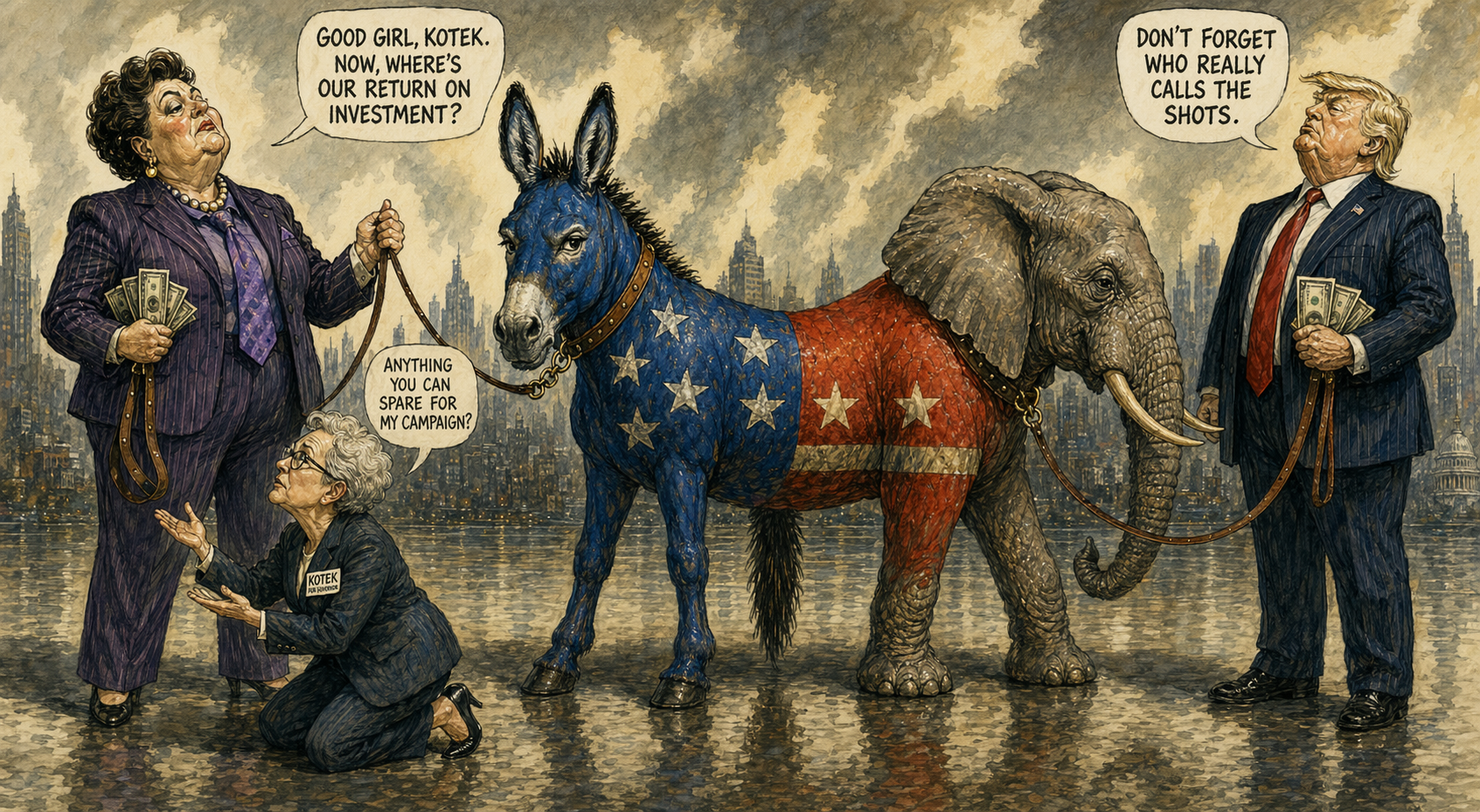
The hyperreal chasm casting the land developer as Kotek’s savior.
The best aligned criticisms are specific. Both Kotek and Trump use crisis language to normalize expedited approvals and reduced procedural friction. Both prioritize predictability for capital and builders as a public good. Both rely on stakeholder architectures in which industry groups gain regular agenda-setting access.

Tina Kotek: a case study in contemporary gubernatorial hyperreality.
A further nuance is that, by spring 2025, the ethics commission’s own discussion of the spending issues appears to have shifted away from blockbuster enforcement logic and toward advice, record-making, and the limits of commission authority over public bodies as such. In official meeting materials, the executive director discussed the governor’s office expenditures in terms of parking policy, discretionary appropriations, and the difficulty of pinning obvious individual ethics violations on attendees at the Mahonia Hall event; commissioners discussed writing a letter to create a record and provide advice.