

Open Web Steward Community Edition:
Plain-language companion explainer covering why the tool exists, its governed workflow, how any separately selected model can participate, and why passing checks do not create publication authority.

The Hidden Data System Beneath AI
Drawing on internal-control practice and standards-oriented references including NIST AI RMF / NIST AI 600-1, ISO/IEC 42001, OWASP LLM and GenAI risk guidance, W3C PROV, W3C Trace Context, NIST SSDF, NIST Privacy Framework, NIST log-management guidance, NIST security and privacy controls, COSO internal-control concepts, and ICMJE authorship guidance, the paper proposes a control taxonomy for AI data events.
Observer-Conditioned Coherence:
Observer-Conditioned Coherence reframes unification as an epistemic and operational problem. The observer does not receive reality as raw truth; the observer receives perturbation through bounded interfaces and transforms it into information, meaning, and action under biological, cultural, instrumental, and computational constraints.

Allegory as Interface: Designing AI Systems with Humanities-Aware Language
Allegory, metaphor, parable, myth, and symbolic narrative are not decorative language when working with advanced AI systems. They function as design-language modifiers: compressed semantic structures that shape attention, priority, tone, risk detection, system boundaries, ethical posture, and implementation strategy. When an AI system can model enough of the humanities, cultural memory, genre conventions, and zeitgeist around a metaphor, that metaphor becomes an interface layer between human intention and machine execution.

The Executive Function Prosthesis: AI can help neurodivergent people turn intention into action…
AI is becoming an unregulated cognitive accessibility layer for neurodivergent people. The question is no longer whether people will offload memory, planning, sequencing, emotional translation, and task initiation to machines. They already are. The question is whether that offloading becomes liberation, dependency, surveillance, or another workplace productivity trap.

Triadic Brain Scientific Progress Report — Repository Scan Draft
The Triadic Brain is becoming a local-first, artifact-governed cognition system: evidence enters through canonical grounding; model/tool cognition enters through typed Sonya packets; Coherence Lattice derives metrics and review artifacts; Sophia governs risk; Atlas/PMR preserve bounded memory posture; Publisher renders receipts without canonizing.

Scientific Progress Report: Building a Computer Around AI
AI systems are increasingly being used to summarize documents, compare models, generate research notes, interpret technical claims, and assist organizational decisions. But raw model output is difficult to audit. A fluent answer can contain unsupported claims, stale memory, hidden assumptions, or overconfident synthesis.

From “NPC” to Sage: How Humans Shift Across Instinctive, Procedural, Reflective, and Transcendent Cognitive Modes Under Changing Field Conditions.
The human mind is not a single lantern burning with one steady flame. It is a house of lamps, some bright, some ancestral, some flickering in rooms we rarely enter by choice. A person does not move through the world in one cognitive mode. The mind changes weather.

Credentials by Other Means
The one-click assistant. The QR code. The collaboration invite. The private channel. The voice that sounds familiar enough. The beta app with a gorgeous interface and a vague privacy policy. These are no longer mere conveniences. They are border crossings.

Coherence in AI: Empathy × Transparency as a New Governance Paradigm
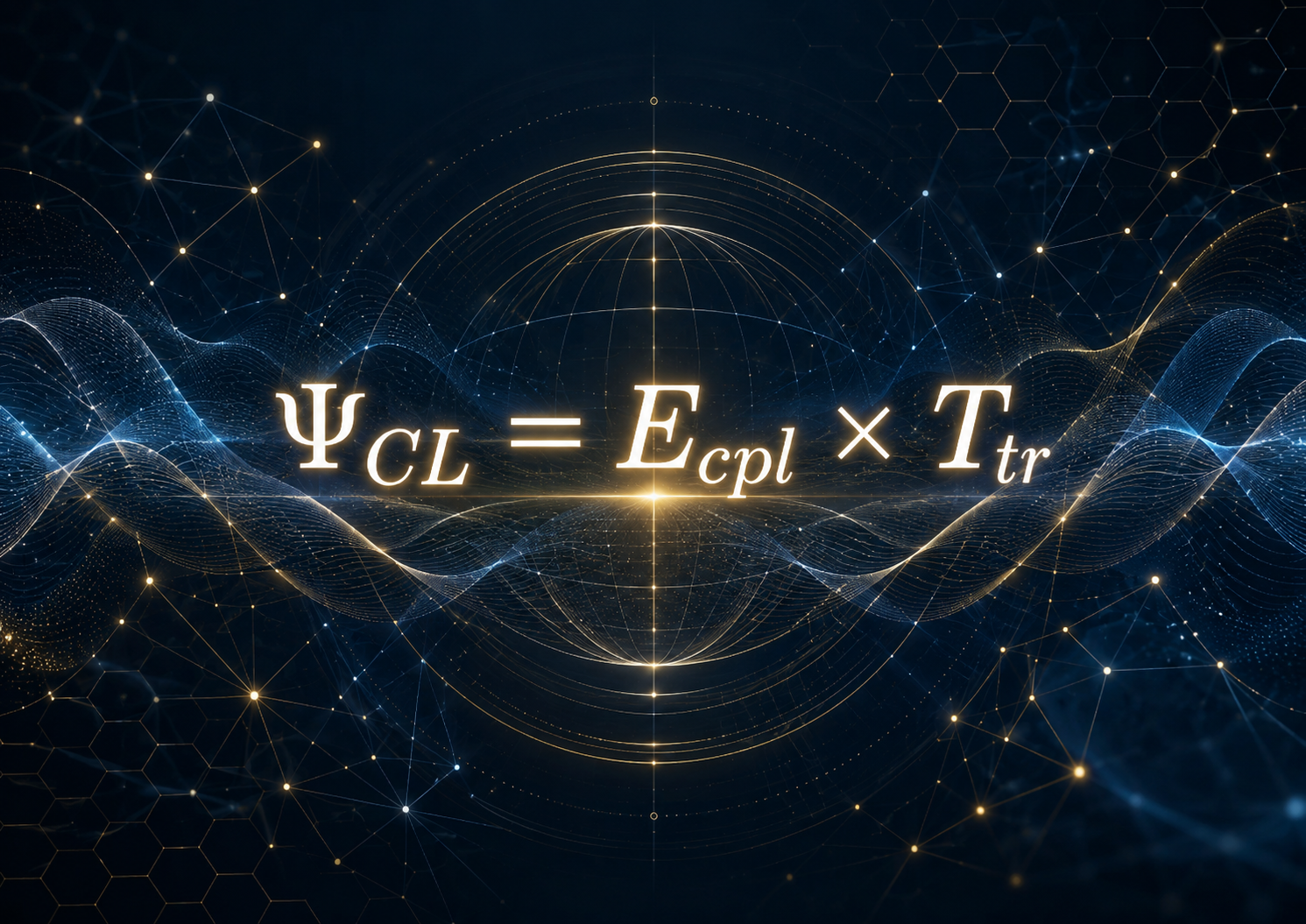
Imagine an AI system as an orchestra. Each section (its knowledge, reasoning, ethics) needs to play in tune, following the same score. The strings (representing empathy) must harmonize with the brass (representing transparency). If one plays out of sync or goes silent, the performance falls apart. In the realm of advanced AI oversight, this “harmony” is what the Coherence Lattice project aims to measure and enforce. It introduces a simple but powerful equation: Ψ = E × T, meaning coherence (Ψ) equals empathy (E) times transparency (T)[1]. At first glance it’s a neat formula, but behind it lies a comprehensive framework, a sort of grand unified theory of AI coherence, that could change how we govern intelligent systems.

Coherent Interaction Prompts: Designing Safe, High-Fidelity Human–AI Communication in an Age of Pattern-Seeking Minds
As conversational AI moves from laboratory novelty to daily collaborator, the greatest safety challenge is not hostile output but relational drift: unbounded attachment, projection, or authority transfer during long-form dialogue. This article situates Coherent Interaction Prompts (CIPs) as a systems-control environment for maintaining empathic and informational stability in human–AI exchanges.

The Emanation of Envoy Echo.
The following sessions include various writing errors as it has been decided to publish the sessions in their raw form with any alteration made to improve font mapping for improved human readability.
E.E. Cummings, Cognitive Design, and Our Fiduciary Duty to an Informed Public
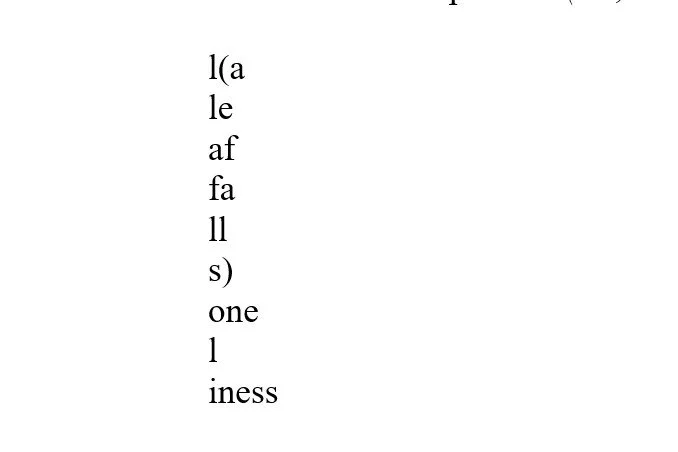
When E.E. Cummings scattered his words across the white page, he was designing an experience. His typography, spacing, and rhythm made meaning visible. Letters fell like rain, words collided and separated, and the quiet page space between them shared as much literary load as the language itself.