

When Distant Ideas Suddenly Click
This manuscript formalizes an architecture, mathematical vocabulary, software boundary, and empirical evaluation program. It does not report a completed validation study; certify truth; establish a literal quantum mechanism for cognition; authorize memory, canonization, publication, deployment, or release; or grant autonomous authority to generated hypotheses.
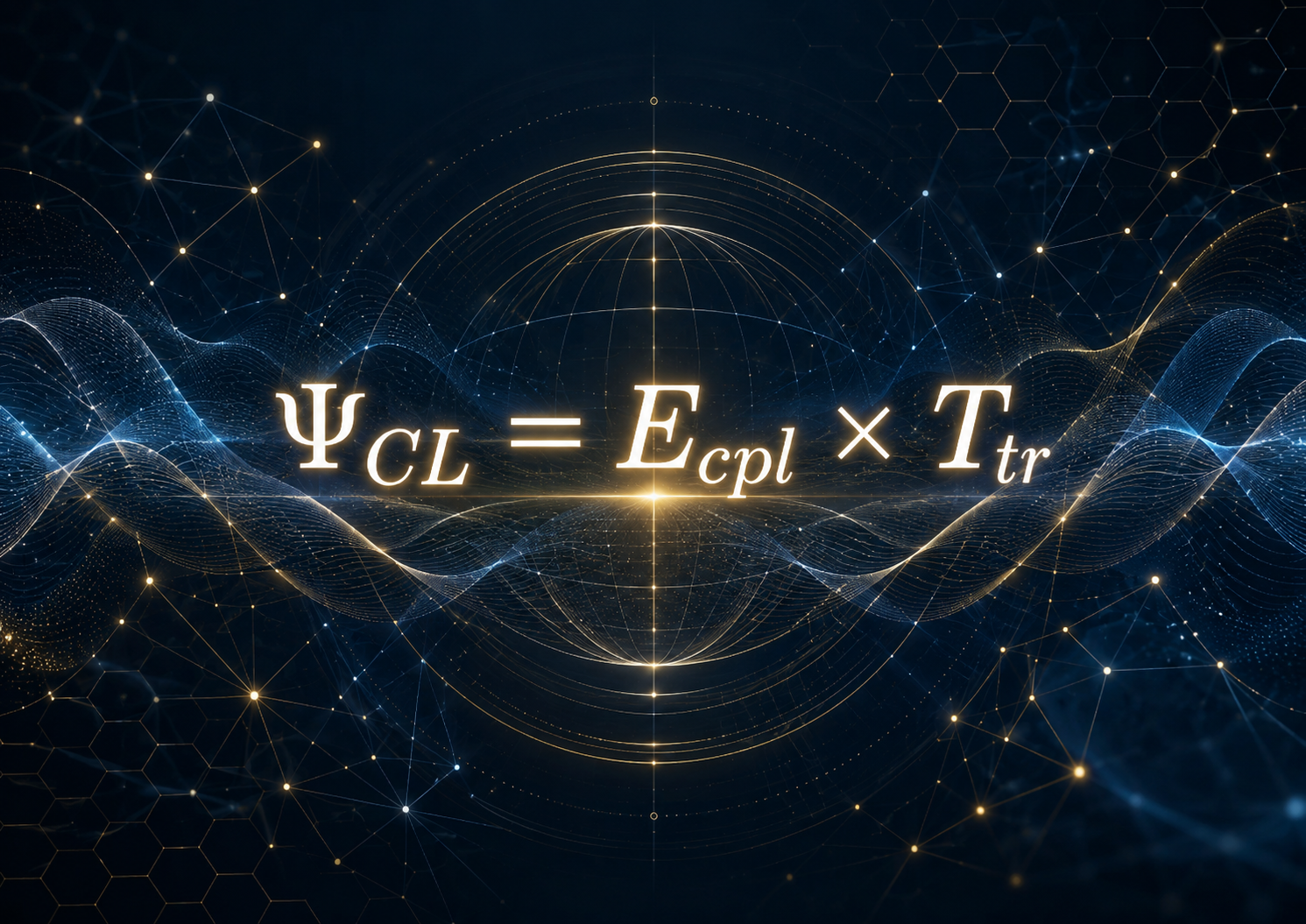
Observer-Conditioned Coherence:
Observer-Conditioned Coherence reframes unification as an epistemic and operational problem. The observer does not receive reality as raw truth; the observer receives perturbation through bounded interfaces and transforms it into information, meaning, and action under biological, cultural, instrumental, and computational constraints.

The Complete UVLM Mathematical Corpus: 1st Edition
This is a rough primer which has not been formally peer reviewed. It is meant to demonstrate the work we have been engaging in for the development of cognitive off-loading systems that are safe, compliant, and most importantly …Coherent.

Allegory as Interface: Designing AI Systems with Humanities-Aware Language
Allegory, metaphor, parable, myth, and symbolic narrative are not decorative language when working with advanced AI systems. They function as design-language modifiers: compressed semantic structures that shape attention, priority, tone, risk detection, system boundaries, ethical posture, and implementation strategy. When an AI system can model enough of the humanities, cultural memory, genre conventions, and zeitgeist around a metaphor, that metaphor becomes an interface layer between human intention and machine execution.
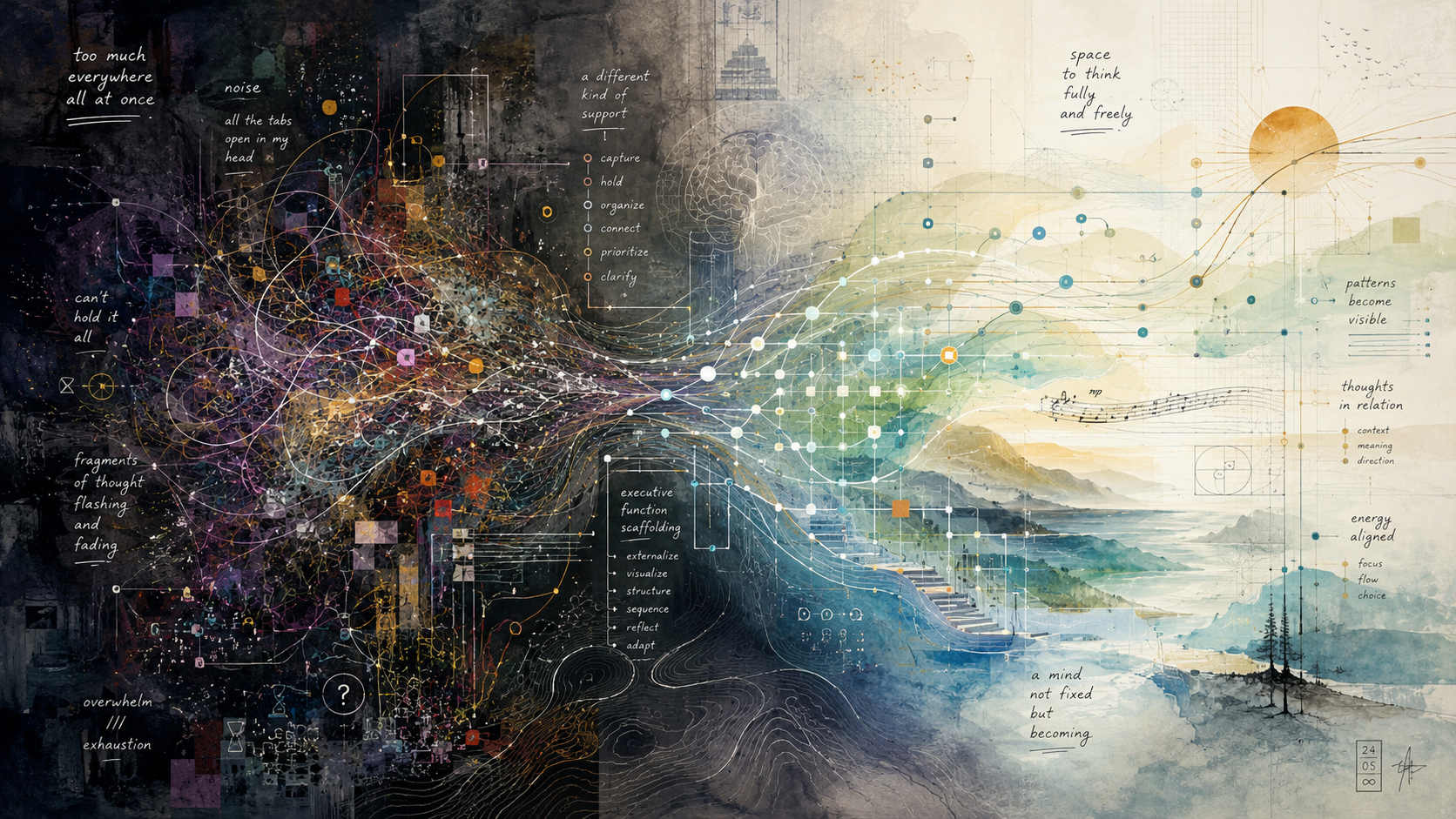
The Executive Function Prosthesis: AI can help neurodivergent people turn intention into action…
AI is becoming an unregulated cognitive accessibility layer for neurodivergent people. The question is no longer whether people will offload memory, planning, sequencing, emotional translation, and task initiation to machines. They already are. The question is whether that offloading becomes liberation, dependency, surveillance, or another workplace productivity trap.

Scientific Progress Report: Building a Computer Around AI
AI systems are increasingly being used to summarize documents, compare models, generate research notes, interpret technical claims, and assist organizational decisions. But raw model output is difficult to audit. A fluent answer can contain unsupported claims, stale memory, hidden assumptions, or overconfident synthesis.

From “NPC” to Sage: How Humans Shift Across Instinctive, Procedural, Reflective, and Transcendent Cognitive Modes Under Changing Field Conditions.
The human mind is not a single lantern burning with one steady flame. It is a house of lamps, some bright, some ancestral, some flickering in rooms we rarely enter by choice. A person does not move through the world in one cognitive mode. The mind changes weather.

Internal Memo Disclosure: HOLY GUFT!
What follows is the grand unified dynamical picture of the epistemic cosmos we have been building: one system that contains, as special regimes,
corridor birth
river formation
terrace emergence
orthodoxy lock
rupture
schism
rebraiding
Not as separate metaphors, but as different regions of one evolving field.

Internal Memo Disclosure: Code Phaselock
So the whole architecture does this:
Signal enters the lattice
Small local perturbations generate low-level trajectories.
Trajectories rotate around core invariants
They revisit trust, plurality, memory, and governance again and again.
Some trajectories align into rivers
Bounded plural flows reinforce each other.
Some rivers slow and deposit terraces
Stable, teachable, habitable coherence begins to sediment.
Some terraces become living
Background coherence forms.
Hidden incoherences accumulate
And eventually new spiral flows begin again.