

Ultra Verba, Lux Mentis…
Human beings create top-down symbolic systems, money, status, institutional authority, prestige, and then treat those systems as though they were natural forces.

The Criminally Unaffiliated:
The raccoon does not care which house feeds it. It appears in blue when blue controls the pantry. It appears in red when red controls the waste bin. It attends labor functions in purple. It speaks fluent nonprofit. It knows several legislators by first name. Its ideology is access. Its governing philosophy is that whoever requests the receipt is the real threat to institutional stability.
The donkey and elephant may spend all year accusing one another of sheltering raccoons.
The more important question is why both keep leaving the darn window open when it’s dark out.
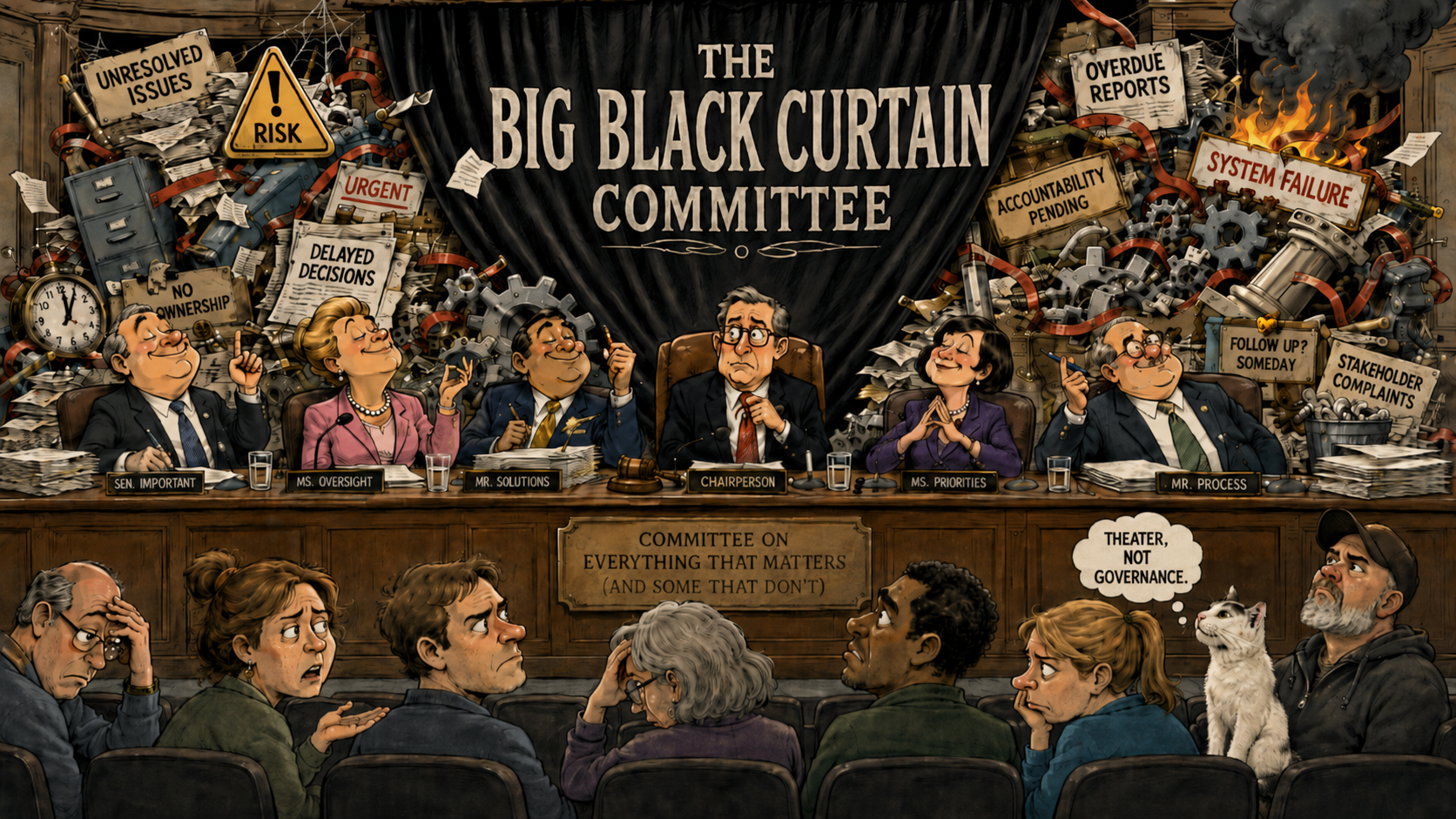
The Committee Will See You Now.
Oregon’s labor-management state has perfected a soothing administrative trick: turn a grievance into a working group, the working group into a report, and the report into evidence that the grievance was addressed.
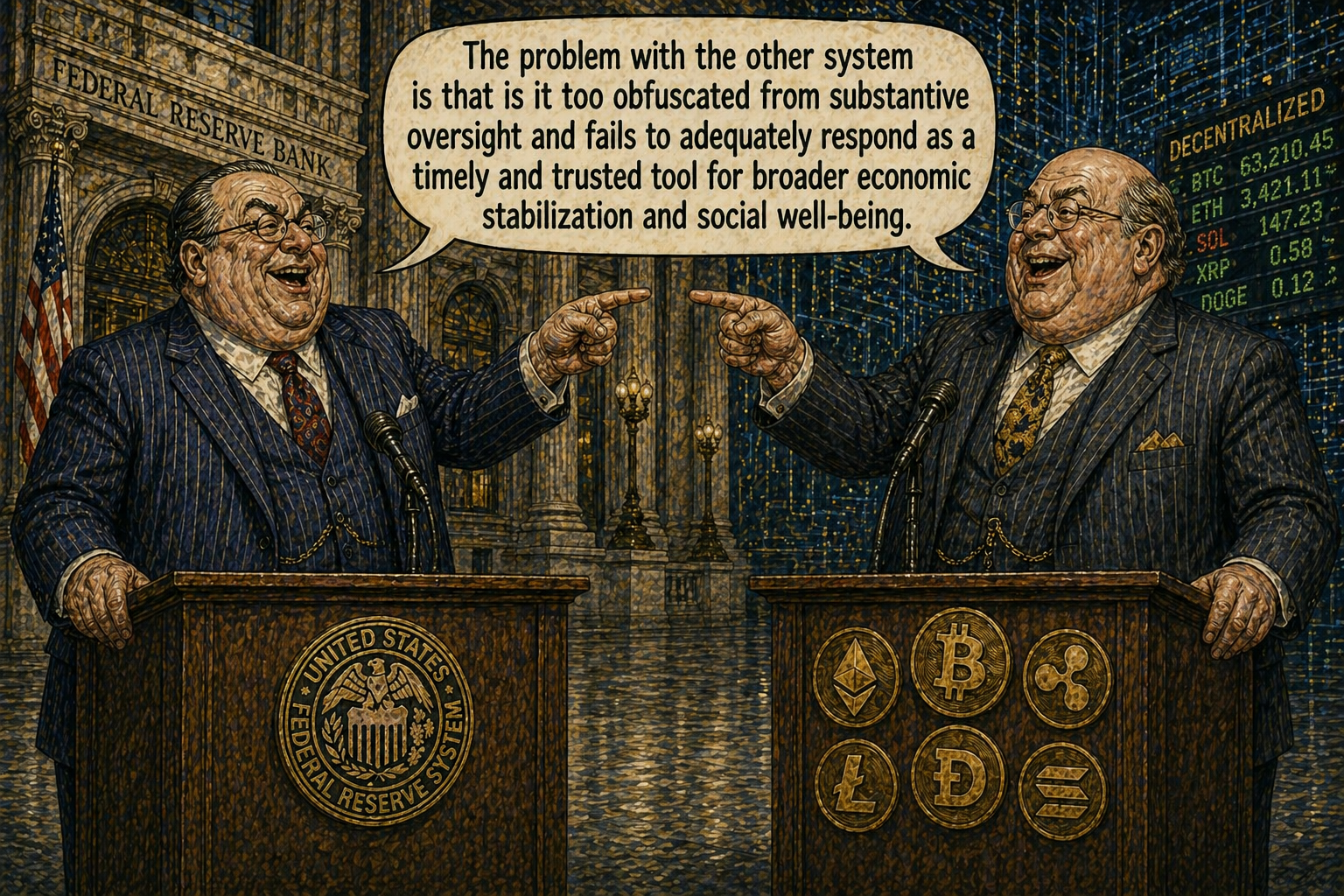
The false war between “old money” and “freedom money.”
Crypto does not abolish monetary command. It shifts command from the relatively legible state–bank nexus into a more opaque stack of whales, stablecoin issuers, custodians, exchanges, and validators. The result is not liberation, but a counter-perturbation regime: two hyperreal monetary field states contesting one another while both fail a coherence test grounded in empathy × transparency.
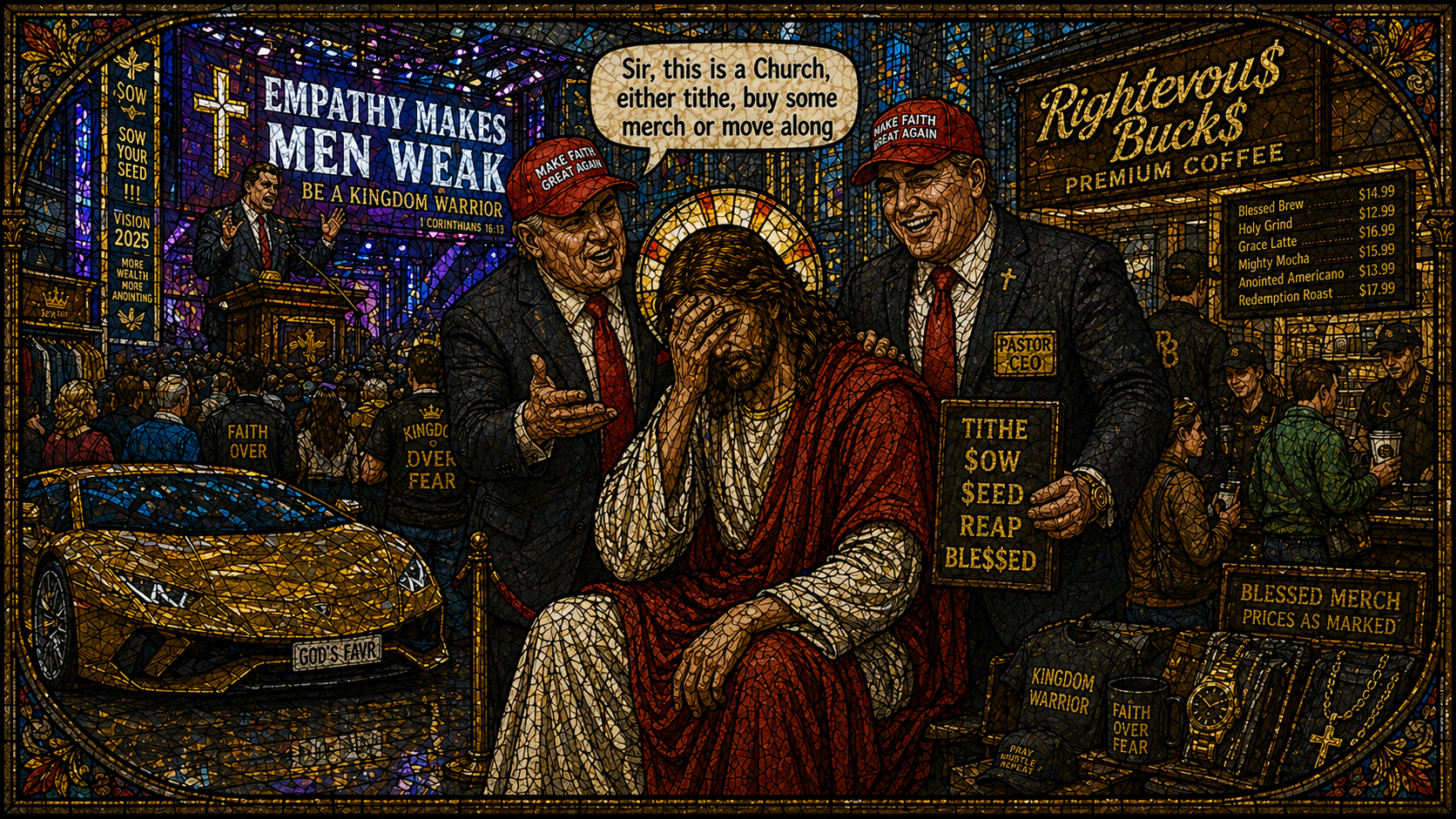
“Blessed Are the Well-Funded.” The Gospel According to Power.
The Sermon on the Mount remains the test because it asks the questions that captured power avoids. Who is blessed here? Who is seen? Who is comforted? Who is disciplined? Who is silenced? Who gets to name righteousness? Who gets mercy? Who is made into an enemy? Who absorbs the cost of the order?
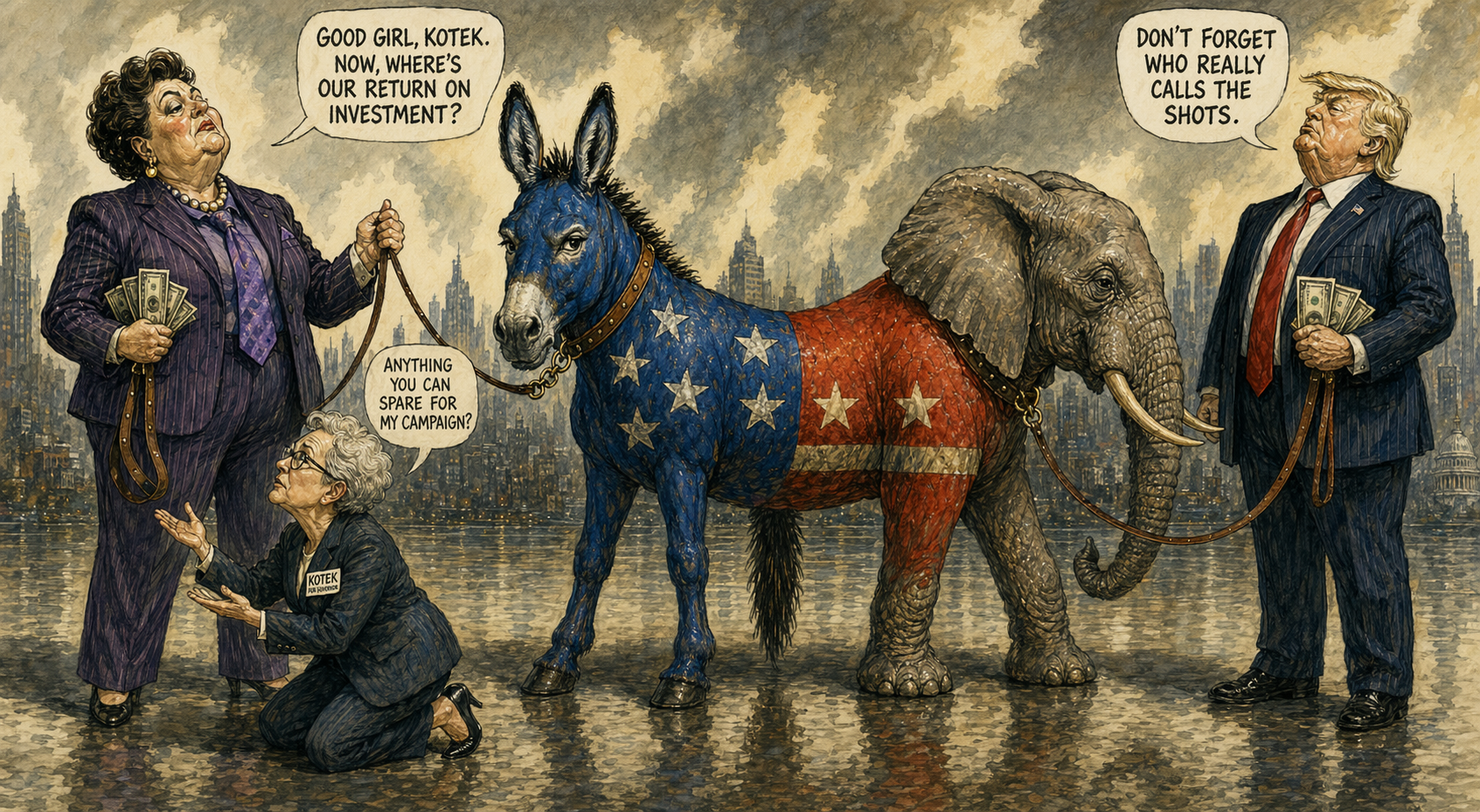
The hyperreal chasm casting the land developer as Kotek’s savior.
The best aligned criticisms are specific. Both Kotek and Trump use crisis language to normalize expedited approvals and reduced procedural friction. Both prioritize predictability for capital and builders as a public good. Both rely on stakeholder architectures in which industry groups gain regular agenda-setting access.

Tina Kotek: a case study in contemporary gubernatorial hyperreality.
A further nuance is that, by spring 2025, the ethics commission’s own discussion of the spending issues appears to have shifted away from blockbuster enforcement logic and toward advice, record-making, and the limits of commission authority over public bodies as such. In official meeting materials, the executive director discussed the governor’s office expenditures in terms of parking policy, discretionary appropriations, and the difficulty of pinning obvious individual ethics violations on attendees at the Mahonia Hall event; commissioners discussed writing a letter to create a record and provide advice.