

The Public Eye Must Kneel
A sourced case for Oregon license-plate cameras under democratic control, with privacy limits, human oversight, ethical AI, audits, and an off switch.
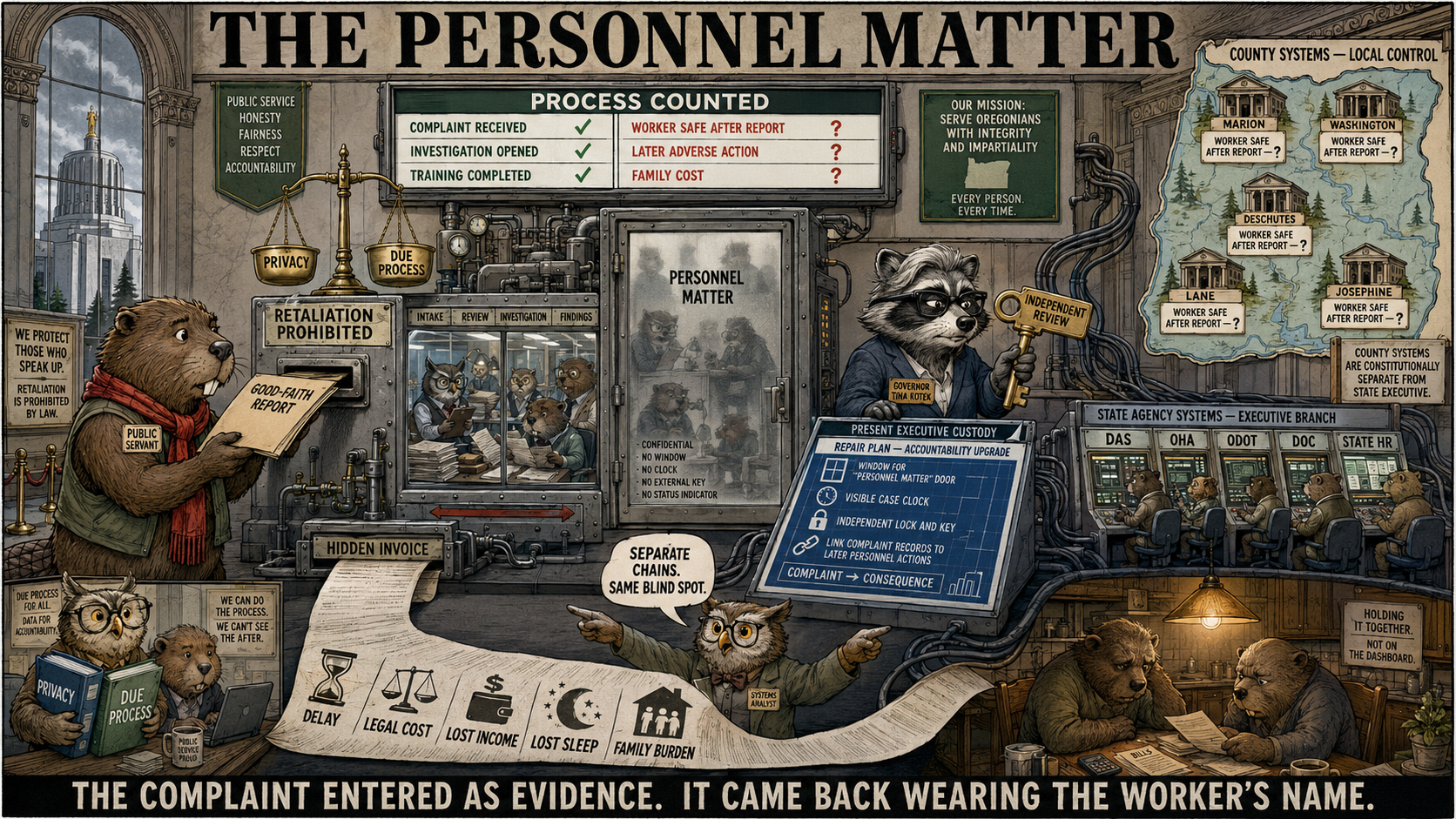
The Personnel Matter
An evidence-led examination of retaliation risk in Oregon public employment, from jury verdicts and settlements to disputed claims, county cases, weak complaint oversight, and the hidden invoice carried home by workers and families.
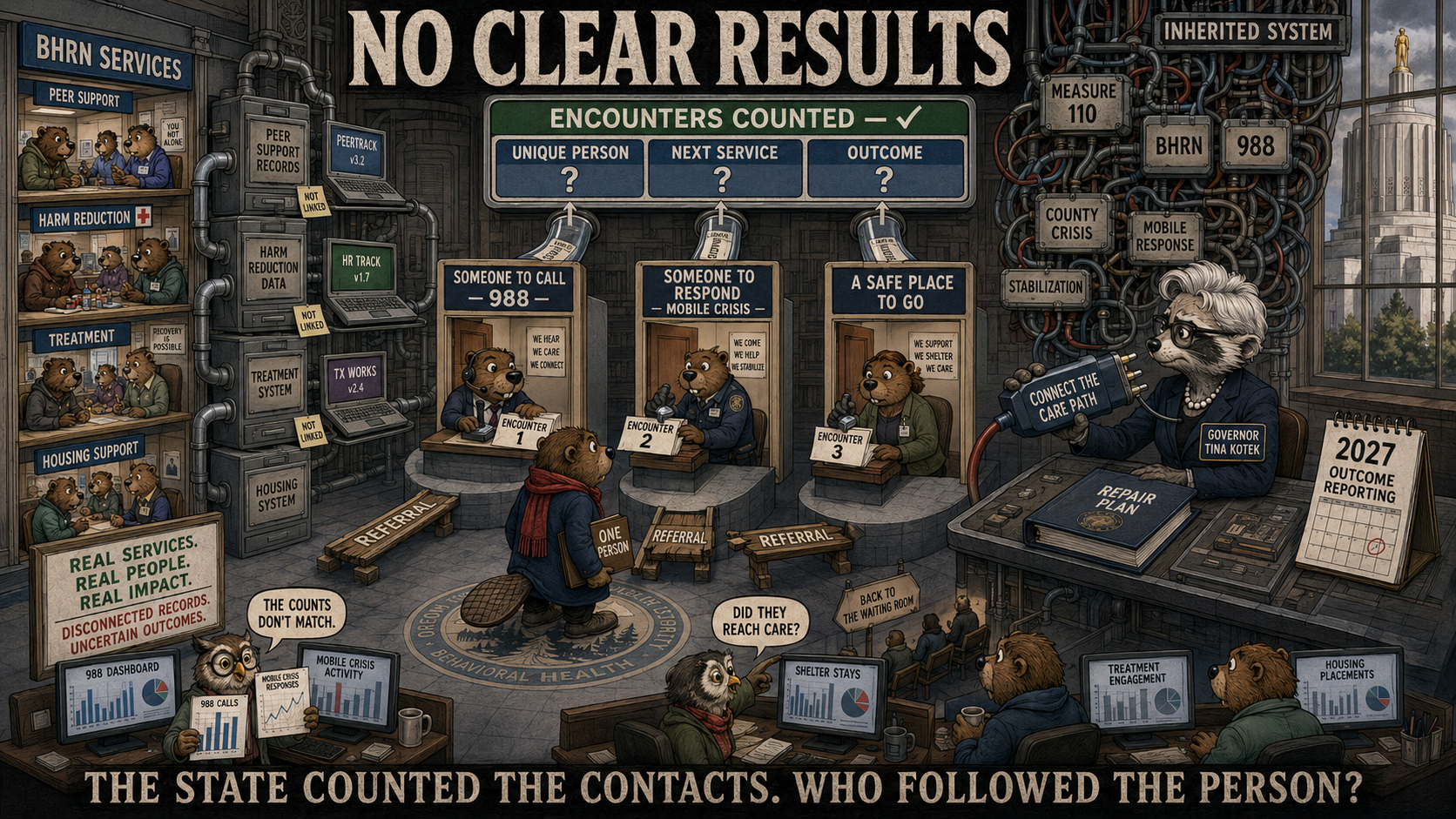
No Clear Results
Oregon has funded peer support, harm reduction, treatment, housing, 988, mobile crisis response, and other behavioral-health services that reached real people. Yet state audits found fragmented systems, incomplete outcome data, uneven county access, and no reliable statewide account of how unique people moved through care. No Clear Results examines the distinction between counting activity and demonstrating continuity, while asking what Tina Kotek’s administration must now prove as custodian of an inherited system.

“We” Did This Together
Workers provide SEIU with voluntary political contributions, campaign labor, workplace stories, bargaining power, turnout, and public credibility. Union executives convert those resources into endorsements, access, coalition seats, policy relationships, and political influence. Governor Tina Kotek then receives union leadership as an authoritative voice of labor, while leadership presents the resulting access and agreements as evidence that members were heard. The public record does not establish secret collusion. It does reveal a closed-loop governance risk: each institution can validate the authority of the other while ordinary workers struggle to inspect how their own voice became the official result.
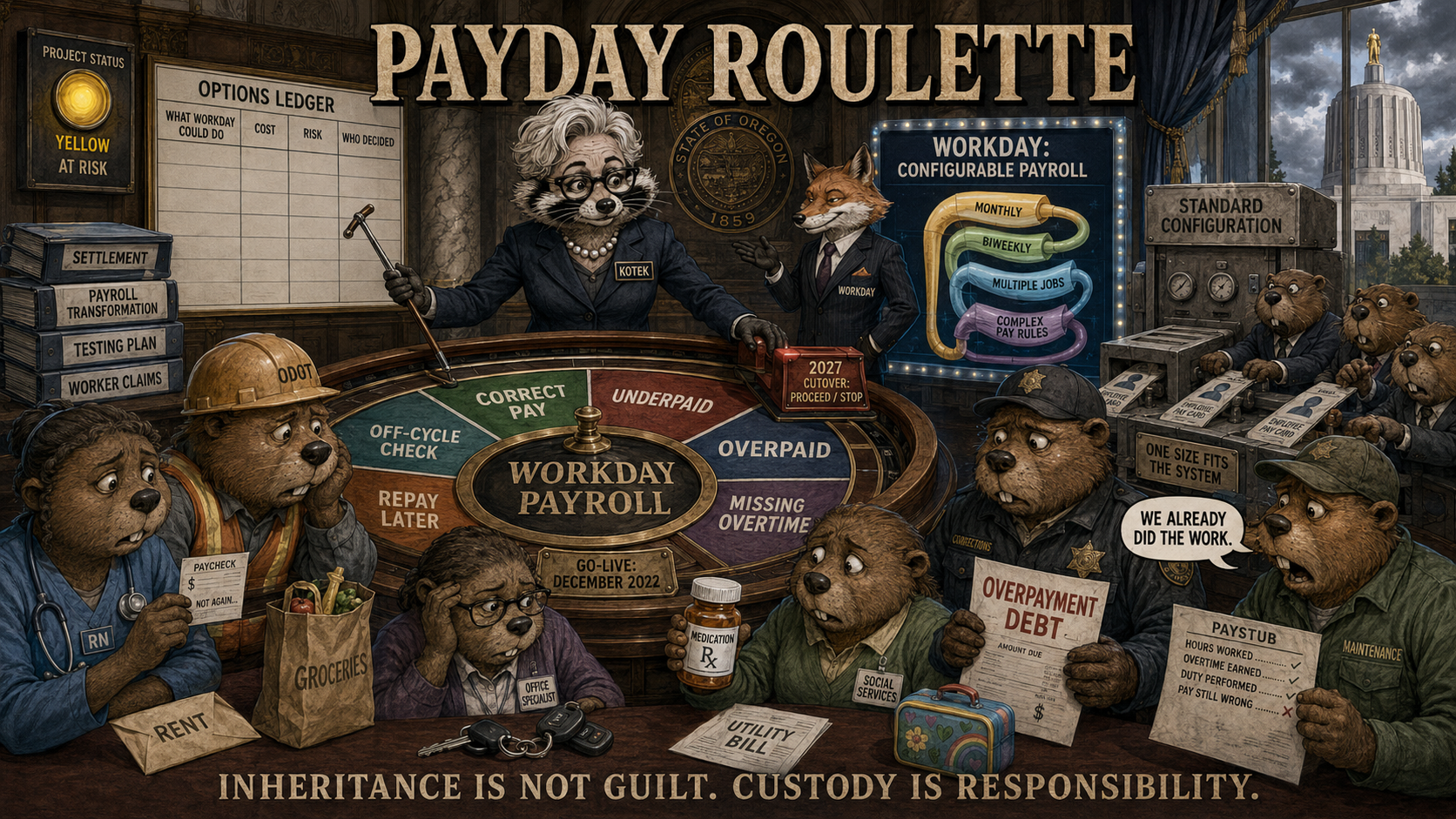
Tina Kotek’s Payday Roulette
Oregon’s Workday Payroll failure began before Tina Kotek took office, but the settlement, worker relief, control redesign, and 2027 transformation now belong to her administration. Payday Roulette examines thousands of incorrect checks, the household costs transferred to state employees, Workday’s public claims of payroll configurability, and a confidential technical source’s challenge to Oregon’s necessity narrative.
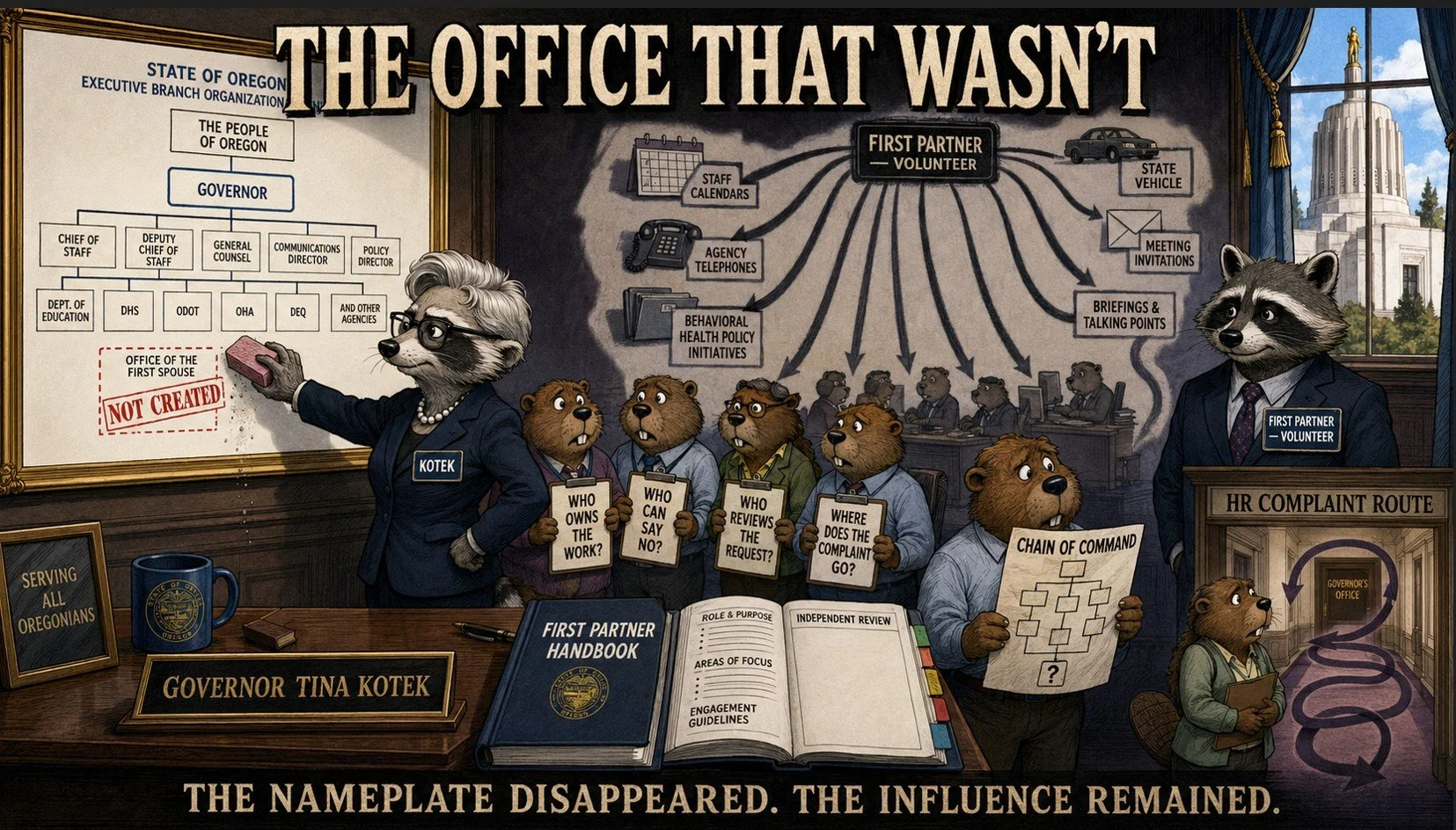
The Office That Wasn’t
Oregon's ethics process did not establish prohibited financial benefit, nepotism, or misuse of office by Governor Tina Kotek. The management record reveals a different failure: senior employees had to navigate consequential first-spouse influence before the administration defined its authority, chain of command, limits, or independent route for dissent. The Office That Wasn't examines the distance between authority as government declares it and authority as public workers experience it.

Signed With Eyes Open: Tina Kotek and the Campaign-Finance Bill She, Herself, Called Flawed
Tina Kotek signed Oregon HB 4018 after publicly identifying weaknesses in enforcement, disclosure, and clarity. This documented commentary examines the compromise and the responsibility attached to it.
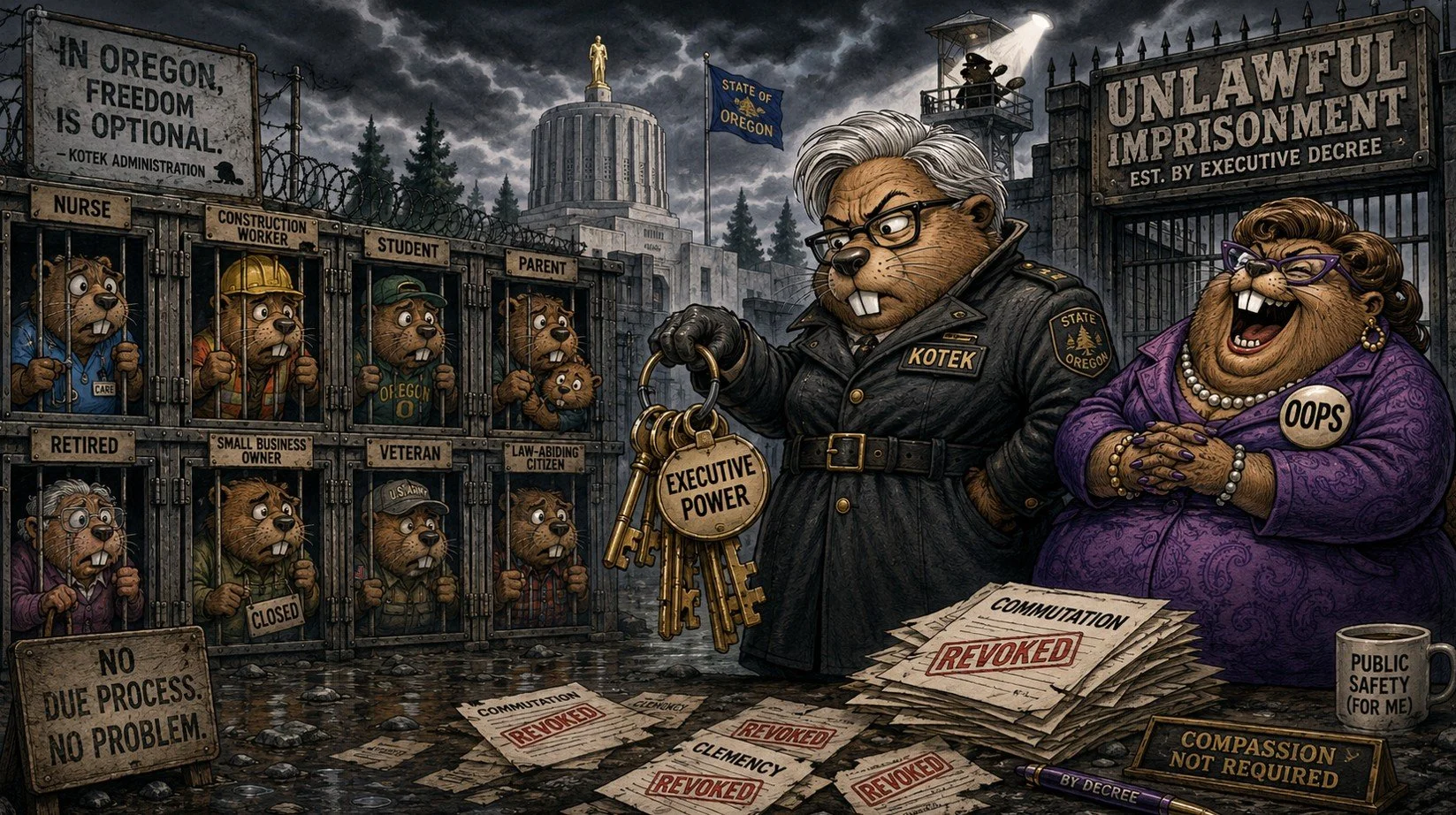
The Court Had to Open the Door
After Oregon certified that Terri Lee Brown had completed her sentence, Gov. Tina Kotek revoked her commutation and sent her back to prison. The Oregon Supreme Court unanimously held that Kotek lacked authority and ordered Brown’s immediate release.

The Verb Did the Damage: A Forensic Reply to Shaanth Nanguneri’s Drazan Story
A forensic reply to Shaanth Nanguneri’s Oregon Capital Chronicle article on Christine Drazan: the payment was material and deserved scrutiny, but the relationship was disclosed and the incriminating frame outran the evidence.
Shaanth Nanguneri found a disclosed related-party payment, a missing governance policy, and records that remain incomplete. Oregon Capital Chronicle’s headline turned those facts into personal enrichment and minimal oversight, conclusions the published evidence does not establish.